

The centre at the Incheon Global Campus in the Korean smart city will provide a testbed to develop physical structures and electronic technologies as prototypes for future urban environments.

Researchers from Stanford University in the US are using the Korean smart city of Songdo as a living laboratory.
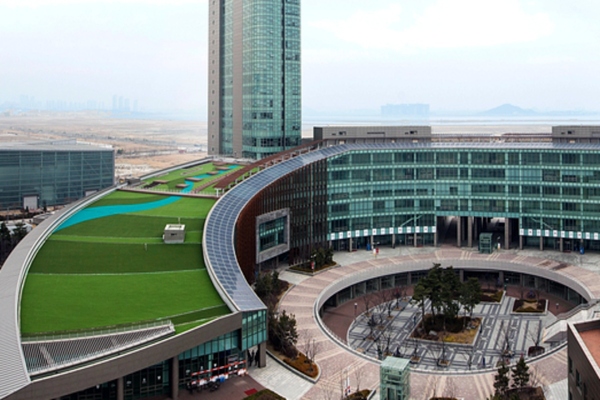
The Stanford Centre at the Incheon Global Campus will provide a testbed to help academic and corporate researchers develop and deploy a new generation of physical structures and electronic technologies as prototypes for the urban environments of the 21st century.
The Incheon Global Campus is a 1,500-acre business district based within the South Korean city of Incheon, a trade and transportation hub close to the nation’s major international airport.
The centre will bring together researchers from across Stanford’s seven schools with collaborators from South Korean industry, government and universities to initially conduct research on smart, sustainable cities and urban communities, with the goal of attracting researchers throughout the university who are interested in Korean collaborations.
“While the centre’s work looks to the future, it is rooted in deep, historic ties between Stanford and South Korea,” said president Marc Tessier-Lavigne at a virtual ribbon-cutting ceremony.
“South Korea has been one of the top countries sending students to Stanford for more than 30 years. As a result of our decades-long relationship, Stanford alumni now serve as leaders in South Korean universities, government and private enterprise.”
“Essentially, it’s a city-scale lab for those of us who are interested in studying these topics”
Researchers from a variety of academic disciplines and fields will focus initially on four key areas:
Michael Lepech, faculty director of the centre and an associate professor of civil and environmental engineering, said the centre was inspired by a 2015 strategic planning initiative at the School of Engineering known as SoE-Future.
Initiated by then-dean, Stanford University provost Persis Drell, and led by an inclusive committee of faculty, staff and students, the school identified grand global challenges in which engineers could make a significant world-changing impact over the coming decades. Among them was how engineering can ensure that humanity flourishes in the cities of the future.
“This centre provides us with access to real-time smart city data, and unique infrastructure to test new technologies and ideas,” said Lepech. “Essentially, it’s a city-scale lab for those of us who are interested in studying these topics.”
You might also like:
Why not try these links to see what our SmartCitiesWorld AI can tell you.
(Please note this is an experimental service)
How can sensor data integration accelerate innovation in smart city companies?What methods improve data visualization for smart-city technology implementation?How does urban data enhance wellness and quality-of-life in cities?What strategies help municipalities invest sustainably in new urban technologies?How does the Incheon Global Campus facilitate real-time smart city research?