



Europe must take advantage of brownfield development’s potential to address affordable housing needs and reduce carbon emissions, a new report reveals.
At a glance
Who: C40 Cities, Arup and Urban Partners.
What: Report reveals brownfield development must play a role in enabling urban growth to meet the needs of Europe’s growing urban population. It sets out to address the traditionally challenging perception of brownfield regeneration by showcasing its potential to enhance housing affordability and curb urban sprawl while delivering attractive returns.
Why: To manage the pressures of increasing urbanisation, C40 reckons both current and emerging European cities must adopt denser, more connected, and mixed-use models of urban development.
When: C40 said regenerating brownfield sites within the existing urban fabric could meet most of Europe’s housing needs for the next 15 years.
Brownfield development must play a role in enabling urban growth to meet the needs of Europe’s growing urban population, a new report urges.
Released by C40 Cities, Arup and Urban Partners, the report sets out to address the traditionally challenging perception of brownfield regeneration by showcasing its potential to enhance housing affordability and curb urban sprawl while delivering attractive returns.
Urbanisation in Europe has increased at a constant rate since the 1960s and is expected to continue growing, with approximately 83 per cent of people projected to live in urban areas by 2050, according to a study by the UN. To manage the pressures that this creates, C40 reckons both current and emerging European cities must adopt denser, more connected, and mixed-use models of urban development.
At the same time, Europe aims to become the world’s first climate-neutral continent, creating a tension between urban development and sustainability. The European Green Deal, for instance, includes interim targets to cut emissions by at least 55 per cent by 2030 compared to 1990 levels.
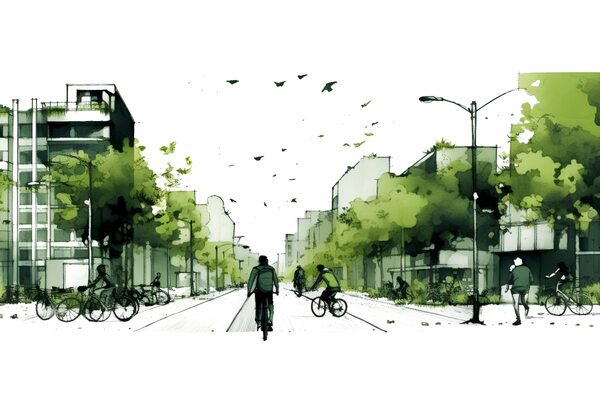
Against this backdrop, the report makes a powerful case for cities to pursue large-scale urban brownfield regeneration to help address their challenges. It argues for a shift to a new model of urban planning with a focus on compact, mixed-use, and transit-oriented neighbourhoods, which prioritises existing central urban areas such as brownfield sites.
The report encourages European cities to adopt a climate-resilient and people-centred approach to planning and design, building on the historical model of European cities, which are compact, mixed-use and walkable. There is an argument for building more housing as part of new “complete neighbourhoods” which require buy-in from all major stakeholders involved in shaping regeneration.
“As Europe’s cities face growing pressure to deliver new homes, costly and carbon-intensive sprawl cannot be the answer”
Urban regeneration has traditionally been underinvested, and the exact scale of financial flows into projects has not been transparent. Mid-sized, neighbourhood-scale regeneration projects, each needing €100m to €400m of investment, are a major opportunity. It makes sense for more investors and funds to have explicit integrated regeneration strategies, for the benefit of both their bottom lines and wider society.
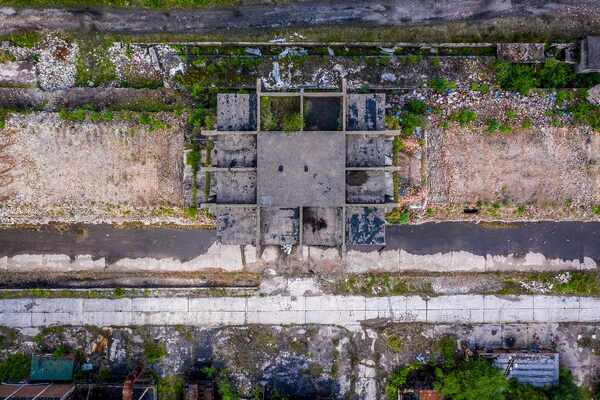
Hélène Chartier, director of urban planning and design, C40 Cities, said: “As Europe’s cities face growing pressure to deliver new homes, costly and carbon-intensive sprawl cannot be the answer. Instead, cities must look inward – to their shuttered factories, obsolete railyards, and underused commercial areas.
Chartier continued: “Regenerating these brownfield sites within the existing urban fabric could meet most of Europe’s housing needs for the next 15 years. Doing so would create vibrant, mixed-use communities, protect vital natural land, and cut emissions. This report is a blueprint for action – showing how cities, investors, and developers can work together today to unlock the green, thriving neighbourhoods of tomorrow.”
“The report gives practical steps to help cities, developers and patient capital turn complex sites into affordable, lower‑carbon neighbourhoods now”
Recommendations and key takeaways from the report:
Léan Doody, Arup’s cities, planning and design leader in Europe, added: “Urban brownfield regeneration is both a planning challenge and Europe’s biggest opportunity to grow without sprawl. The report gives practical steps – plan for the long term, build trusted partnerships and reduce investment risk through planning certainty – to help cities, developers and patient capital turn complex sites into affordable, lower‑carbon neighbourhoods now.”
Read the full report here.
Why not try these links to see what our SmartCitiesWorld AI can tell you.
(Please note this is an experimental service)
How can brownfield regeneration reduce carbon emissions in European cities?What financial models support investment in mid-sized urban regeneration projects?How does mixed-use development improve housing affordability and urban density?What role do transit-oriented neighborhoods play in sustainable urban planning?How can cities integrate brownfield sites into existing urban infrastructure effectively?