




















Inrix’s strategic integration has extended its granular ground truth parking and loading zone availability coverage to 13 of its 126 premium coverage cities.
At a glance
Who: Inrix; Automotus.
What: Transportation data and analytics specialist Inrix has announced it is rolling out its real-time parking and loading occupancy coverage to 13 new cities through a strategic Integration with Automotus.
Why: The integration provides governments, automakers, logistics fleets, mapping platform companies, and mobile app developers with ground truth, block-level occupancy status, helping to reduce traffic congestion caused by drivers circling for parking while also reducing safety issues.
Where: Deployment will be in high-density urban centres such as Miami, Los Angeles, Atlanta and Philadelphia.
Transportation data and analytics specialist Inrix has announced it is rolling out its real-time parking and loading occupancy coverage to 13 new cities through a strategic Integration with Automotus.
Describing it as a “significant expansion” of its real-time occupancy service, the new coverage adds nearly 400 city blocks of real-time data to its parking engine.
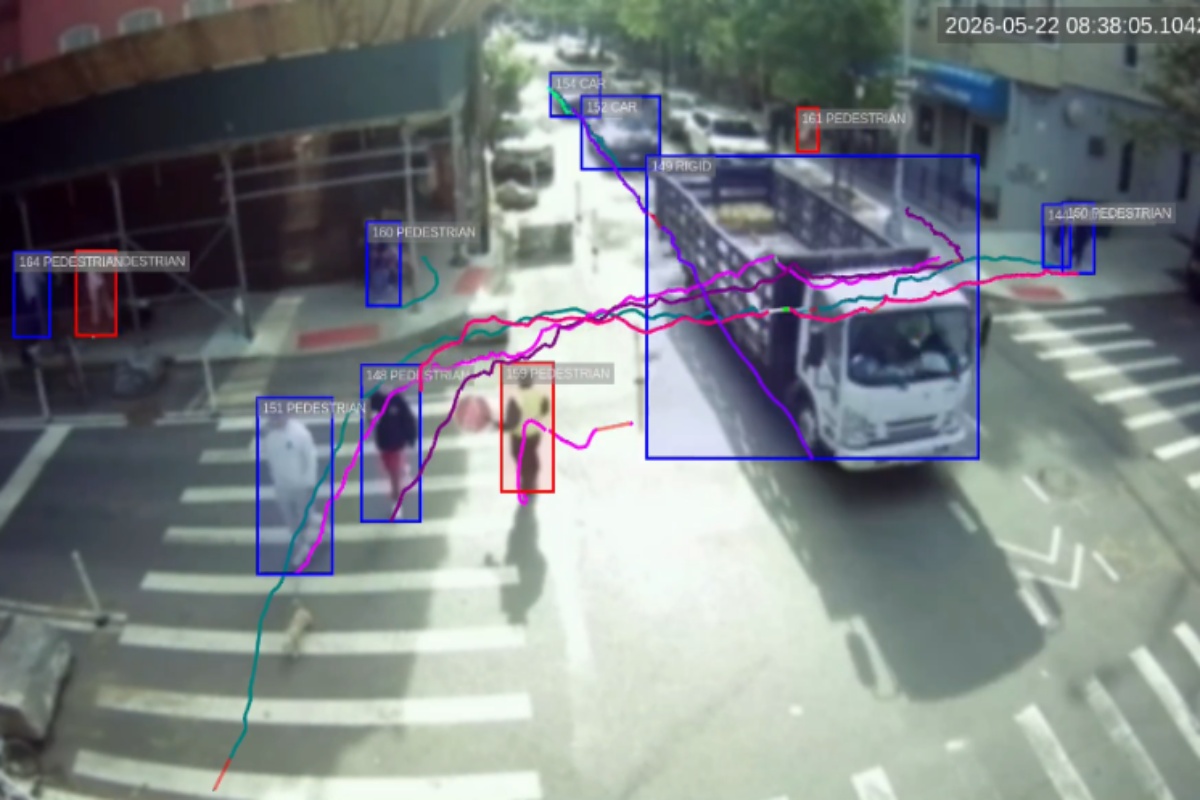
These blocks represent continuously monitored kerb segments where Automotus’s fixed-camera computer vision detects parking and loading zone occupancy in real time, feeding verified kerb availability data directly into Inrix’s platform.
The integration provides governments, automakers, logistics fleets, mapping platform companies, and mobile app developers with ground truth, block-level occupancy status, helping to reduce traffic congestion caused by drivers circling for parking while also reducing safety issues caused by commercial vehicles double parking when last-mile delivery operators can’t find a loading zone.
“The kerb is the most contested real estate in modern cities, and our customers – from delivery fleets to individual drivers to public agency parking programme managers, need ground-truth data to navigate it efficiently”
Unlike inferred or survey-based parking data, this approach relies on continuous, direct visual observation of kerb activity, giving cities and mobility providers a verified view of how kerb space is actually used in real time.
The expansion includes high-density urban centres such as Miami, Los Angeles, Atlanta and Philadelphia, marking a major step forward in the digitisation of the kerb and helping improve traffic for drivers.
“The kerb is the most contested real estate in modern cities, and our customers – from delivery fleets to individual drivers to public agency parking programme managers, need ground-truth data to navigate it efficiently,” said Ahmed Darrat, chief product officer at Inrix.
“By integrating Automotus’s computer vision data into our real-time occupancy engine, we aren’t just predicting where space might be available in the most highly contested loading zones; we are seeing it. Expanding this level of precision to 13 new markets is a testament to our commitment to providing the most comprehensive mobility intelligence for the world.”
“Our mission has always been to help cities reduce congestion and emissions by making the kerb more efficient, but true efficiency requires visibility”
According to Inrix, the integration adds detailed block-level coverage across a diverse set of metropolitan areas, significantly enhancing the parking experience. Automotus’s automated kerb management solutions are currently deployed in these cities to manage commercial loading zones and on-street parking.
This partnership unlocks the secondary value of that operational data, transforming it into a driver-facing utility that guides vehicles to open spots and streamlines urban flow. This integration with Inrix’s products expands the existing feature set which is already available for off-street parking.
“Our mission has always been to help cities reduce congestion and emissions by making the kerb more efficient, but true efficiency requires visibility,” said Jordan Justus, CEO of Automotus.
“Partnering with Inrix allows us to take the granular, real-time data our cameras generate and put it directly into the hands of the end users – drivers and fleets. This is how we close the loop on kerb management, turning enforcement and analytics infrastructure into a tool that actively improves the user experience and traffic for everyone.”
Why not try these links to see what our SmartCitiesWorld AI can tell you.
(Please note this is an experimental service)
How does Automotus’s computer vision improve real-time kerb occupancy data?What impact does real-time parking data have on reducing urban traffic congestion?How can governments utilize Inrix’s parking data to enhance city mobility?In what ways does block-level occupancy data benefit last-mile delivery operations?How does integrating Automotus data expand Inrix’s existing parking solutions?