




















The Cities of the Future Index by EasyPark uses publicly available data to find out which cities are best adopting new technological solutions to improve sustainability and liveability.
London, UK, has been named as “most intelligent and future-proof” city in a study which identifies the leading 50 smart cities globally based on how they are adopting new technologies to improve their sustainability and liveability.
The study released by tech parking company EasyPark began by assessing several thousand cities around the world and looked at those smart cities that are leading the way in implementing the use of new technologies.
Understanding that cities face different challenges depending on their population, the study was split into three size categories: metropolitan areas with more than three million inhabitants, between 600,000 and three million inhabitants, and between 50,000 and 600,000 inhabitants.
The result of the study reveals the top 50 highest ranking smart and future-proof cities worldwide in each category.
London ranks first in the largest city size category followed by US cities New York and San Francisco. Citizens in San Francisco were found to have adopted new technologies most widely of the cities in this size category.
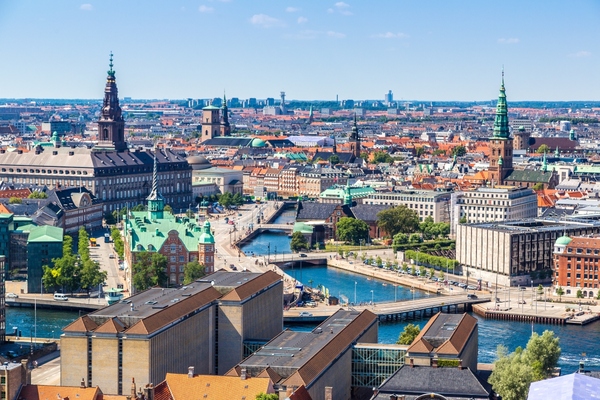
Danish capital Copenhagen ranked highest in the 600,000 to three million people group of cities followed by Stockholm, Sweden, and Oslo, Norway.
Lund, Sweden, ranks as the most intelligent and future-proof city with a population of between 50,000- and 600,000 people, followed by Stavanger, Norway, and Espoo, Finland.
“It is clear that some of the most technologically advanced cities around the world have already adopted innovative services and solutions to optimise traffic flow and ease mobility, to make the city more liveable”
To establish how technologically advanced and sustainable a city is, researchers retrieved data from sources like the World Bank, the Economist, the International Monetary Fund and the Lancet.
Four key areas formed the basis for evaluating how innovative each location. These were:
While metropolitan areas in Europe score well across the various size categories, the study shows that Scandinavian cities all rank particularly highly. Analysing urban areas with between 600,000- and three million inhabitants, half of the top 10 cities were in Scandinavia.
This was also the case for cities with between 50,000- and 600,000 inhabitants, where 90 per cent of the top 10 are also from these countries.
“Many governments are stepping up their responses to climate change, and it is clear that many solutions begin in major cities before filtering out to the rest of the country,” said Johan Birgersson, CEO of EasyPark Group.
“While cities continue to expand and envelope more of their surrounding areas, mobility is taking on an increasingly important role in people’s day to day lives. Many of the highest scoring cities score well for high electric car usage and low CO2 emissions rates.
He continued: “[Although] the world faces challenges relating to climate change, it is clear that some of the most technologically advanced cities around the world have already adopted innovative services and solutions to optimise traffic flow and ease mobility, to make the city more liveable.”
For the full rankings, go to Cities of the Future.
Why not try these links to see what our SmartCitiesWorld AI can tell you.
(Please note this is an experimental service)
How do smart cities optimize traffic flow using innovative technologies?What role do electric vehicles play in reducing urban CO2 emissions?How is digital life measured across populations and government sectors?Which green energy practices most effectively improve city sustainability?How do business tech infrastructures support urban mobility innovations?