














BUILD YOUR OWN
RESOURCE LIBRARY



Podcasts
Cities Thriving on Lighting, Episode 2 – Simplicity by design in smart lightingSponsored by Paradox Engineering
Cities Thriving on Lighting, Episode 1 – Lighting as the backbone of the smart citySponsored by Paradox Engineering
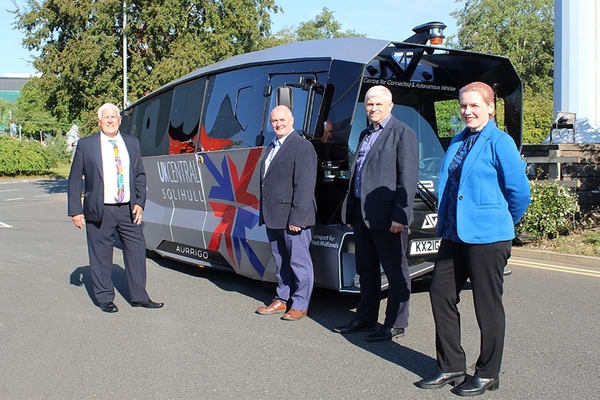
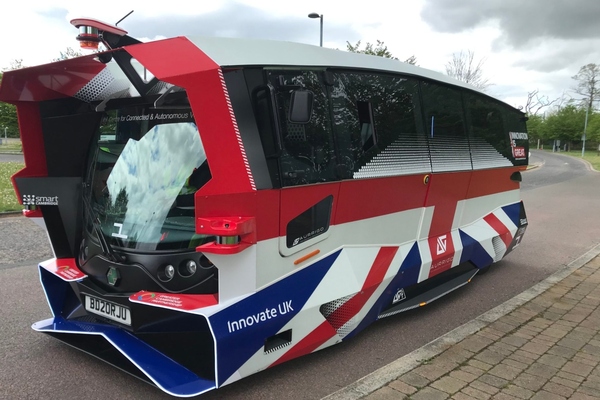
UK local authority invests in autonomous shuttle for passenger trials
Following the trials at the National Exhibition Centre in the West Midlands, the Aurrigo Auto-Shuttle may be used to support other first- and last-mile transport opportunities in and around Solihull.


Solihull Metropolitan Borough Council in the West Midlands has invested in a £250,000 autonomous electric shuttle for passenger trials at the UK’s National Exhibition Centre (NEC).
It is being supplied by Aurrigo, which designs, develops and builds a range of autonomous vehicles at its Advanced Engineering Centre in Coventry.
Autonomous operation
Carrying up to eight passengers, the vehicle uses a suite of sensors to understand its surroundings, interacting with live traffic with little or no operator input.
The testing at the NEC, backed by funds from the Greater Birmingham & Solihull Local Enterprise Partnership (GBSLEP), will see the shuttle operate autonomously along a one-mile pre-mapped section of Pendigo Way between Hall 5 and Resorts World and expects to cater for more than 1,000 people during a four-week period.
Once complete, the Auto-Shuttle could then be used to support other first- and last-mile transport opportunities in and around Solihull, including possibly being used at the Commonwealth Games 2022.
“Connected autonomous vehicle (CAV) technology has the potential to revolutionise the way we get around our towns, cities and rural areas as well as transport goods,” said councillor Ken Hawkins, environment and infrastructure portfolio, Solihull Council. “This trial is all about looking at how we can practically and safely start to incorporate autonomous vehicles into our future transport infrastructure.
“Already one of the best-connected destinations in the UK and Europe, the NEC is the perfect place to trial the Auto-Shuttle, and look at how it can be used to improve first- and last-mile passenger experience.
Read More
“Alongside the obvious environmental benefits, this is an excellent example of how smart technology could be used to cut congestion and improve public transport.
“The results of our trials will provide learning on future mobility services and highway infrastructure design across all future development sites within Solihull and the wider region, including integration with the HS2 Interchange and Hub.”
As well as the Auto-Shuttle, it has also developed the four-seater Auto-Pod and the autonomous Auto-Dolly for use in carrying luggage and cargo around airports.
“Trials will provide learning on future mobility services and highway infrastructure design across all future development sites within Solihull and the wider region, including integration with the HS2 Interchange and Hub”
“This is another important milestone in our journey, with the first Auto-Shuttle successfully sold to a local authority in the UK,” said Miles Garner, sales and marketing director, Aurrigo.
“Solihull Council is at the forefront of developing new transport solutions in a bid to leverage its unique location in the heart of the country and connected autonomous vehicles are seen as a major priority.”
He continued: “The trials at the NEC have generated significant interest and the overwhelming reaction from event-goers, workers and the general public has been very positive.”
Why not try these links to see what our SmartCitiesWorld AI can tell you.
(Please note this is an experimental service)
How does the Aurrigo Auto-Shuttle navigate autonomously in live traffic?What are the environmental benefits of using autonomous electric shuttles?How can autonomous shuttles improve first- and last-mile transport solutions?What role does sensor technology play in the Auto-Shuttle's operation?How might the Auto-Shuttle integrate with future infrastructure like HS2 Hub?Latest City Profile
SmartCitiesWorld Newsletters (Daily/Weekly)
You may also like these related articles...
BECOME A MEMBER
© 2026 SmartCitiesWorld
Smart Cities World Ltd, 37 Lombard Street, London, EC3V 9BQ