










 22 - 26 June 2026: Find out more




BUILD YOUR OWN
RESOURCE LIBRARY



Podcasts
Cities Thriving on Lighting, Episode 2 – Simplicity by design in smart lightingSponsored by Paradox Engineering
Cities Thriving on Lighting, Episode 1 – Lighting as the backbone of the smart citySponsored by Paradox Engineering
LA launches first Capital Infrastructure Programme
It will enable LA to plan, prioritise, and finance significant capital projects and maintenance programmes with greater accountability, clarity, and purpose.


 At a glance
Who: Los Angeles City Council.
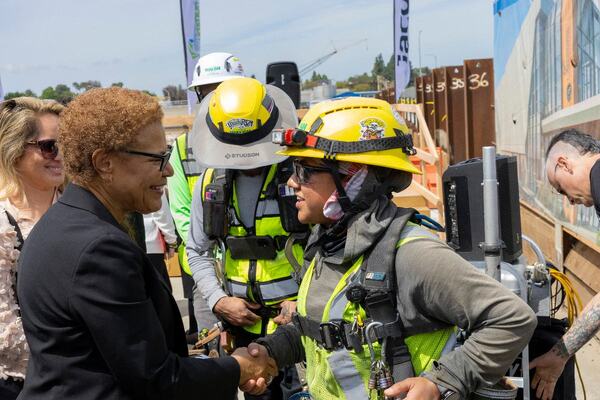
What: Mayor Karen Bass has released LA’s first Capital Infrastructure Programme, a comprehensive plan to build and maintain streets, parks, and other public spaces.
Why: LA has never had a Capital Infrastructure Programme. The programme aims to forge a new path, enabling LA to plan, prioritise, and finance both significant capital projects and ongoing maintenance programmes with greater accountability, clarity, and purpose.
When: The programme was released on 4 May 2026.
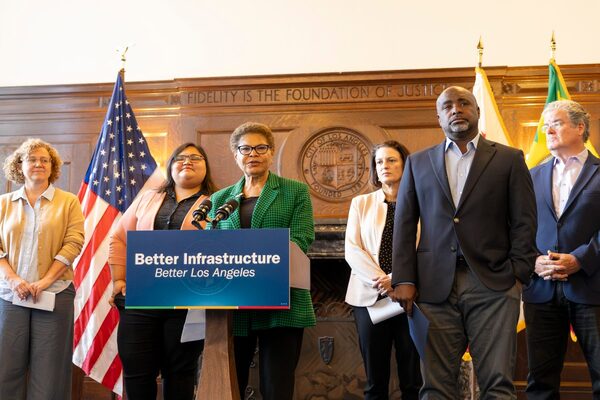
Mayor Karen Bass has released LA’s first Capital Infrastructure Programme, a comprehensive plan to build and maintain streets, parks, and other public spaces. Bass was joined by members of the City Council to issue the programme as part of her work to take on long-standing challenges that have held back the city.
The programme aims to forge a new path, enabling Los Angeles to plan, prioritise, and finance both significant capital projects and ongoing maintenance programmes with greater accountability, clarity, and purpose.
Data-based foundation
It will include 10 recommendations to achieve this vision by reforming City processes and the Charter. Greater transparency is also achieved by laying out a data-based foundation regarding how and where the City must address short and long-term infrastructure needs.
“I ran for mayor to break away from the City’s broken system that has left us with deteriorating streets and repair backlogs that piled up for years,” said Bass. “With my Capital Infrastructure Programme, we are forging a new path together to better design, maintain, and deliver – on time and budget – the infrastructure that Angelenos deserve.
“Los Angeles has a lot to fix, but fixing what is broken cannot mean rebuilding the same system we inherited. Much of our infrastructure was designed decades ago for a different Los Angeles, one built around cars first”
“We will finally responsibly plan for long-term improvements to our streets, sidewalks, parks, and every piece of infrastructure across Los Angeles.”
The City said the last three decades, the lack of a Capital Infrastructure Programme has led to systemic underfunding of infrastructure projects and maintenance of City facilities, infrastructure, and public spaces that Angelenos rely on every day. To tackle this long-standing issue, Bass issued Executive Directive 9 to streamline the delivery of infrastructure projects in a way to benefit Los Angeles for decades to come.
Read More
“Today, we start doing things differently,” said councilwoman Katy Yaroslavsky. “Los Angeles has a lot to fix, but fixing what is broken cannot mean rebuilding the same system we inherited. Much of our infrastructure was designed decades ago for a different Los Angeles, one built around cars first.
“Los Angeles has changed, and our infrastructure has to change with it, by repairing what has failed while building streets that are safer, cooler, more accessible, and better connected to the way people live now.”
Included in the programme are 29 Olympic and Paralympic legacy capital projects that will both prepare the City for 2028 and leave lasting investments for communities across LA. Sixteen of these capital projects are currently funded in Bass’ proposed FY 26-27 budget. Working alongside the City Council, the Mayor’s Office will seek to advance the reforms in the Capital Infrastructure Programme and begin the long-term funding and planning for the proposed capital projects.
For an overview of the programme, go to Capital Infrastructure Programme.
Why not try these links to see what our SmartCitiesWorld AI can tell you.
(Please note this is an experimental service)
How will the Capital Infrastructure Programme prioritise citywide capital projects?What metrics define the programme's data-based foundation for infrastructure needs?How does the programme allocate funding between new projects and maintenance?How will Olympic legacy projects create lasting community benefits after 2028?What procedural reforms to the Charter improve accountability and project delivery timelines?Energy & EnvironmentGovernance and CitizenLos AngelesmobilityParks and green spacePedestrianisationPlanningPolicy MakingRecreational spaceRoadTransport hubsurban space
Latest City Profile
SmartCitiesWorld Newsletters (Daily/Weekly)
You may also like these related articles...
BECOME A MEMBER
© 2026 SmartCitiesWorld
Smart Cities World Ltd, 37 Lombard Street, London, EC3V 9BQ