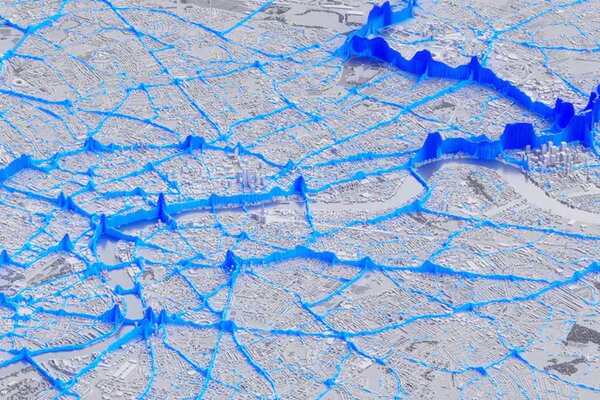


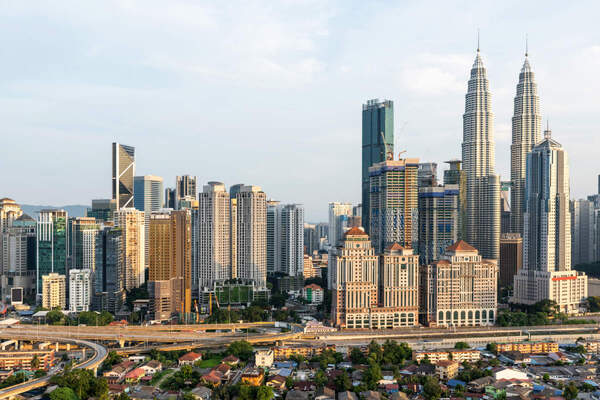






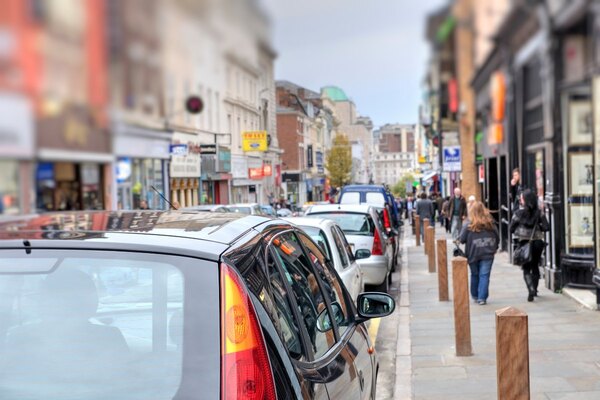

TomTom has analysed unified metrics in 500 cities across 62 countries to rank these cities based on their average travel time as well as congestion levels.
Mexico City is ranked the most congestion city in 2024 with the Thai capital Bangkok second and Davao City in the Philippines third, according to the 14th edition of its TomTom Traffic Index, which provides an overview of global traffic trends.
The location technology specialist’s Traffic Index features 500 cities across 62 countries on six continents. It uses unified metrics to rank these cities based on their average travel time as well as congestion levels. It gives city-by-city information that can help urban planners and policymakers tackle traffic-related challenges and make informed decisions.
In 2024, 379 cities out of 500 (76 per cent) saw their overall average speed decrease compared to 2023. Despite this decrease, average speeds under optimal conditions, characterised by free-flowing traffic, remained stable and even showed slight improvements in most cities. This suggests that the observed deterioration in average speeds is primarily driven by dynamic factors affecting congestion levels rather than changes in road infrastructure.
The differences in travel times (or average speeds) across cities stem from a combination of static and dynamic factors that significantly influence traffic flow and overall driving conditions.
“The combination of population and economic growth is putting significant strain on our transportation networks”
Static factors are fixed aspects of a city’s infrastructure and planning that influence travel times. The design of road networks, including highways, arterial roads, and residential streets, impacts traffic flow. Narrow streets, one-way systems, and complex intersections can slow movement, while wider, multi-lane roads support smoother flow. Speed limits, often set for safety, and high-density areas with frequent stops or pedestrian zones also affect driving speeds. Traffic light synchronisation, roundabouts, and stop signs further shape navigation efficiency.
Complementing these static factors are dynamic factors, which are ever-evolving conditions that impact traffic flow on a daily basis. Traffic congestion during peak hours or seasonal traffic surges leads to higher vehicle density, causing delays. Unexpected obstructions, such as car accidents, construction projects and road closures can create bottlenecks, disrupt normal traffic patterns, and lead to rerouted traffic. Additionally, rain, snow, or fog can reduce visibility and traction, forcing drivers to adapt their driving styles. The highest levels of congestion are often reached on days when weather conditions are particularly bad.
In 2024, Barranquilla in Colombia was the city with the lowest average speed. The average speed over the year is 10.3 mph, which means that it takes almost 35 minutes on average to complete a simple six-mile journey. Three Indian cities feature in the top five list of slowest cities. London, the first European city in the ranking, is in fifth position, with an average speed of 11.2 mph in the city. Yet the English capital is only 150th in the congestion ranking, which measures only the dynamic factors of slow speed.
The level of congestion only takes into account the dynamic factors that lower the average speed in a city. With a congestion rate of 52 per cent, Mexico City is the city in which traffic has the greatest impact on the deterioration of journey times compared with ideal traffic conditions. This means that on all routes surveyed throughout the year on the entire road network, journey times are 52 per cent longer than those recorded in Mexico City when traffic was free-flowing.
Because of rush-hour traffic in Lima, Peru, and Dublin, Ireland, motorists in these two cities lost an average of 150 hours in traffic jams (on a typical 10km journey, made every working day in the morning and evening) – almost a week’s worth over the year.
“The combination of population and economic growth is putting significant strain on our transportation networks,” said Ralf-Peter Schäfer, vice president of traffic, TomTom.
“Our traffic data allows urban planners to understand these factors, for them to design cities that balance mobility, safety, and accessibility”
“Outdated infrastructure and inefficient road planning fail to keep pace with demand. Additionally, the surge in e-commerce has led to a rise in freight traffic, further complicating the situation. Without a shift towards more regulation and sustainable transportation options, we risk worsening congestion that impacts everyone in our cities.”
Schäfer added: “Urban mobility is the result of the interplay between static factors that determine the potential for efficient travel, and dynamic factors that create variations and disruptions experienced by road users. Our traffic data allows urban planners to understand these factors, for them to design cities that balance mobility, safety, and accessibility.”
The TomTom Traffic Index utilises floating car data collected from various sources. For this new edition, TomTom analysed a representative sample covering 458 billion miles driven in 2024, allowing to track and demonstrate how traffic patterns have changed in cities worldwide.
In the USA, TomTom’s coverage enables its data experts to estimate total traffic volumes. This year’s Traffic Index provides an overview of total trip mileage across the country, broken down by city. These insights allow traffic analysts to quantify travel demand, calculate time lost to congestion, and assess CO2 emissions in urban areas.
For the latest edition of the Traffic Index, TomTom has revised its method for defining city centers and metropolitan areas to better reflect actual traffic conditions and enable standardized comparisons between cities. TomTom maps all traffic flows on a hexagonal grid system to identify interconnected areas within the city; the “city centre” is defined as the cluster of densest hexagons that account for 20 per cent of all trips, while the “metropolitan area” encompasses all hexagons representing 80 per cent of all trips within the city.
The full report can be accessed at www.tomtom.com/TrafficIndex.
Why not try these links to see what our SmartCitiesWorld AI can tell you.
(Please note this is an experimental service)
How do static factors influence average travel speeds in urban areas?What dynamic factors most significantly increase congestion during peak hours?How can urban planners use traffic data to improve city mobility?What role does e-commerce play in increasing urban freight traffic?How does TomTom define city centers for accurate traffic analysis?