


BUILD YOUR OWN
RESOURCE LIBRARY



Opinions

Transforming indoor public safety with smart sensor networksSponsored by Motorola Solutions

How AI will define cities and mobility in 2026Sponsored by ST Engineering
Barcelona Roundtables: City AI in action: building safe, resilient, personalised and thriving cities - 4/5/6 November 2025

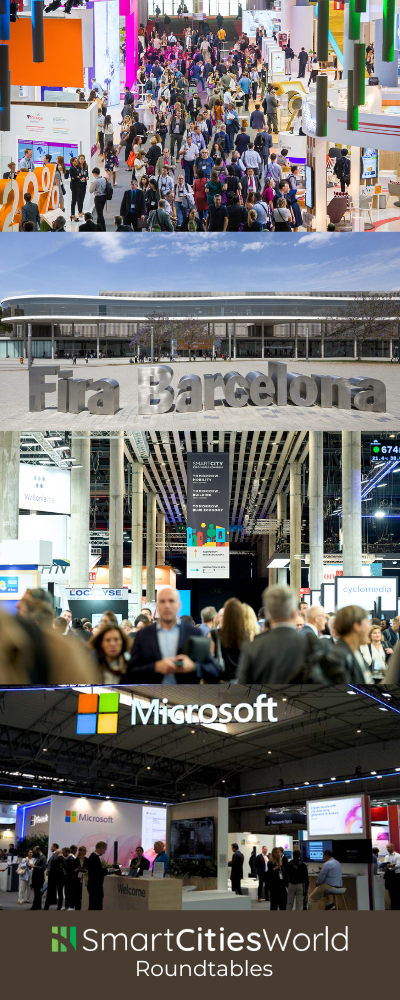
City AI in action: building safe, resilient, personalised and thriving cities
Cities around the world are at a pivotal moment. As urban populations grow and infrastructure ages, local governments face mounting pressure to deliver services that are not only efficient but also equitable, resilient, and responsive to the needs of all residents. At the same time, rapid advances in artificial intelligence (AI) and digital technologies are opening new possibilities for how cities plan, operate, and evolve.
While the potential is vast, the path forward is complex. Adoption of AI in urban settings remains uneven, with challenges around trust, governance, interoperability, and capacity. Yet cities at the forefront are already demonstrating how AI can improve service personalisation, enhance infrastructure resilience, strengthen public safety, and support sustainable economic growth.
In partnership with Microsoft, SmartCitiesWorld is convening a series of four roundtables at Smart City Expo World Congress 2025 to explore how city leaders are navigating this landscape. These invite-only sessions will offer a platform for candid, peer-to-peer exchange on what’s working, what’s not, and what’s needed to move from pilot projects to city-wide transformation.
Each roundtable will focus on a critical theme shaping the future of urban life:
• Delivering personalised city services for residents
• Operating resilient urban infrastructure
• Transforming public safety and emergency response for cities
• Planning and operating liveable, economically thriving cities
Together, these conversations aim to identify practical strategies, cross-sector partnerships, and enabling conditions that can help cities harness AI not just as a technology, but as a catalyst for more inclusive, responsive, and future-ready urban governance.
If you are interested in participating in one or more of the roundtables, take a look below at some of the specifics of the discussions, and register your interest in those most relevant to your situation and expertise. The roundtables are reserved for those who represent cities and local and regional governments – all registrations will be reviewed to ensure relevance and you will be informed whether your registration has been successful via email.
Registration closed
Thank you to our sponsors, Microsoft, for supporting this event.
Agenda
Tuesday 4 November 2025
Delivering personalised city services for residents
13.30 – 14.30
Wednesday 5 November 2025
Planning and operating liveable, economically thriving cities
11.30 – 12.30
Wednesday 5 November 2025
Operating resilient and sustainable urban infrastructure
14.00 – 15.00
Thursday 6 November 2025
Transforming public safety and emergency response for cities
10.00 – 11.00
Booth
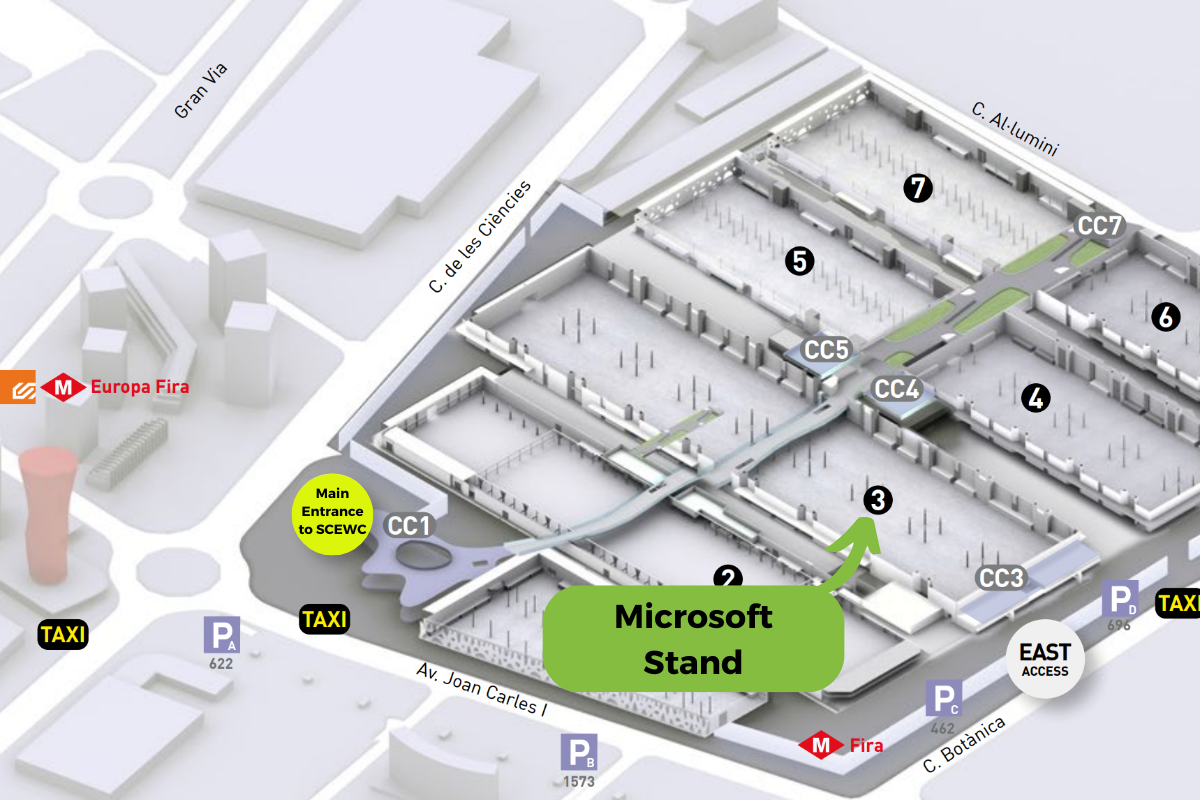
Hall 3, Level 0, Street D, Stand 51
Venue
Fira Barcelona Gran Via (Smart City Expo World Congress), Av. Joan Carles I, 64 – Hall 2
08908 L’Hospitalet de Llobregat (Barcelona)

Roundtable Topic 1: Delivering personalised city services for residents
Scene Setter: Andy Blore, Directorate Head of ICT, City of Manchester
Cities are under pressure to deliver services that are efficient, equitable and accessible. AI offers capabilities to personalise services, reduce backlogs by supporting case management transformation, and anticipate citizen needs to improve civic experience, but adoption is uneven and challenges around trust, inclusion, and capacity remain. This roundtable will provide an opportunity for city leaders to share where they are on their journey toward personalised services, what they have learned about citizen engagement and equity, and what support they need to move from pilots to broader deployment.
- Where is your city currently in using AI to personalise citizen services – are you still exploring, piloting, or scaling?
- Which services have been the easiest to personalise with AI so far, and which have proven most difficult?
- What lessons have you learned about building citizen trust while introducing AI-enabled service tools?
- How have you addressed equity and inclusion challenges, and what barriers remain?
- What internal skills or external partnerships have been most important in moving this work forward?
- Looking ahead, what additional support would help you take the next step in scaling personalised services?

Roundtable Topic 2: Planning and operating liveable, economically thriving cities
Scene Setter: Teppo Rantanen, Executive Director of Economic Policy, Competitiveness and Innovation, City of Tampere
Thriving cities are those that go beyond efficiency to create places where residents can live well, businesses can innovate, and communities can prosper sustainably. AI and digital platforms can help cities plan smarter, simulate future scenarios, and operate more cohesively across departments. However, many governments are still navigating issues of scale, governance, and public engagement. This roundtable will provide space for city leaders to discuss how they are using AI to shape thriving urban environments, share insights on the organisational and cultural shifts required, and identify the kinds of support and partnerships that can accelerate their progress.
- What AI or digital tools is your city already using to inform planning or operations?
- Where have you seen the biggest benefits so far – efficiency, citizen engagement, sustainability, or resilience?
- What obstacles have you encountered in scaling these tools across departments or agencies?
- How are you involving citizens or community groups in shaping your city’s AI-enabled plans?
- What skills, governance structures, or cultural shifts inside city hall have been necessary to progress?
- What support – from partners, peers, or policy – would help you move closer to your vision of a thriving city?

Roundtable Topic 3: Operating resilient urban infrastructure
Scene Setter: James Alberque, GIS and Emerging Technology Manager, City of Raleigh, N.C
Cities must operate sustainably and resiliently amid climate change and aging infrastructure. Cities can plan for extreme weather impacts, connect and manage infrastructure and put into place smarter environmental governance and regulatory oversight. AI and digital tools can aid predictive maintenance, resource optimisation, and planning, but adoption varies widely. This roundtable will let participants share progress, address challenges in integration and governance, and identify key partnerships and resources for effective scaling.
- What kinds of infrastructure systems in your city are already using AI for monitoring or predictive maintenance?
- How has AI adoption changed the way you plan or budget for infrastructure upkeep?
- What challenges have you faced in integrating data across utilities, transport, and other assets?
- Have you seen measurable improvements in sustainability (energy savings, emissions reduction, resource efficiency) from AI so far?
- What governance or procurement hurdles are slowing down progress in this area?
- What kinds of partnerships, tools, or funding support would enable you to scale AI-enabled infrastructure management more quickly?

Roundtable Topic 4: Transforming public safety and emergency response for cities
Scene setter: TBD
Public safety is a core city responsibility. AI is transforming emergency response through improved forecasting, real-time situational awareness, and modernised emergency operations centres, but challenges with interoperability, privacy, and trust remain. This roundtable lets cities discuss current uses of AI in safety, review outcomes, and identify needed capabilities and partnerships for safer communities.
- How is your city currently applying AI to emergency response – forecasting risks, dispatch, coordination, or communication?
- What has worked well in integrating AI into existing safety systems, and what has been harder than expected?
- How are you managing data sharing between different agencies, and what challenges remain?
- What feedback have you received from first responders or citizens on AI-enabled safety tools?
- How are you balancing efficiency gains with maintaining privacy and public trust?
- What additional capabilities or resources would help you strengthen AI-supported emergency management?
Scene Setter

Name: James Alberque
Title: GIS and Emerging Technology Manager
Organisation: City of Raleigh
Biography:
Jim Alberque is the GIS and Emerging Technology Manager and leads a talented teams of web developers and technologists at the City of Raleigh. He has been with the city for 6 years in various technology management roles. Jim’s team deliver dozens of digital solutions for internal and public use.
Scene Setter

Name: Teppo Rantanen
Title: Executive Director of Economic Policy, Competitiveness and Innovation
Organisation: City of Tampere
Biography:
Teppo Rantanen is focusing on industries such as semiconductors, defense, energy and experience economy, which shape the strategic economic policy of the city. He leads Tampere through collaboration in extensive international networks towards a human-centric citiverse. His approach to leading the Citiverse involves leveraging new technologies such as digital twins, XR technologies, data, AI, and connectivity to create a seamless digital layer over the physical city environment, benefiting both people and businesses.
He is also a co-chair of the UN Virtual Worlds Initiative on the Citiverse. From 2002 to 2014, Teppo served as Deloitte Finland’s Chief Executive Officer and from 2014 to 2016 in London as a member of Global Technology, Media and Telecommunications Leadership Team. He currently serves on the board of Business Finland, which helps Finnish companies grow and succeed globally.
Scene Setter

Name: Andy Blore
Title: Directorate Head of ICT
Organisation: Manchester City Council
Scene Setter

Name: Brooks Patrick
Title: Global Business Development Manager
Organisation: Esri
Biography:
Brooks Patrick is the Global Business Development Manager for Smart Cities at Esri, focusing on planning and urban development. He helps customers and partners across local government and private sectors in this role. Patrick has a background in urban planning and development, with expertise in using digital twin technology and GIS for city planning and development projects
Organisations registered to attend included
- City of Rzeszów
- London Legacy Development Corporation
- City of Espoo
- Sunderland City Council
- Bloomberg Philanthropies What Works Cities at Results for America
- Forum Virium Helsinki
- City of Roma
- Instituto Metropolitano de Planeación de Tijuana
- Seoul Metropolitan Government
- Digitaal Vlaanderen
- Wirtschaftsförderung Dortmund
- London Borough of Hammersmith & Fulham Council
- Cork City Council
- City of Tallinn
- Manchester City Council
- Transport for West Midlands
- Secretary of State Rio de Janeiro
- CCI Budapest
- City of Stockholm
- City of Malmö
- Gdynia IT Center
- City of Cape Town
- State of São Paulo
- Ministry of Regional Development, Czechia
- World Smart Sustainable Cities Organization (WeGO)
- Dublin City Council
- JETRO - The Japan External Trade Organization
- Kyiv City Administration
- City of Tampere
- City of Kosice
- NEXUS Leeds
- County Government of Mombasa
- Municipality of Salvador
- VTT Technical Research Centre of Finland Ltd.
- West of England Combined Authority
- TETO Brasil
- Glasgow City Council
- Ministry of Digital Development and Information, Singapore
- Government of Goias
- Malaysia Digital Economy Corporation
- Cascais City Council
- Comune di Ferrara
- Invest Bristol and Bath, West of England Combined Authority
- Umeå Kommun
- City of Montreal
Job titles of registered attendees included
- Director of Regional & Territorial Development
- CIO
- Head of Dept. of the City Brand, Economic Cooperation and Tourism
- Deputy Mayor for Economic Development and Innovation
- Head of Urban Policy and Strategies Unit
- Chief Sustainability Officer
- Secretary of State
- Director
- Smart Cities Lead
- Chief Information Security Officer
- Chamber Counsellor
- Assistant Vice President of Corporate Development, Partnerships and International
- Chief Digital Officer
- Assistant Director Infrastructure & Environment
- Digital Strategy Lead - Growth and Development Directorate
- Director of Institutional Relations and Advocacy
- Former Mayor
- Director of Smart Cities
- Chief Operations & Command Center
- Head of EU R&I collaboration
- Director of Inclusive Economy
- Head, AI Cities
- Smart City Director
- Managing Director
- Honorary Mayor
- Head of Department (Info Comm Technology)
- Director of Facilities Management
- Program Director, House of Emerging Technologies
- VP Europe
- Strategic Digital Manager
- Business Development Executive
- Account Manager for Local Authorities
- Innovation Project Manager
- Senior Project Development Manager
- Strategic Transport Planner
- Head of Innovation
- Project Leader
- Head of Strategic Development Unit
- Head of the International Cooperation Office
- Digital and Data Business Partner
- Innovation & Smart City Advisor
- GIS Coordinator
- Digital Officer
- Councillor
Roundtable Discussions are sponsored by

Why not try these links to see what our SmartCitiesWorld AI can tell you.
(Please note this is an experimental service)
How can AI improve personalised city services while ensuring equity and inclusion?What AI methods enhance predictive maintenance for resilient urban infrastructure?How does AI integration optimize emergency response coordination and resource allocation?Which AI tools effectively support sustainable economic growth in urban planning?What governance models best facilitate city-wide AI adoption and data privacy?BECOME A MEMBER
© 2026 SmartCitiesWorld
Smart Cities World Ltd, 37 Lombard Street, London, EC3V 9BQ