
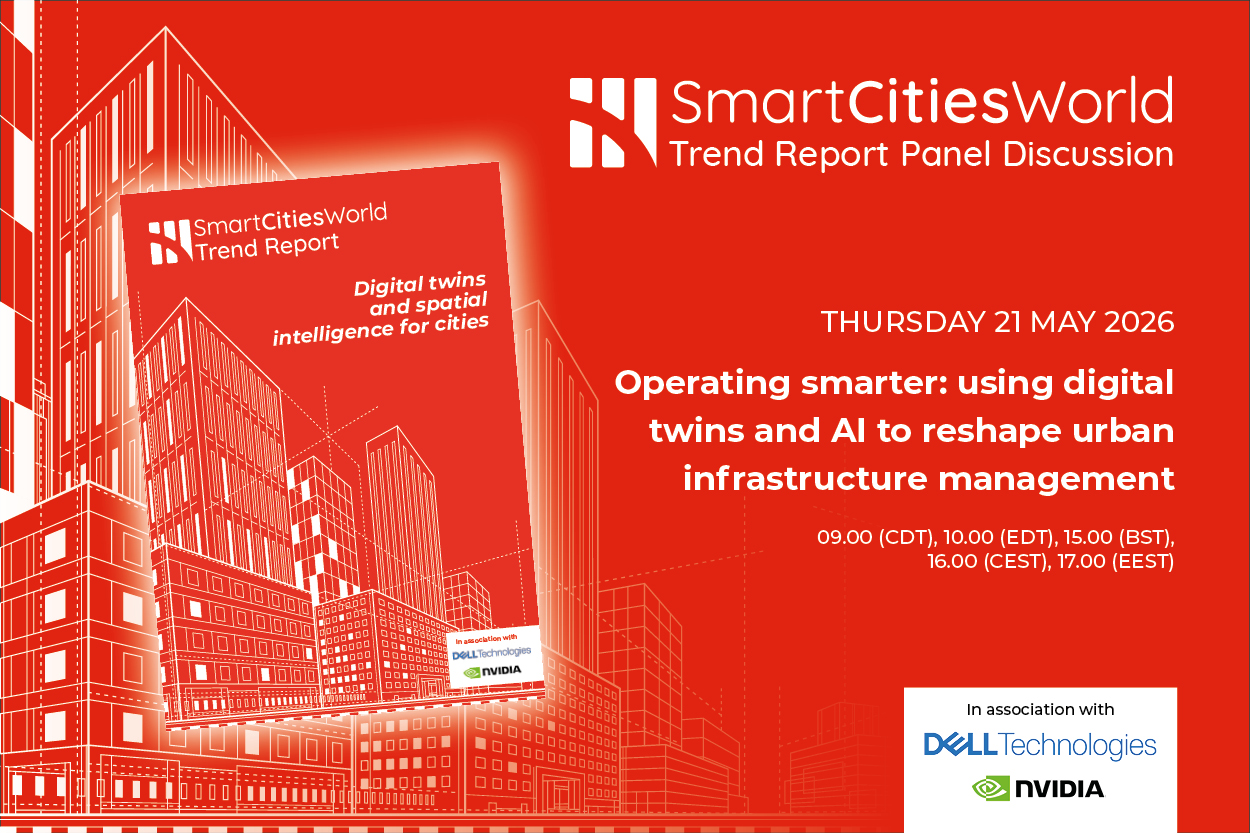












Discover how AI-powered digital twins are transforming urban infrastructure and how these innovations can improve efficiency, resilience, and sustainability.
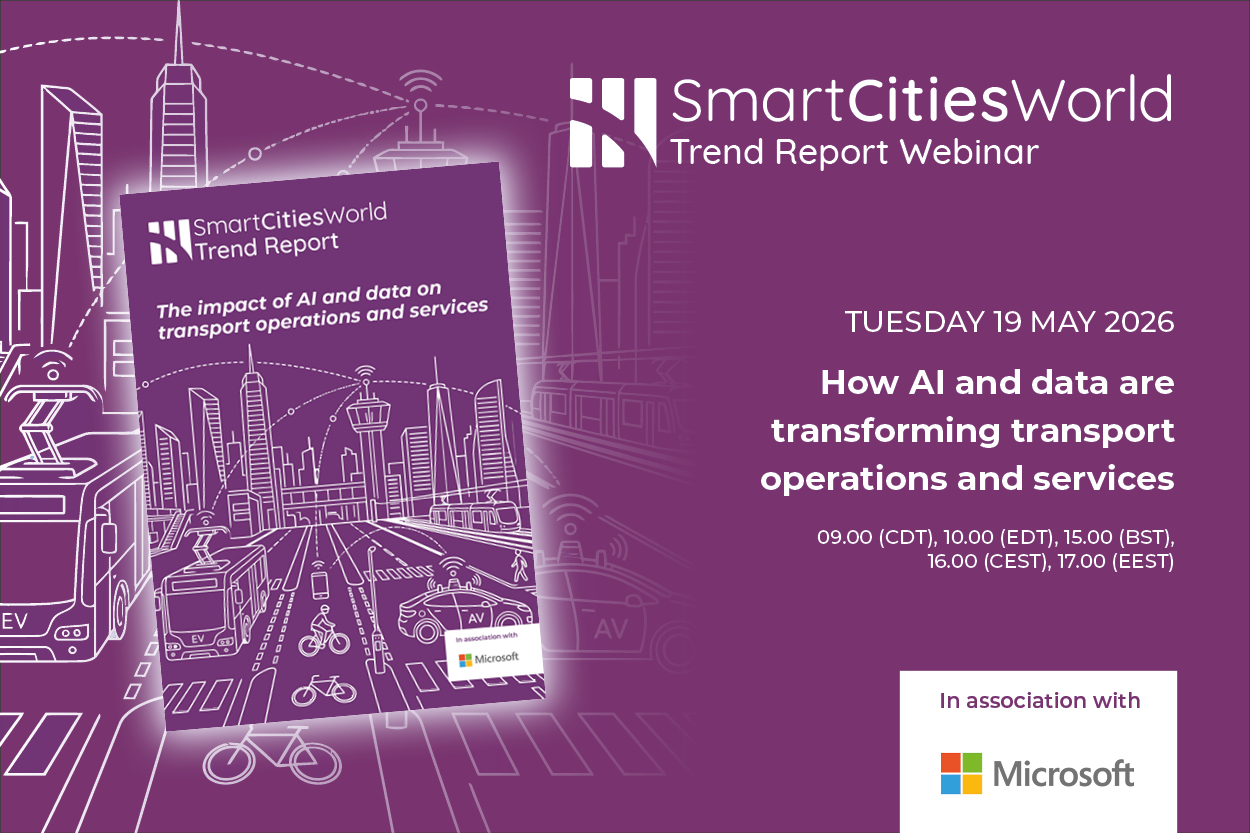
Explore how data and AI are being used in urban transport networks to support planning, day-to-day operations, and improve outcomes for communities and passengers.
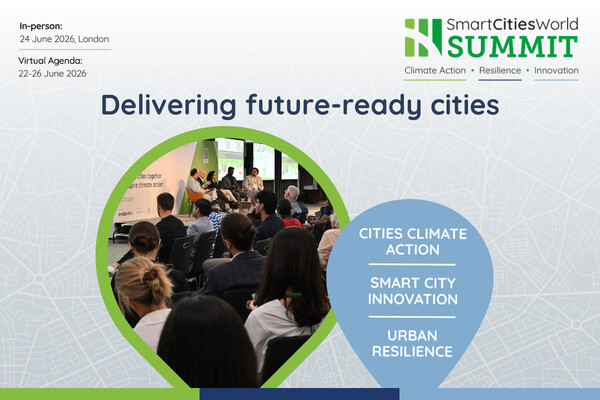
As cities confront the combined pressures of climate change, infrastructure resilience and digital transformation, the SmartCitiesWorld Summit 2026 will bring together urban leaders and partners during London Climate Action Week to explore how these agendas intersect – and how cities can translate strategy into practical action.
Find out how Sunderland is repositioning itself as a leading smart city – using digital infrastructure and low-carbon innovation to build a resilient, future-focused economy in the latest SmartCitiesWorld City Profile.
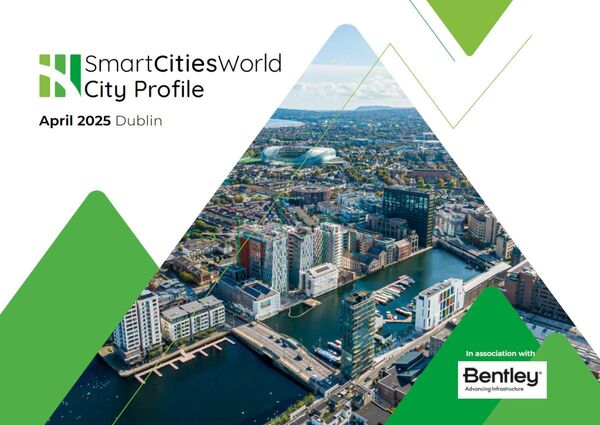
Find out how Dublin is innovating to improve experiences and services for its communities in the latest SmartCitiesWorld City Profile, including digital twin projects, traffic reduction, and economic growth.
Tune into the SmartCitiesWorld podcast to understand the world of sovereign AI for cities, featuring PNY Technologies’ Youssef Nadiri as our expert guest.
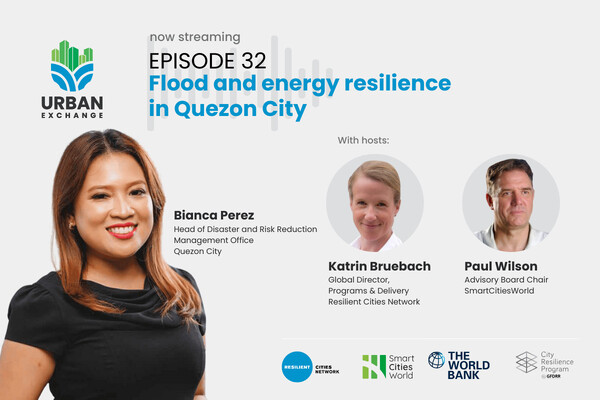
Tune in for the latest Urban Exchange where we get a first-hand account of city resilience measures from Quezon City following unexpected extreme rainfall.
How smart sensor networks can help improve indoor safety by detecting risks early, improving situational awareness and supporting healthier, more secure and sustainable buildings.
Gareth Tang, President of Urban Solutions at ST Engineering, explains how urban AI applications are set to evolve, detailing projects where AI is already making significant impact.
The strategy will help Los Angeles map out challenges identified by local, diverse stakeholders surrounding public airspace and property rights – and implement solutions to these issues.
The forum has focused on FRT for passengers boarding aircraft and the toolkit’s questionnaire has been tested by Tokyo-Narita Airport, which will encourage other airports to adopt this framework.
The World Economic Forum has chosen the cities to pioneer a global policy roadmap developed by its G20 Smart Cities Alliance for the ethical and responsible use of data and technology.
Key insights highlighted in the report include blockchain technology’s fragmentation both worldwide and within jurisdictions, overlaps, gaps, as well as conflicts in standard-setting.
Unprecedented disruptions from the coronavirus pandemic risks cancelling out recent progress unless there is urgent action at national, regional and global levels.
Scale 360 aims to harness the potential of technology innovation and smart policy to fast-track the circular economy through nationally led challenges.
Dubai Future Council for Blockchain event brought together various government departments and private companies with a vested interest in smart city technologies.
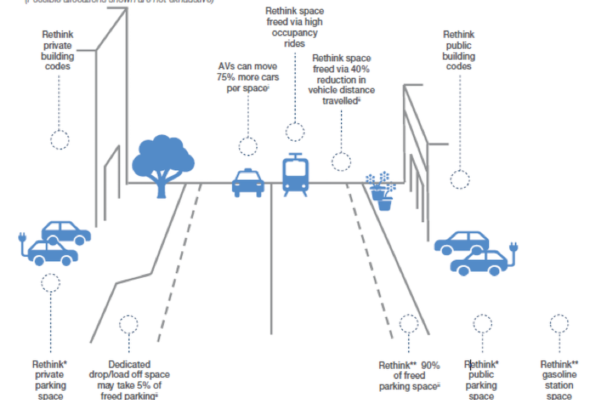
The Shared, Electric and Automated Mobility Governance Framework is a set of sustainable mobility guidelines aimed at helping cities reduce congestion and pollution.
The World Economic Forum and Accenture have designed a framework and visual roadmap with key questions to ask when building a blockchain business case.
The alliance will unite municipal, regional and national governments as well as private sector partnerships and citizens around a shared set of guiding principles on tech governance.
The Global Fourth Industrial Revolution councils will work together to develop policy guidance and address governance gaps in areas such as AI, IoT and blockchain.
Cyber-security experts at Davos hope those democracies that have not signed the Paris Call for Trust and Security in Cyberspace will join the multi-stakeholder initiative
A coalition of G20 cities will help ensure that global smart city efforts are built upon a common set of human-centred principles and shared policy frameworks
At its annual meeting in Davos, WEF is launching an initiative aimed at helping the civil society prepare for and respond to the Fourth Industrial Revolution