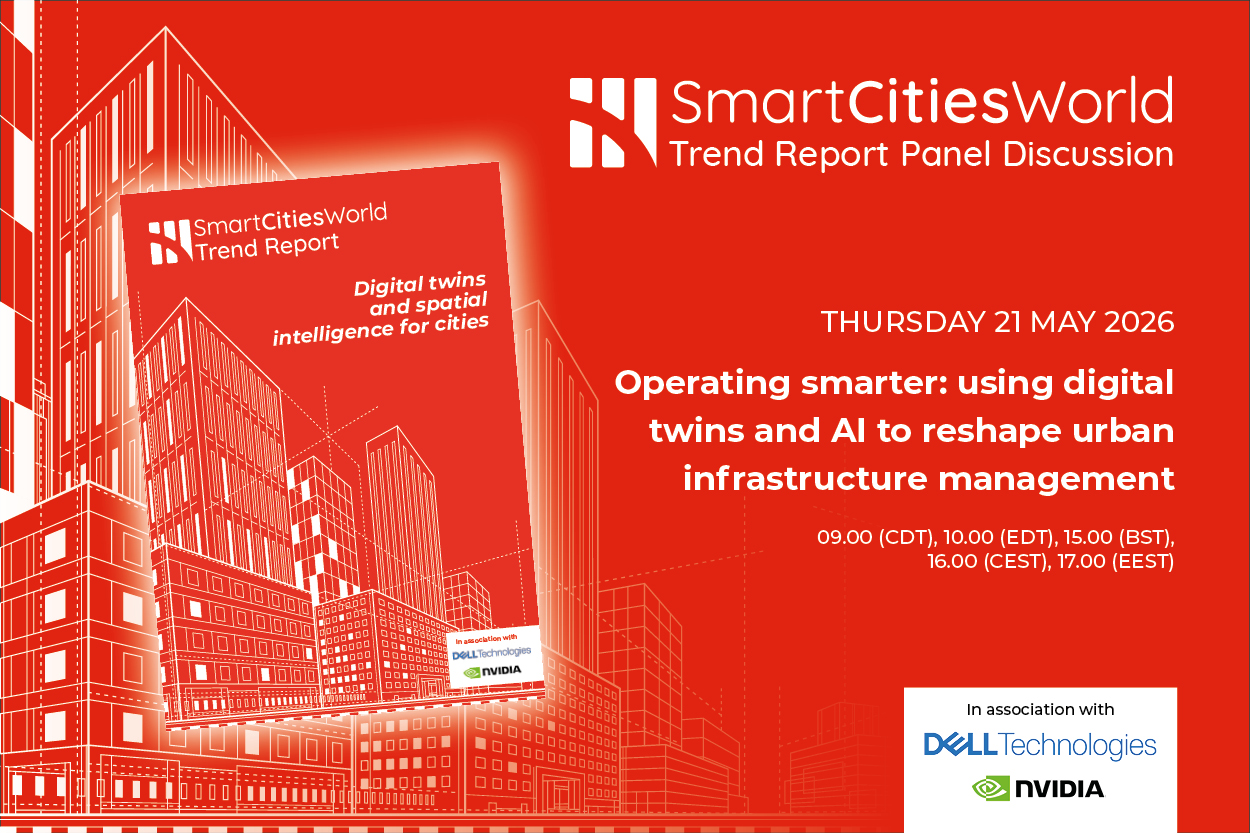



Discover how AI-powered digital twins are transforming urban infrastructure and how these innovations can improve efficiency, resilience, and sustainability.
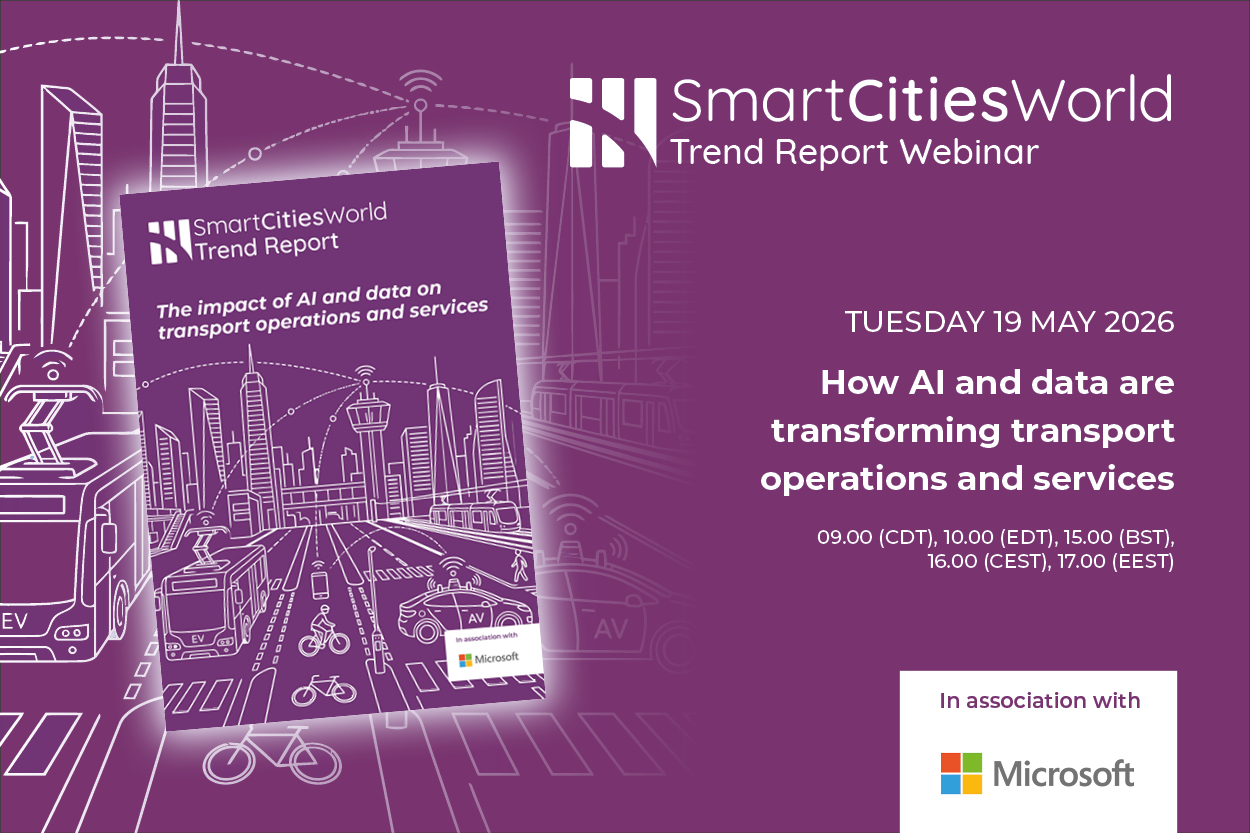
Explore how data and AI are being used in urban transport networks to support planning, day-to-day operations, and improve outcomes for communities and passengers.
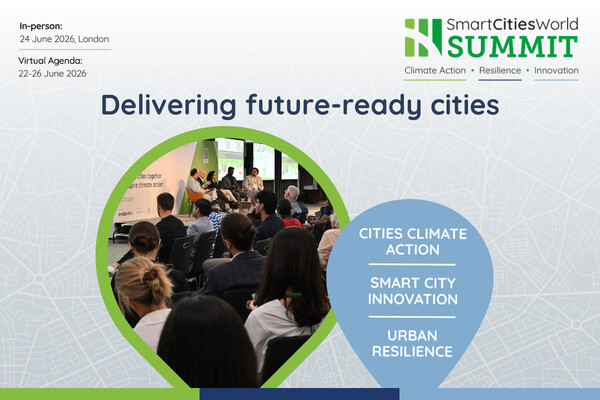
As cities confront the combined pressures of climate change, infrastructure resilience and digital transformation, the SmartCitiesWorld Summit 2026 will bring together urban leaders and partners during London Climate Action Week to explore how these agendas intersect – and how cities can translate strategy into practical action.
Find out how Sunderland is repositioning itself as a leading smart city – using digital infrastructure and low-carbon innovation to build a resilient, future-focused economy in the latest SmartCitiesWorld City Profile.
Find out how Dublin is innovating to improve experiences and services for its communities in the latest SmartCitiesWorld City Profile, including digital twin projects, traffic reduction, and economic growth.
Tune into the SmartCitiesWorld podcast to understand the world of sovereign AI for cities, featuring PNY Technologies’ Youssef Nadiri as our expert guest.
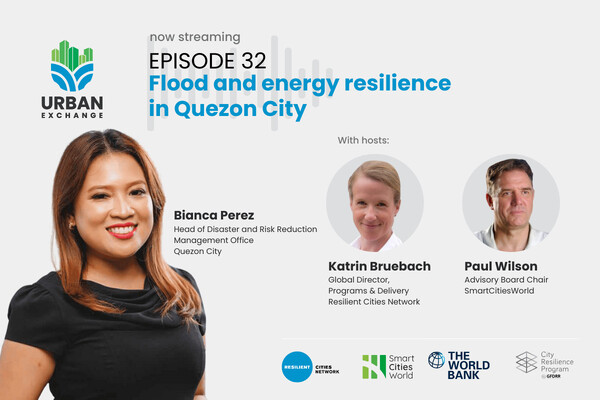
Tune in for the latest Urban Exchange where we get a first-hand account of city resilience measures from Quezon City following unexpected extreme rainfall.
How smart sensor networks can help improve indoor safety by detecting risks early, improving situational awareness and supporting healthier, more secure and sustainable buildings.
Gareth Tang, President of Urban Solutions at ST Engineering, explains how urban AI applications are set to evolve, detailing projects where AI is already making significant impact.
Centre is expected to serve as a hub for both domestic construction and IT industries entering Vietnam and for smart city cooperation between the two countries.
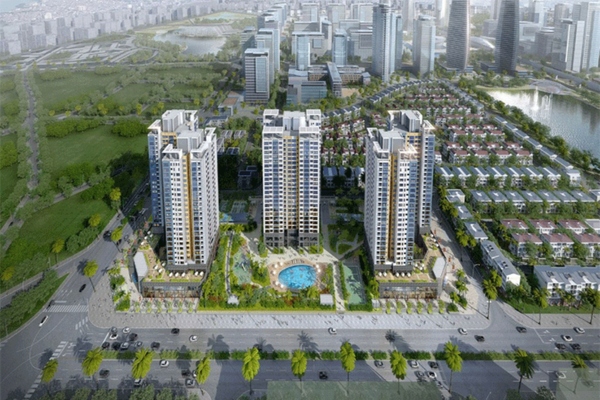
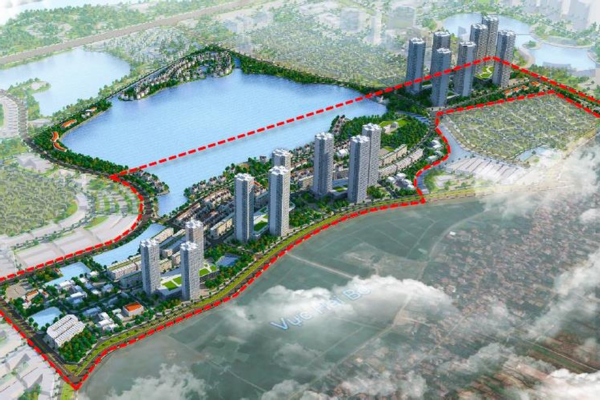
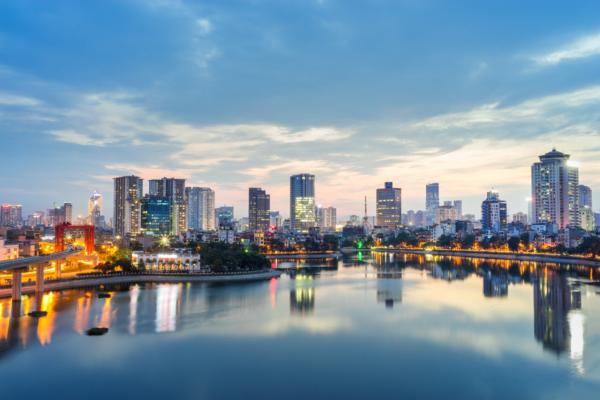
Daewoo E&C Vina, Bespin Global and the accelerator SparkLabs Korea plan to build and operate a smart city-integrated management platform for the Starlake City project in Hanoi.
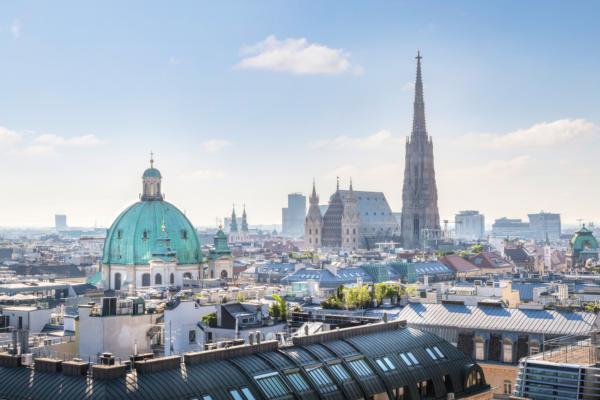
Austrian capital retains its position in the Economist Intelligence Unit’s index which assigns cities a rating of relative comfort for over 30 qualitative and quantitative factors.
The custom-built solutions aims to reduce meeting times by 30 per cent and remove the use of paper by the end of the year, except for confidential documents.