













Discover how AI-powered digital twins are transforming urban infrastructure and how these innovations can improve efficiency, resilience, and sustainability.
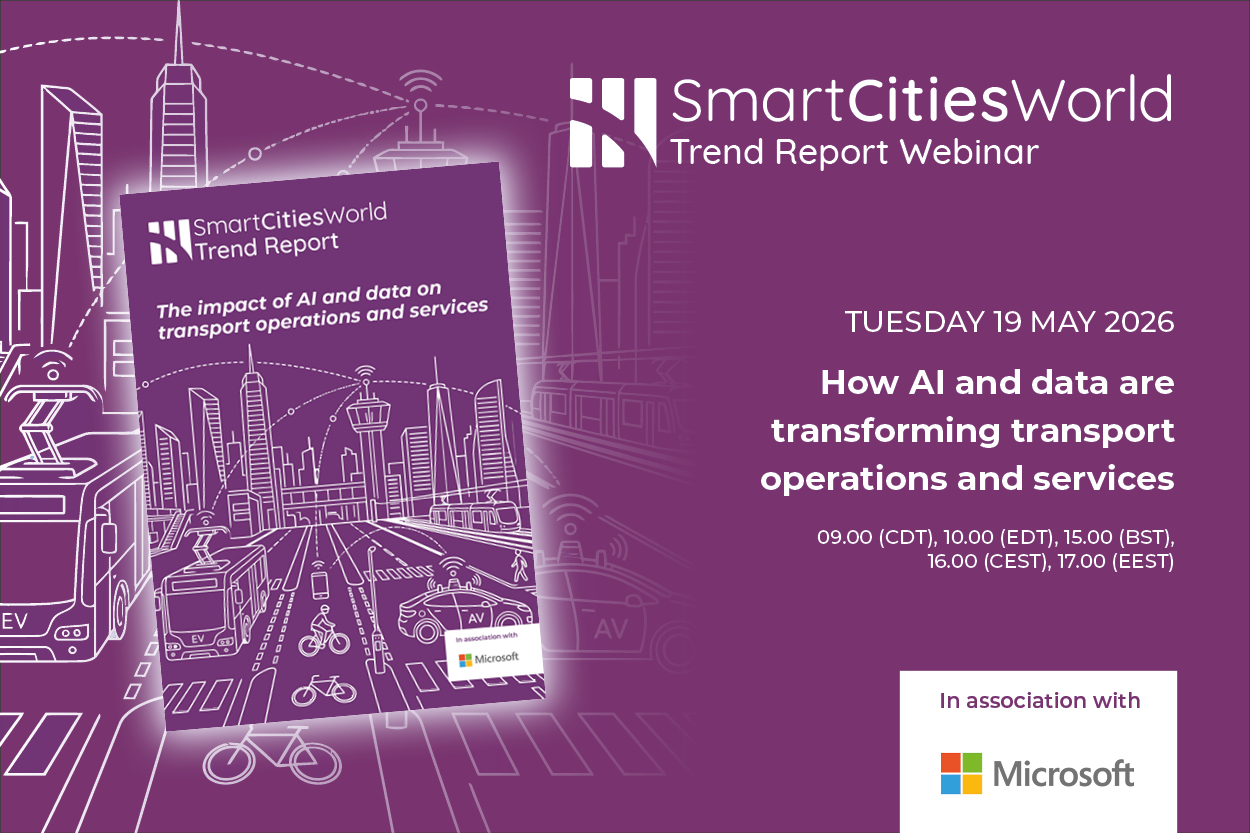
Explore how data and AI is being used in urban transport networks to support planning, day-to-day operations, and improve outcomes for communities and passengers.
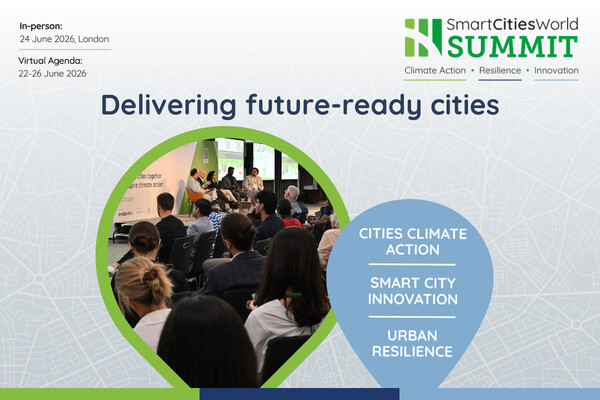
As cities confront the combined pressures of climate change, infrastructure resilience and digital transformation, the SmartCitiesWorld Summit 2026 will bring together urban leaders and partners during London Climate Action Week to explore how these agendas intersect – and how cities can translate strategy into practical action.
Find out how Sunderland is repositioning itself as a leading smart city – using digital infrastructure and low-carbon innovation to build a resilient, future-focused economy in the latest SmartCitiesWorld City Profile.
Find out how Dublin is innovating to improve experiences and services for its communities in the latest SmartCitiesWorld City Profile, including digital twin projects, traffic reduction, and economic growth.
Tune into the SmartCitiesWorld podcast to understand the world of sovereign AI for cities, featuring PNY Technologies’ Youssef Nadiri as our expert guest.
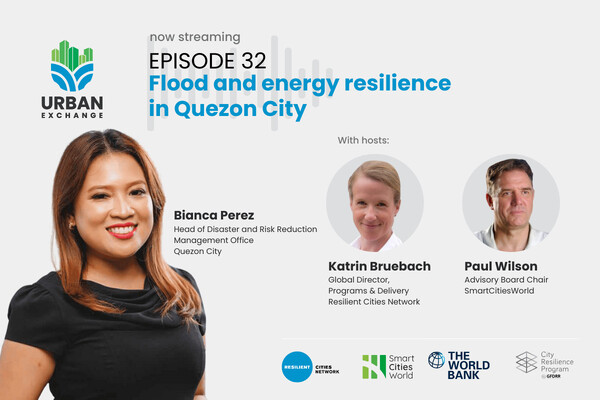
Tune in for the latest Urban Exchange where we get a first-hand account of city resilience measures from Quezon City following unexpected extreme rainfall.
How smart sensor networks can help improve indoor safety by detecting risks early, improving situational awareness and supporting healthier, more secure and sustainable buildings.
Gareth Tang, President of Urban Solutions at ST Engineering, explains how urban AI applications are set to evolve, detailing projects where AI is already making significant impact.
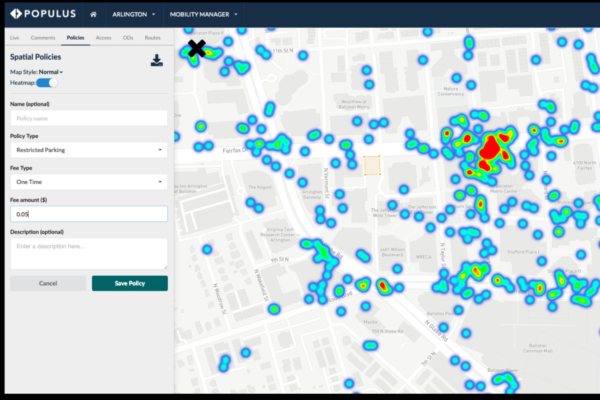
The city’s Mobility and Environment Agency will use the mobility and kerb managment platform to ensure the post-Covid world is greener, fairer and more resilient for citizens.
The new micro-mobility platform will launch this winter in Austin, Berlin, Miami and Seattle with Lime aiming to be the one-stop-shop for anyone looking to take a car-free trip under five miles.
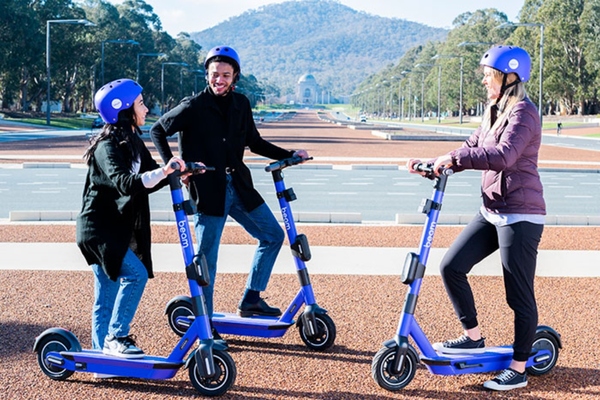
The shared scheme will be run by two companies, Beam Mobility and Neuron Mobility, with a maximum of 1,500 e-scooters made available in the Australian capital city.
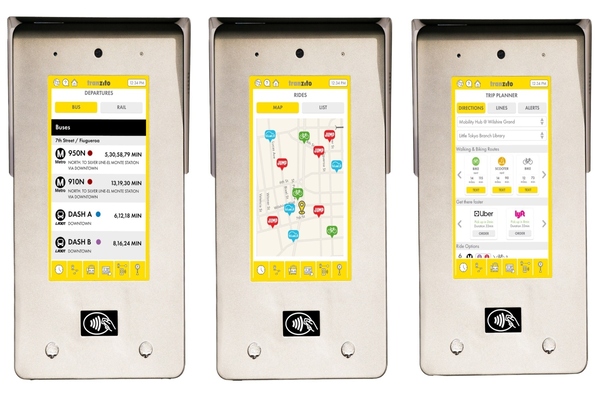
Moovit and Tranzito are joining forces to create kerbside mobility hubs which enable users to plan their trips and book and pay for shared mobility rides from A to B without a smartphone.
Many cities around the world are looking for ways to benefit from dockless scooters and bikes while ensuring safety and reducing disruption. For them and mobility companies, this case is one to watch.
New mobility options can improve the livability of cities but without the right strategy could have the polar opposite effect, say authors Giel Mertens and Rolf Bastiaanssen of Bax & Company, and Nico Larco of the University of Oregon.
Scott Shepard, Chief Commercial Officer, Free2Move, highlights lessons learned in Europe and North America about how to succeed with shared mobility so that cities can leverage the best from mobility innovations and investments.
Bike-sharing companies pulling out of key markets paints a seemingly gloomy outlook but there’s more to the story than meets the eye, says Johan Herrlin, CEO, Ito World.
Phil Williams, Director of Strategic Partnerships at open mobility platform Iomob, outlines a vision for digital mobility infrastructure which will be fundamental in the shift to shared, sustainable urban mobility systems.
Improving mobility is complex, affected by many inter-related and shifting trends. Phil Williams, Director of Strategic Partnerships at Iomob, looks at how we move towards ’mobility heaven’ and avoid ’driverless car hell’.
The shared mobility technology company and kick-scooter maker want to reduce dependency on private vehicles as well as mitigate pollution and congestion
The latest release of the shared mobility technology company’s AI platform sets out to change the mindset of users and convince them to give up their private car for good