
























BUILD YOUR OWN
RESOURCE LIBRARY



smartmicro: seamless object tracking at the intersection
Sponsored by smartmicroGreater sophistication in traffic sensor technology is increasing the number of use cases.


In most cities, traffic detection systems have become indispensable. Different detection technologies are installed at intersections to manage traffic signals, and to optimise traffic flow. In-ground technologies like inductive loops are replaced by more modern above-ground detection systems. Today, radar, video, or thermal detection solutions are state of the art.
For the attentive road user, such sensors, mounted on mast arms or poles, are nothing new. Normally one sensor is directed into one arm of an intersection and detects approaching traffic at the stop bar. Forward firing sensors like radar, for example, additionally provide advanced detection capabilities within one single unit. Normally, four detectors manage an intersection with adaptive traffic control. However, these sensors work independently and do not exchange any object information with one another.
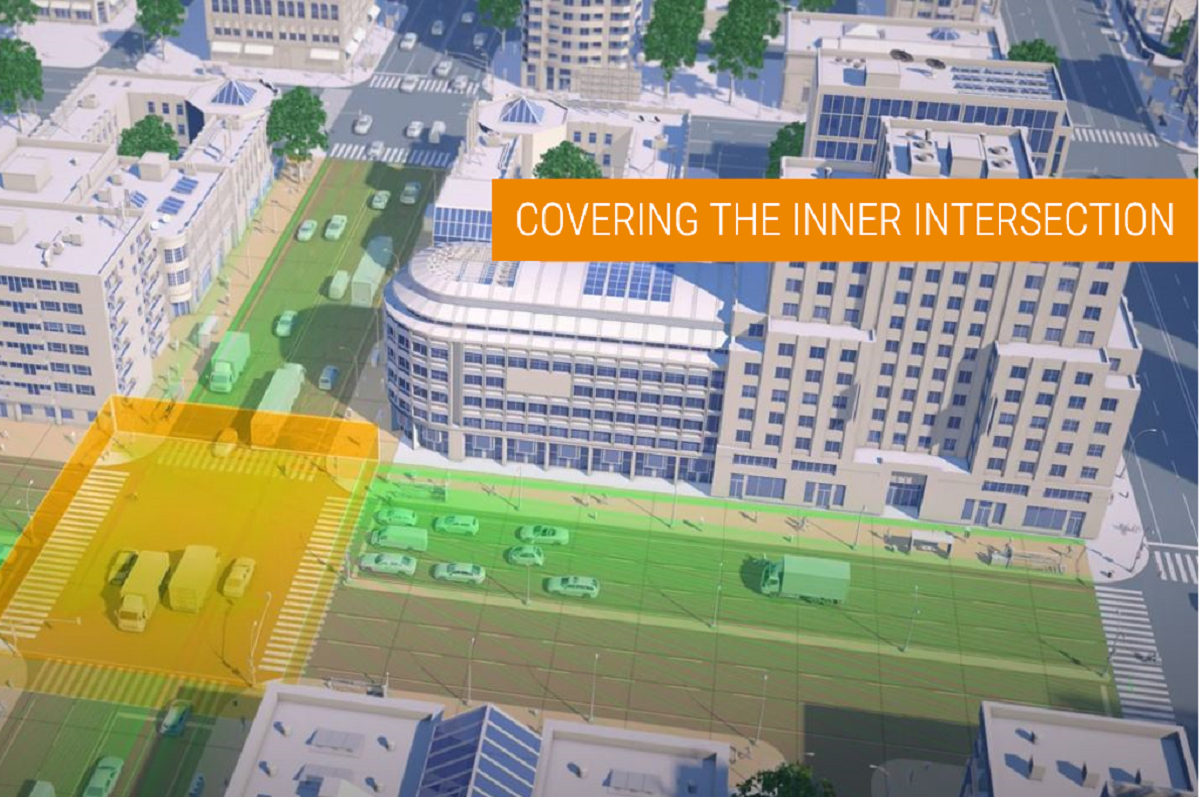
Although most of the objects including pedestrians and bicycles pass through the inner part of an intersection, this section is of less interest. Imagine there would be a system of detectors providing a full overview of this area as well as speed and position data of all objects. The safety and protection of all traffic participants could be significantly enhanced.
Mounting the sensor on the opposite side of each approach results in an overlap of sensor coverage at the inner part of the intersection and this area becomes “visible” to the detection system.
By synchronizing these four detectors much higher detection, tracking, and classification accuracy can be achieved. The communication between the sensors not only enables seamless object tracking throughout the entire intersection. It also provides a richer set of data for vehicle-to-infrastructure (V2I or, more generally, V2X) communication.
Available as of 2021, the most advanced smartmicro traffic management technology enables radar synchronization for seamless object tracking from approach to departure. By covering the entire intersection, including all approaches and the inner part of the intersection, object tracking, and classification will reach an entirely new level.
Why not try these links to see what our SmartCitiesWorld AI can tell you.
(Please note this is an experimental service)
How does radar synchronization improve object tracking accuracy at intersections?What benefits does seamless object tracking provide for pedestrian safety?How can synchronized sensors enhance vehicle-to-infrastructure communication?In what ways does overlapping sensor coverage optimize traffic flow management?How does smartmicro technology classify different traffic participants effectively?Latest City Profile
Latest Summit Speakers
(22-26 June)
SmartCitiesWorld Newsletters (Daily/Weekly)
You may also like these related articles...
BECOME A MEMBER
© 2026 SmartCitiesWorld
Smart Cities World Ltd, 37 Lombard Street, London, EC3V 9BQ