







It will be used in its Eyes on the Road project which provides residents with 1,000 free high-res dash cameras to improve roadway conditions and safety.
At a glance
Who: Hawaii Department of Transportation (Hawaii DoT); University of Hawaii; Bentley Systems.
What: Bentley is providing its Blyncsy solution in Hawaii DoT and the University of Hawaii’s Eyes on the Road programme. Blyncsy’s machine learning algorithms and advanced AI analytics will automatically analyse the crowd-sourced footage.
Why: To identify and report roadway issues to Hawaii DoT in near real time, allowing maintenance crews to address and rectify these issues swiftly, ensuring that roads are kept safe for vehicles, cyclists, and pedestrians.
When: The project aims to enhance statewide roadway safety.
Hawaii Department of Transportation (Hawaii DoT) is deploying Bentley Systems’ Blyncsy solution in its Eyes on the Road programme, in collaboration with The University of Hawaii to enhance roadway safety statewide.
The Eyes on the Road project provides 1,000 free high-resolution dash cameras to Hawaii residents to install in their vehicles, to improve roadway conditions and keep the roads safe.
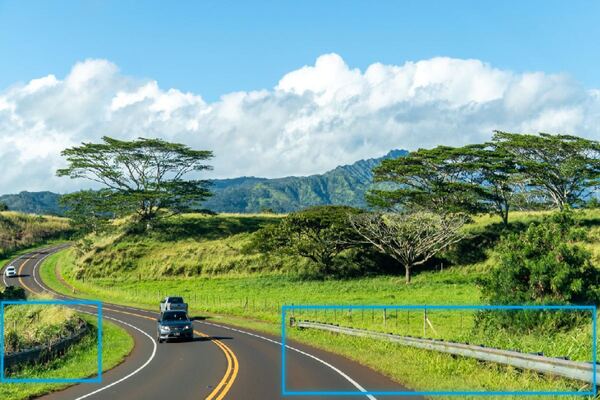
The cameras record video automatically as residents drive normally each day. The collected crowd-sourced imagery captures road safety issues such as guardrail damage, vegetation encroachment, debris on the road or along the shoulder, and other roadway hazards.
The footage is uploaded to the cloud through a cellular connection and then automatically analysed using machine learning algorithms and advanced AI analytics from Bentley’s Blyncsy, anonymously.
“Our crews have been working with Blyncsy to refine the machine learning algorithms to amplify our efforts to efficiently maintain our transportation infrastructure”
Blyncsy, part of the infrastructure engineering software company’s Asset Analytics portfolio, transforms dash camera footage and other roadway imagery into actionable insights. It automatically detects and reports on the condition of critical transportation assets, enabling transportation agencies to prioritise maintenance, improve safety, and make data-driven decisions more efficiently.
“Our crews have been working with Blyncsy to refine the machine learning algorithms to amplify our efforts to efficiently maintain our transportation infrastructure,” said Hawaii DoT director Ed Sniffen. “The Eyes on the Road programme will give us the information we need to get to damaged facilities quickly.”
In the Eyes on the Road programme, Bentley’s Blyncsy is used to identify and report roadway issues to Hawaii DoT in near real time, allowing maintenance crews to address and rectify these issues swiftly, ensuring that roads are kept safe for vehicles, cyclists, and pedestrians.
Mark Pittman, senior director of transportation AI at Bentley Systems, added, “Bentley’s goal is to give transportation agencies real-time visibility into the state of their roadways. By combining AI and machine learning analytics with dash cam imagery, we are helping Hawaii DoT move from reactive to proactive maintenance to reduce risk, lower costs, and save lives.”
Bentley also recently announced the acquisitions of Talon Aerolytics and the technology and technical expertise of Pointivo to strengthen its Asset Analytics portfolio. The new acquisitions extend Bentley’s offerings in both telecommunications and electric utilities, enabling integrated digital workflows that support global 5G deployments and grid modernisation.
“These acquisitions represent a major investment in scaling our Bentley Asset Analytics offering,” said James Lee, chief operating officer, Bentley Systems. “By deploying AI across infrastructure sectors, we are enabling continuous inspections to improve operational performance and maintenance economics for asset owners.”
Why not try these links to see what our SmartCitiesWorld AI can tell you.
(Please note this is an experimental service)
How does Blyncsy's AI analyze dash camera footage for roadway issues?What types of roadway hazards can the Eyes on the Road program detect?How does crowd-sourced imagery improve maintenance response times?In what ways does AI-driven analysis enhance transportation infrastructure safety?How do cellular connections facilitate real-time data upload from dash cameras?