

The city aims to boost expertise and data on air pollution, as well as help develop a national blueprint to improve air quality standards in Indonesian cities.
The Indonesian capital of Jakarta on the island of Java is working with Bloomberg Philanthropies and the Indonesian-led climate foundation ViriyaENB to improve air quality in the Greater Jakarta area.
The new initiative seeks to boost technical expertise and data research on air pollution, as well as develop policy recommendations to serve as a building block towards a national blueprint to improve air quality standards in Indonesian cities.
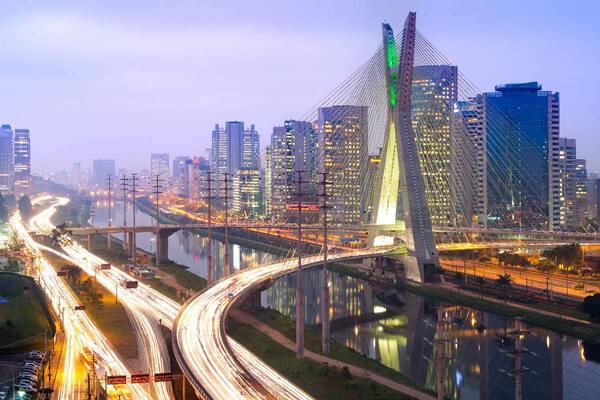
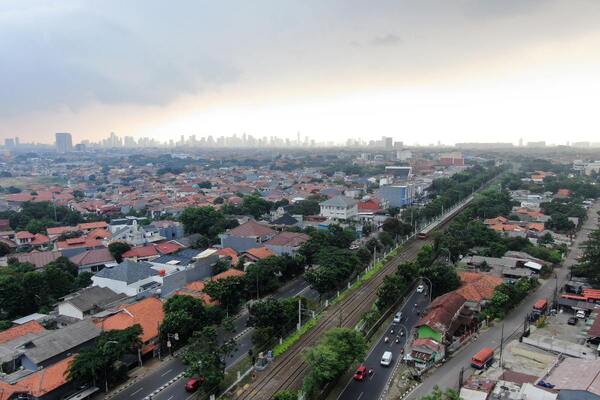
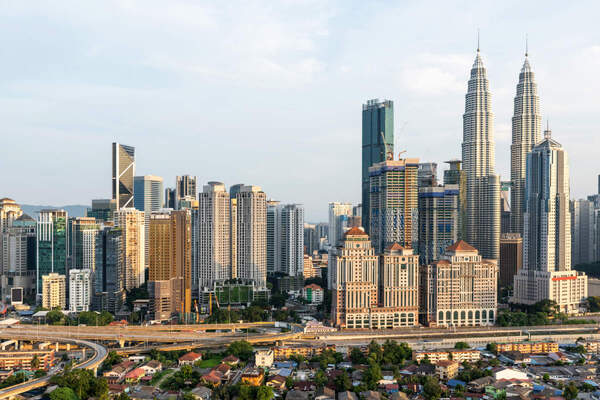
Home to approximately 30 million people, the Greater Jakarta area is one of the world’s largest and most sprawling metropolises, surrounded by industrial plants and countless home-based small industries.
Air quality in the Greater Jakarta area has declined in recent months due to this year’s prolonged dry season and emissions from motorised vehicles and surrounding industrial plants.
“Air pollution in Greater Jakarta area is a complex and multi-layered challenge that requires collaboration from national and international key stakeholders to formulate and implement innovative solutions”
The new partnership is expected to complement Indonesia’s pathway to net-zero emissions and its efforts to increase climate resilience. Air quality has become a top priority following the rising air pollution in the Greater Jakarta area and Indonesian President Joko “Jokowi” Widodo’s call for his administration to make health-based efforts to address the issue.
“Air pollution in Greater Jakarta area is a complex and multi-layered challenge that requires collaboration from national and international key stakeholders to formulate and implement innovative solutions,” said Rachmat Kaimuddin, deputy for infrastructure and transportation for the Coordinating Ministry for Maritime and Investment Affairs of the Republic of Indonesia (CMMAI/Marves).
“Thus, we are pleased to enter this new partnership with Bloomberg Philanthropies and ViriyaENB, as they will bring world-class expertise and solutions to the table.”
The partnership will support Indonesia’s efforts to reduce air pollution by focusing on:
“Air pollution is an environmental and public health challenge that can only be addressed with accurate data, political will, and strong partnerships,” said Antha Williams, who leads Bloomberg Philanthropies’ Environment Programme. “Through this new collaboration with the Government of Indonesia, we look forward to working with partners and the Coordinating Ministry for Maritime and Investment Affairs to ensure the Greater Jakarta area has access to clean air that improves health and strengthens the economy.”
“Air pollution is an environmental and public health challenge that can only be addressed with accurate data, political will, and strong partnerships”
Suzanty Sitorus, executive director of ViriyaENB, added: “The outcomes of this initiative, which will be built on a foundation of accurate and transparent data, will not only mitigate the impacts of toxic air pollution in Greater Jakarta but also provide a blueprint for the rest of Indonesia to follow.
The announcement builds on the Jakarta Clean Air Partnership, launched in 2020 between the Jakarta Provincial Government (DKI Jakarta), Bloomberg Philanthropies, and implementing partner Vital Strategies to enhance the availability and use of air quality data, analysing policy solutions and promoting public awareness on the health impacts of air pollution.
The project forms part of Bloomberg Philanthropies’ Global Clean Air Programme. It follows Bloomberg Philanthropies’ launch of Breathe Cities, a global initiative to break down barriers to action and ensure communities worldwide have access to clean air.
Why not try these links to see what our SmartCitiesWorld AI can tell you.
(Please note this is an experimental service)
How can data transparency improve air quality policymaking in Jakarta?What role does multi-stakeholder engagement play in clean air action plans?How might international expertise enhance air pollution reduction efforts?What strategies support knowledge sharing among air quality stakeholders?How does improving air quality contribute to Jakarta's climate resilience?