













BUILD YOUR OWN
RESOURCE LIBRARY



Introducing AI CityXchange: focusing on the real work of AI in cities
SmartCitiesWorld’s senior editor Luke Antoniou on the launch of the new AI CityXchange, at a time where dialogue and knowledge sharing is critical between cities and their partners to use AI technology for public good.


AI CityXchange is SmartCitiesWorld’s new home for everything we do on AI in cities and aims to reflect the reality we see every week in conversations with local government, city authorities, utilities, and their partners
When I started talking seriously with cities about artificial intelligence (AI) a couple of years ago, one theme kept coming up again and again – not “what’s the cleverest thing AI can do?”, but “how do we make this useful, safe, and real in the context of local government?” That question, more than any hype cycle, is what has led us to launch AI CityXchange.
AI CityXchange is SmartCitiesWorld’s new home for everything we do on AI in cities – from journalism and research to reports, case studies, and events. But more than that, it’s our attempt to reflect the reality we see every week in conversations with local government, city authorities, utilities, and their partners. Cities are not all in the same place on their AI journeys. Some are still putting the foundations in place – governance, data, skills, trust. Others are already moving beyond pilots and trying to scale AI across services. Most are somewhere in between.
Helping AI to create value in cities
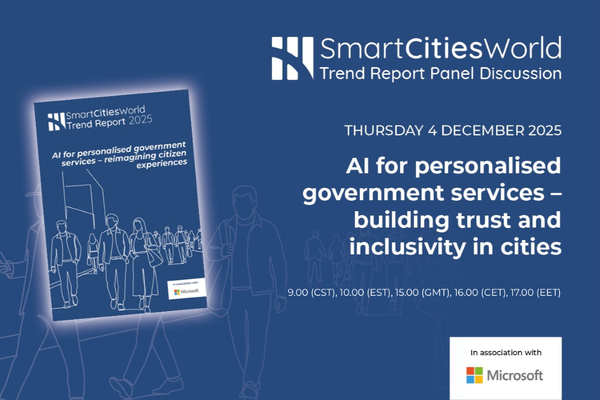
We’ve seen this first-hand in the work we’ve covered and produced over the past few years. In our series of AI-focused Trend Reports in 2025, for example, the focus wasn’t on flashy experimentation – it was on very practical uses of GenAI to support staff, and on computer vision to improve road safety, all wrapped in a strong conversation about internal guardrails, workforce confidence, and community trust. That work makes one thing very clear – AI only creates value in cities when it’s embedded in day-to-day operations and aligned with public purpose, not when it lives in a lab or a slide deck.
The story isn’t “look what the technology can do”, but “look what changes when you combine data, process reform, and the right tools”. It’s a reminder that scaling AI is as much about organisational change as it is about models and platforms.
In recent conversations with AI CityXchange’s first strategic partner, Microsoft, and our initial workshop partners Sunderland City Council and Smart Dublin, what stood out was how much work happens before anyone can responsibly deploy AI at all – getting data in order, agreeing governance, building skills internally, and making sure political and executive leadership are aligned. It’s the kind of work that requires more airtime in industry conversations – the areas where most cities are spending their energy.
AI only creates value in cities when it’s embedded in day-to-day operations and aligned with public purpose, not when it lives in a lab or a slide deck
This is a big part of why AI CityXchange is structured the way it is, built around two simple pillars. The first, AI Foundations, is about the building blocks – data strategy, interoperability, ethics and governance, procurement, organisational readiness, workforce skills, and public trust. The second, Scaling AI, is about what happens when you move beyond pilots – operationalising AI, integrating it into core processes, measuring impact, managing risk, and making sure value sticks over time.
But structure alone isn’t enough. AI only matters in cities when it connects to real services and real outcomes. That’s why AI CityXchange is also organised around city functions – people and community, built environment and infrastructure, transport, environment and nature, economy and culture, and governance and corporate services. Whether we’re talking about public safety, buildings and energy systems, traffic management, climate action, skills development, or partnerships and procurement, the question is always the same – how does AI actually help here, and what does responsible use look like in practice?
Holistic thinking and conversations
Another lesson from our recent work is that no single perspective is enough. In our reports and interviews across water, energy, telecoms, and local government operations, the most useful insights came when city practitioners, technologists, and policy voices were in the same conversation. That’s why AI CityXchange brings with it a programme of workshops and exchanges with cities, starting with dedicated workshops this year in Sunderland and Dublin, and as side events at SmartCitiesWorld Summit in London and Smart City Expo World Congress in Barcelona. The aim is simple – fewer stage-managed presentations, more honest discussion about what’s working, what isn’t, and what comes next.
We’re also launching AI CityXchange with partners who understand that this is a long game. Microsoft is supporting the platform as a strategic partner, and Sunderland City Council and Smart Dublin are joining us as workshop partners. That mix – global technology experience alongside grounded city innovation teams – reflects exactly the balance we want to strike.
AI CityXchange is a place where we can be honest about the complexity, celebrate the progress, and spend more time on the (sometimes unglamorous but always vital) work of making AI useful for public service
All of this sits within our wider Technology Innovation for Community-Centric Cities work, which has always looked to keep people, inclusion, and outcomes at the centre of the smart cities conversation. AI CityXchange is just a more focused expression of that – a place where we can be honest about the complexity, celebrate the progress, and spend more time on the (sometimes unglamorous but always vital) work of making AI useful for public service.
If you’re just starting to explore AI, we want this to help you get the foundations right. If you’re already scaling, we want this to be a place where your experience can help others, and where you can learn from peers facing the same challenges.
This is the start, not the end, of the conversation – and we’re excited to build it with cities and their partners, step by step.
Why not try these links to see what our SmartCitiesWorld AI can tell you.
(Please note this is an experimental service)
How can cities effectively build AI governance and ethical frameworks?What strategies support scaling AI from pilots to core city services?How does AI improve public trust and workforce confidence in cities?Which AI applications best enhance urban transport and infrastructure management?How can data interoperability accelerate AI integration in local government?AI and Machine LearningAI CityXchange - Industry InsightsinclusivityPolicy Makingregulationtransparency
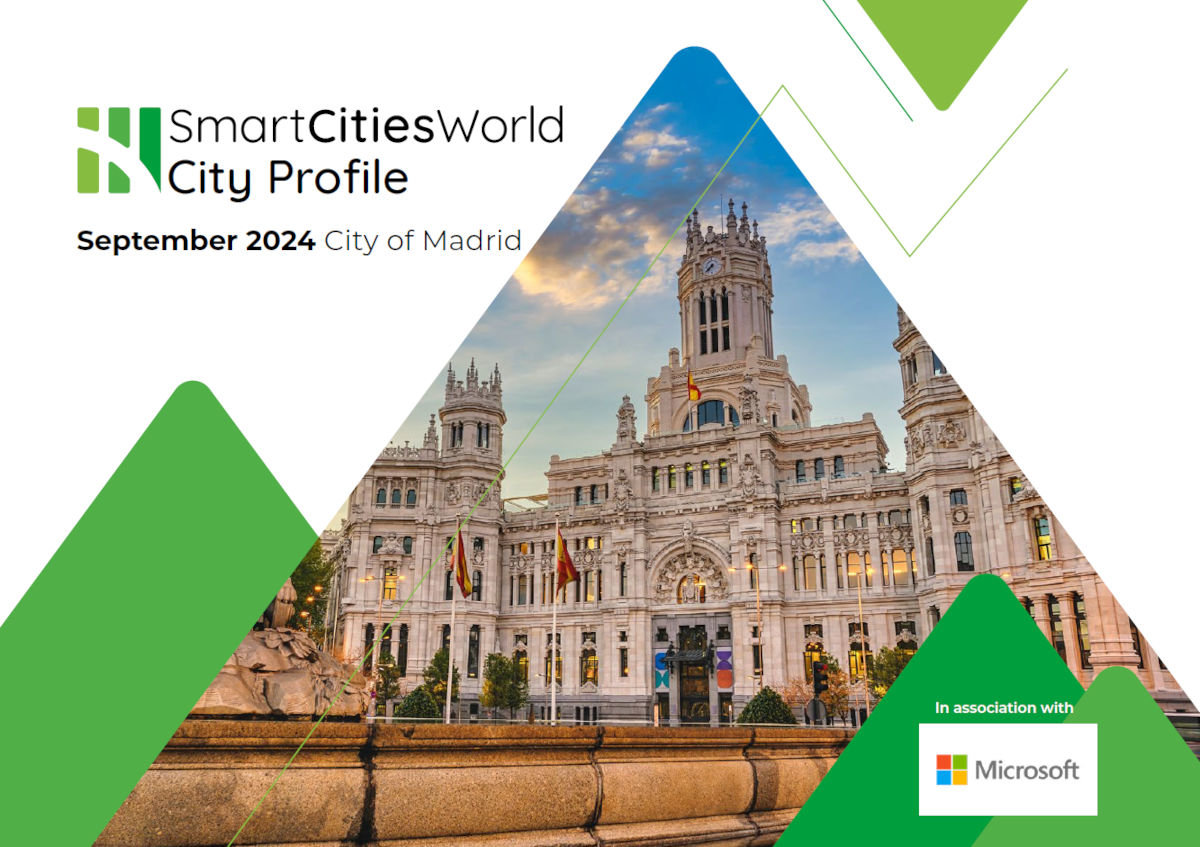
Latest City Profile
SmartCitiesWorld Newsletters (Daily/Weekly)
You may also like these related articles...
BECOME A MEMBER
© 2026 SmartCitiesWorld
Smart Cities World Ltd, 27 Clements Lane, London, EC4N 7AE