





 22-26 June 2026: Find out more
BUILD YOUR OWN
RESOURCE LIBRARY



Opinions
Smart lighting: enabling smart cities beyond illuminationSponsored by Paradox Engineering

How AI and biometrics are shaping next-generation mobility paymentsSponsored by ST Engineering
How culture is driving resilience and recovery in cities
This is one of the findings revealed in the fifth edition of the World Cities Culture report that identifies key trends in urban policy in global cities.


The fifth edition of the World Cities Culture report shows that culture is driving recovery and resilience at a time of global instability, with cities at the forefront of innovation and leadership.
Culture participation in cities is rebounding with 40 per cent of residents visiting museums, 35 per cent attending live music, and 46 per cent attending other live performances.
Culture infrastructure
The global cities network, World Cities Culture Forum, launched its latest flagship World Cities Culture report at the World Cities Culture Summit in Amsterdam, taking place this week.
It also revealed that culture infrastructure is recovering slowly with a small increase of one per cent of theatres and just over three per cent growth in live music venues after dramatic decline due to Covid-19 pandemic.
“This report provides a vital tool for city leaders to measure cultural provision, participation, and impact, and to inform future policymaking”
Published every three years, the World Cities Culture report provides a comprehensive dataset on the role of culture in cities, widely used by policymakers, researchers, and media to track trends and inform policy.
The report identifies key trends in urban policy in global cities including cultural tourism, AI and creativity, climate action and the night-time economy.
Read More
With trust between nations under strain, cities are emerging as connectors across borders, and culture is at the heart of these exchanges. The World Cities Culture Forum supports cities to scale up local innovations, from the adoption of the night-time economy in cities worldwide to the establishment of Creative Land Trusts to protect space for culture in cities like London, Sydney and Austin.
The report highlights the trends shaping world cities and shares practical solutions to today’s challenges including:
- Creative workspace: rising rents and rapid urbanisation continue to displace artists and creatives. In order to attract and retain talent, 94 per cent of cities are actively protecting creative workspaces
- Climate and culture: culture is emerging as a powerful tool in climate action, with 88 per cent of cities driving collaboration between culture and climate
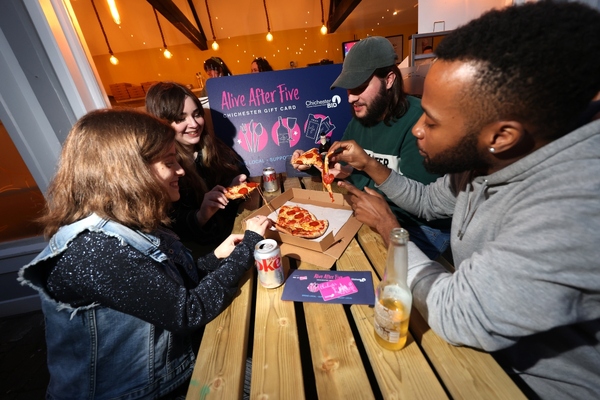
- Night-time economy: once overlooked, the night-time economy is now widely recognised as a mainstream policy area with 97 per cent of cities supporting night-time economy and 59 per cent with a dedicated night-time economy strategy
- Youth and education: cities are focusing on the next generation and creative skills, vital for the AI era, with 78 per cent of cities integrating arts and creativity into primary and secondary schools and 97 per cent of cities with initiatives that support creative education and youth participation
- Tourism: our cities welcome 1.3 billion visitors, and more than a quarter of cities have introduced tourism taxes to reinvest in culture. Cultural tourism accounts for 40 per cent of global tourism (Unesco 2021) and 66 per cent of our cities see sustainable tourism as a key priority.
The launch coincides with the 14th World Cities Culture Summit, hosted by the city of Amsterdam, which convenes 50 of the world’s largest creative cities across six continents. Under the theme Stronger Together: Culture in a Changing World, city leaders are exploring how culture can address global challenges – from climate change and generative AI to sustainable tourism – to make cities more inclusive, liveable, and prosperous.
“I’m delighted to introduce the 5th edition of the World Cities Culture report, our flagship publication and the most comprehensive global dataset on culture in cities,” said Justine Simons, deputy mayor for culture and creative industries, London and founder of World Cities Culture Forum. “By sharing data, insights, and best practice from our network of over 45 cities, this report provides a vital tool for city leaders to measure cultural provision, participation, and impact, and to inform future policymaking.”
The latest report features a new data explorer tool for cities and researchers to search data in a more interactive and visual way. The digital report is available in multiple languages and is supported by Bloomberg Philanthropies’ Digital Accelerator programme. It is available at World Cities Culture Forum report.
Why not try these links to see what our SmartCitiesWorld AI can tell you.
(Please note this is an experimental service)
How can cities effectively protect creative workspaces amid rising rents?What strategies link culture and climate action in urban policy?How does supporting the night-time economy boost city resilience?In what ways does cultural tourism contribute to sustainable urban development?How are cities integrating arts education to prepare youth for the AI era?
Latest City Profile
Latest Urban Exchange Podcast
Latest Special Report
SmartCitiesWorld Newsletters (Daily/Weekly)
You may also like these related articles...
BECOME A MEMBER
© 2026 SmartCitiesWorld
Smart Cities World Ltd, 27 Clements Lane, London, EC4N 7AE