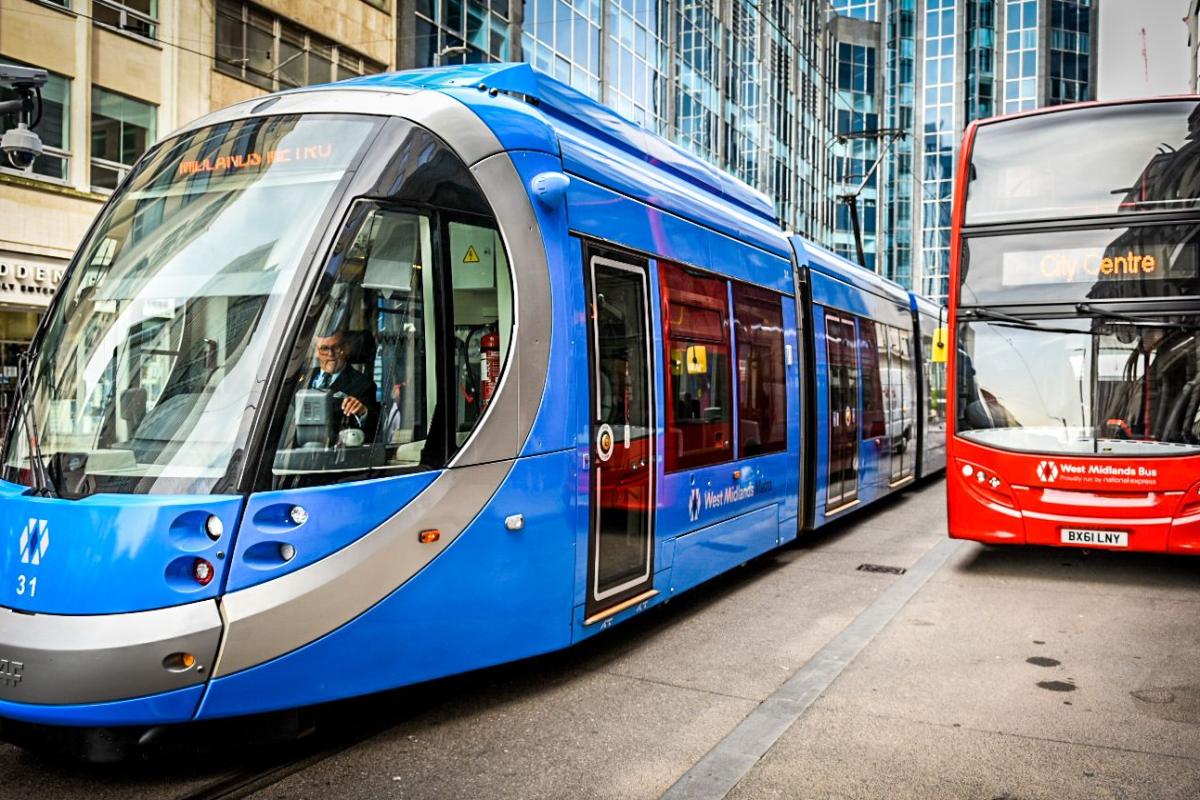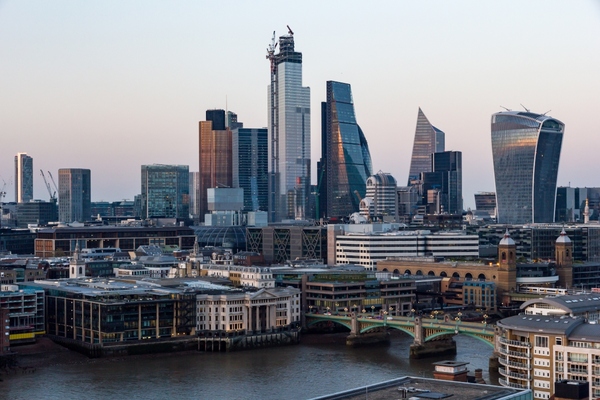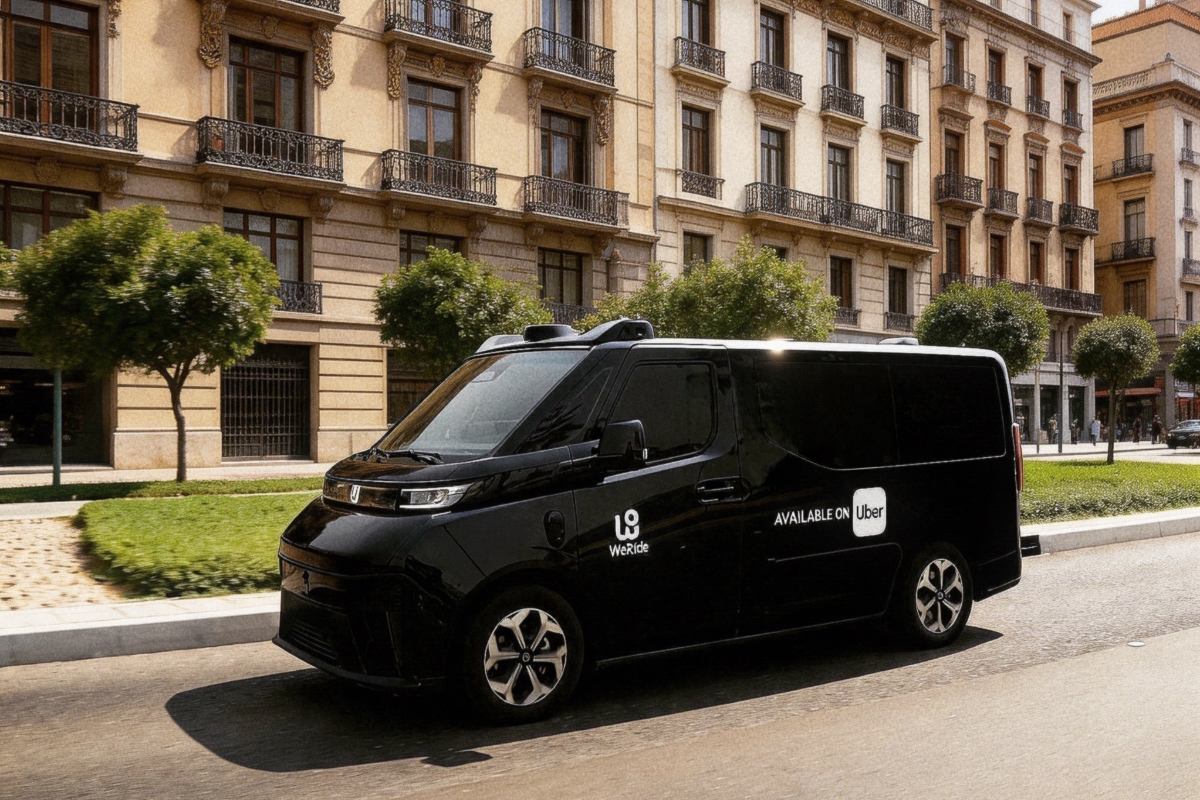



Terbine’s Mission Control system is designed to manage the complexity of autonomous systems at scale and ensure humans are kept in the loop in smart cities.
At a glance
Who: Terbine.
What: The tech company is launching Mission Control for the Physical AI era that is designed to manage the complexity of autonomous systems at scale and ensure a human remains in the loop. It serves as a central nerve centre, utilising an AI-powered digital twin of infrastructure components and connected vehicles.
Why: As Physical AI moves from experimental pilots to mass deployment in 2026, it aims to overcome the challenge of overseeing potentially thousands of intelligent machines such as autonomous vehicles, drones, and robots.
When: Mission Control has been launched to coincide with CES 2026.
Terbine has announced the availability of its Mission Control system, a supervisory interface for the emerging world of Physical AI.
Launched to coincide with CES 2026, it is intended to manage the complexity of autonomous systems at scale, while ensuring them with critical “human-in-the-loop” supervision.
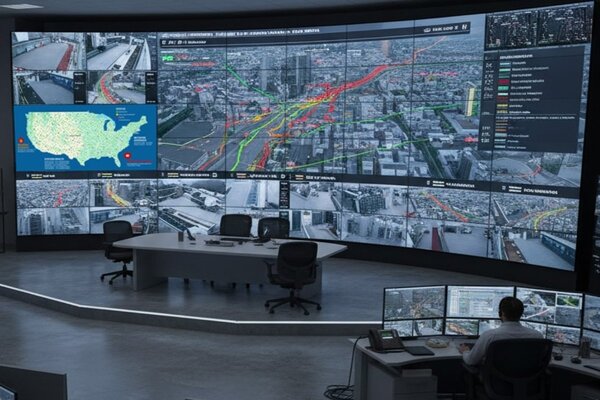
The new offering combines the Terbine Strata platform with immersive large-screen displays and individual operator consoles, suitable for industries ranging from smart cities and energy to logistics and defence.
As Physical AI moves from experimental pilots to mass deployment in 2026, organisations face the challenge of overseeing potentially thousands of intelligent machines – including autonomous vehicles, drones, and robots.
Terbine reports its Mission Control system provides a "supervisory layer" that offers real-time visibility and management, utilising AI to detect issues while retaining human authority for critical decision-making and troubleshooting.
“While machines can handle onboard decisions, our system provides the visualisation and command capabilities needed to ensure safety and efficiency across mixed fleets of autonomous and human-operated assets”
The system provides a digital twin for large organisations to interact with and manage infrastructure, intelligent connected machines and other fixed or moving resources.
“We are entering an era where intelligent machines, humans, and infrastructure must interact seamlessly,” said David Knight, CEO of Terbine. “While machines can handle onboard decisions, our system provides the visualisation and command capabilities needed to ensure safety and efficiency across mixed fleets of autonomous and human-operated assets.”
The mission control system is designed to serve as a central nerve centre, utilising an AI-powered digital twin of infrastructure components and connected vehicles. Key capabilities include:
According to Terbine, the Mission Control system is architected for a wide array of Physical AI implementations including:
The Strata platform is designed for the future of “autonomous orchestration”, where the system not only monitors but actively facilitates interactions between machines and infrastructure, such as ad-hoc platoons of large trucks, coordinating rendezvous of humanoid and delivery robots, and many more yet-unimagined applications.
Why not try these links to see what our SmartCitiesWorld AI can tell you.
(Please note this is an experimental service)
How does Mission Control integrate AI-powered digital twins for infrastructure management?What methods does Mission Control use to ensure human-in-the-loop supervision?How can Mission Control improve incident response in mixed autonomous fleets?In what ways does Mission Control support smart city traffic and safety management?How does the system coordinate autonomous vehicle platoons across different transport modes?