









BUILD YOUR OWN
RESOURCE LIBRARY



Podcasts

Cities Thriving on Lighting, Episode 2 – Simplicity by design in smart lightingSponsored by Paradox Engineering
Cities Thriving on Lighting, Episode 1 – Lighting as the backbone of the smart citySponsored by Paradox Engineering
Opinions

Transforming indoor public safety with smart sensor networksSponsored by Motorola Solutions
New initiatives emerge to bolster urban resilience
Efforts by cities like Tallinn demonstrate how important building resilience against climate and environmental change is and how determined cities are to confront it.


At this stage of the climate crisis, cities are under enormous pressure to develop new strategies and adopt new solutions that will make their infrastructure, economies and communities more resilient to the most serious impacts of climate change, whether that’s rising sea levels off coastal cities or the urban heat island effect, among numerous other challenges.
SmartCitiesWorld has put urban resilience front and centre this week, reporting on new initiatives launching around the world that can aid cities in negating environmental changes and set examples for others to follow.
The first example of this is the return of the QBE AcceliCITY Resilience Challenge for 2022, ranked as one of the world’s top five govtech accelerators. Led by non-profit Leading Cities in partnership with insurance firm QBE North America, AcceliCITY enters its fourth year in 2022, and for the first time is expanding into the Asia/Pacific region in the form of AcceliCITY East, which runs alongside AcceliCITY West.
At this stage of the climate crisis, cities are under enormous pressure to develop new strategies and adopt new solutions
Entries to the competition are welcome until the end of April 2022, with several prizes available to the selected winners. One winner will receive $100,000 and a pilot project in a city while two additional People’s Choice prizes of $25,000 each will also be awarded. Another winner will receive a paid pilot urban food project in the city of Gainesville, Florida, which is sponsoring this year’s AcceliCITY Smart Challenge.
International competitions like AcceliCITY are crucial to further developing the ecosystem of solutions available to cities to improve their resilience credentials, and can lead to innovative projects being undertaken in cities around the world. Earlier today, we reported that the Estonian capital of Tallinn is taking part in an international project seeking to develop adaptation measures to counter the effect of heat waves caused by climate change.
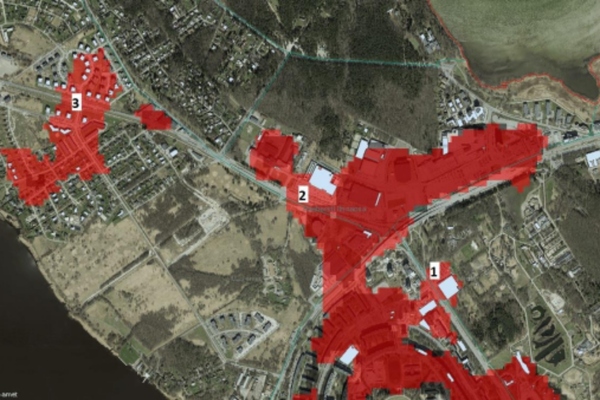
The project will develop measures for housing, mobility, land use and landscaping, which will be combined to identify appropriate measures for pilot area rollouts. The pilot first pilot area, Väike-Õismäe, is thought to be able to act as an example for measures that would also work in similar places, such as Mustamäe and Lasnamäe.
The coverage of these developments shows how important resilience against climate and environmental changes is, but also how determined cities and adjacent organisations are to finding and developing solutions. There’s more on resilience and climate in our Energy & Environment section.
Why not try these links to see what our SmartCitiesWorld AI can tell you.
(Please note this is an experimental service)
How can urban resilience initiatives reduce the impact of heat waves?What strategies improve infrastructure resilience against rising sea levels?How do govtech accelerators like AcceliCITY support climate adaptation?Which pilot projects demonstrate effective urban food resilience solutions?What role does land use planning play in climate change adaptation?climate actionClimate change/ResilienceEnergy & EnvironmentGovernance and CitizenQBE AcceliCity Resilience ChallengeresilienceTallinn
Latest City Profile
SmartCitiesWorld Newsletters (Daily/Weekly)
You may also like these related articles...
BECOME A MEMBER
© 2026 SmartCitiesWorld
Smart Cities World Ltd, 37 Lombard Street, London, EC3V 9BQ