











 22 - 26 June 2026: Find out more





BUILD YOUR OWN
RESOURCE LIBRARY



Opinions

Smart lighting: enabling smart cities beyond illuminationSponsored by Paradox Engineering

How AI and biometrics are shaping next-generation mobility paymentsSponsored by ST Engineering
How Chattanooga is building largest smart intersection in US
USDoT will fund the $4.5m smart city project to create a living lab, providing mapping, tracking, and identification insights into the city’s state of mobility.


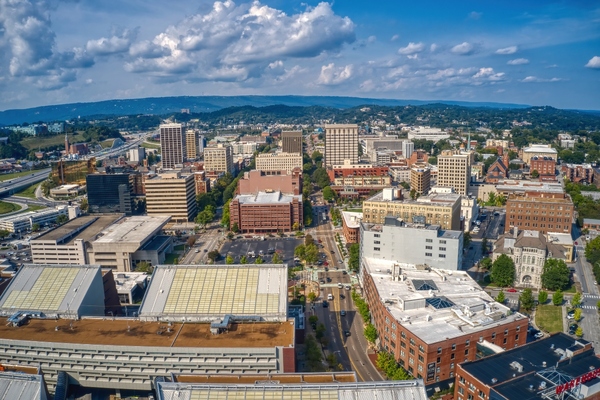
City of Chattanooga, Tennessee, plans to utilise $4.5m in federal funds to deliver 86 new smart intersections, thought to be the largest urban IoT deployment of its kind in the US.
The landmark project to optimise traffic systems and evolve roadways for electric vehicles will see the Chattanooga Department of Innovation Delivery and Performance, and researchers at the Centre of Urban Informatics and Progress (CUIP) expand their partnership with Seoul Robotics.
Living laboratory
The US Department of Transportation will fund the $4.5m endeavour to create a living laboratory that will provide researchers mapping, tracking, and identification insights into the state of mobility in the city.
Intersections will be installed throughout 2023 and 2024, and once finalised, the city of Chattanooga will capture more than 100 intersections total, covering the entire downtown area. This project will expand the efforts of the partnership’s MLK Smart Corridor, a proprietary testbed first deployed in 2019.
The system leverages lidar sensors equipped with Seoul Robotics’ 3D perception software, Sensr, which uses deep learning AI with dynamic weather-filtering capabilities to anonymously detect, track and predict the movement of pedestrians and vehicles, regardless of weather conditions.
“We’re generating a real world, data-informed testing environment for emissions management, pedestrian safety, electric vehicles and more”
Through highly accurate, real-time data, Seoul Robotics claims the system is able to identify potential incidents such as accidents and wrong-way driving, as well as better understand traffic flow and the interactions between pedestrians and vehicles.
“Our partnership with Seoul Robotics on the MLK Smart Corridor delivered an entirely new dimension of insights beyond what we anticipated. The level of accuracy and actionability has enabled numerous advancements in how we can make our city safer, more efficient, and healthier for the people who live here,” said Dr Mina Sartipi, founding director of the CUIP at the University of Tennessee at Chattanooga.
“By expanding the project footprint, we will not only position Chattanooga as a pioneer of smart city technology, but also create a blueprint for other cities around the US to leverage the transformative capabilities of 3D systems.”
Read More
The City of Chattanooga plans to leverage 3D data from the new intersections to prepare for the transition to electric vehicles, better inner-city driving mobility and improve the traffic management system.
Quantifiable insights will be used to map the ideal locations to install EV charging stations, as well as monitor the infrastructure to understand its utilisation. Real-time high-resolution traffic insights gleaned from the system will also be used to optimise routes to alleviate congestion and ultimately reduce vehicle emissions.
“The level of accuracy and actionability has enabled numerous advancements in how we can make our city safer, more efficient, and healthier for the people who live here”
“Our work in Chattanooga will deliver more than insights into the city. We’re generating a real world, data-informed testing environment for emissions management, pedestrian safety, electric vehicles and more,” added William Muller, vice president of business development at Seoul Robotics.
“With this scalable network of smart intersections, we’re able to capture the most granular level of 3D data that can be used to transform cities today, and in the future.”
Seoul Robotics will be showcasing its full suite of 3D solutions during the tech event CES 2023 in Las Vegas, which runs 5-8 January.
Smart city research
The Centre for Urban Informatics and Progress is a smart city research centre at the University of Tennessee at Chattanooga. CUIP said it is committed to applied smart city research that betters the lives of citizens every day.
Seoul Robotics was founded in 2017 with a mission to unlock insights and capabilities by capturing the world in 3D. The company’s core technology, Sensr, is a patented 3D perception software that uses AI deep learning and weather-filtering capabilities to provide advanced, accurate environmental insights.
Why not try these links to see what our SmartCitiesWorld AI can tell you.
(Please note this is an experimental service)
How does Seoul Robotics’ Sensr software improve pedestrian and vehicle detection accuracy?In what ways will smart intersections optimize traffic flow and reduce congestion?How can 3D data assist in planning and monitoring electric vehicle charging stations?What role does AI play in predicting and preventing traffic incidents at intersections?How will Chattanooga’s smart intersection network contribute to emissions management efforts?
Latest City Profile
Latest Urban Exchange Podcast
Latest Special Report
SmartCitiesWorld Newsletters (Daily/Weekly)
You may also like these related articles...
BECOME A MEMBER
© 2026 SmartCitiesWorld
Smart Cities World Ltd, 27 Clements Lane, London, EC4N 7AE