















BUILD YOUR OWN
RESOURCE LIBRARY



Podcasts

Cities Thriving on Lighting, Episode 2 – Simplicity by design in smart lightingSponsored by Paradox Engineering
Cities Thriving on Lighting, Episode 1 – Lighting as the backbone of the smart citySponsored by Paradox Engineering
Opinions

Transforming indoor public safety with smart sensor networksSponsored by Motorola Solutions
Austin explores cool pavements to tackle heat island effect
The City has treated a 0.8-mile stretch of a street with an environmentally friendly cool pavement seal that acts as a reflective surface to absorb less heat.


To prolong and protect the city’s roads, Austin’s Office of the City Engineer Pavement Maintenance Management team is exploring the latest cool pavement technology to reduce the heat island effect.
Summer temperatures can reach 100-plus degrees in the Texan city and the heat index doesn’t only affect residents, it could also cause pavement to overheat and crack.
Cool pavement pilot
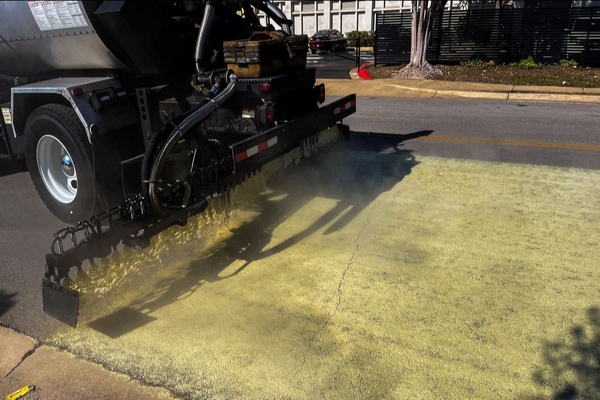
The City has completed a $17,000 cool pavement pilot project along Meinardus Drive. Using a distributor truck, PlusTi A.R.A-1 Ti treatment was installed over a 0.8-mile stretch of that street. According to managing engineer Angela Johnson, cool pavement seal is made of a water-based emulsion with titanium dioxide and is environmentally friendly.
The treatment acts as a reflective surface on the roads that in return absorb less heat. In some cases, this technology can even help decrease the temperature of the asphalt by 10 degrees. Streets without this liquid are darker in colour, while streets with cool pavement seal are lighter.
Read More
The City of Austin is working with the University of Texas (UT) which is monitoring the temperature changes on Meinardus Drive and collecting data to see how effectively it reduces heat. The Office of the City Engineer has also applied for a federal grant to expand the programme and the anticipated award announcement is September 2023.
The treatment acts as a reflective surface on the roads that in return absorb less heat. In some cases, this technology can even help decrease the temperature of the asphalt by 10 degrees
It is part of broader work being undertaken by the university, which seeks to provide solutions for Austin communities that might be at the highest risk for climate-related hazards. Using satellite-generated data alongside survey data and input from the community, the university will also create a “climate atlas” for Austin.
The project collaboration between academic and non-academic partners aims to link policy research at the Lyndon B Johnson School at the university with city-neighbourhood climate information work. led by UT professor and project co-lead Dev Niyogi from the Jackson School and Cockrell School of Engineering.
Why not try these links to see what our SmartCitiesWorld AI can tell you.
(Please note this is an experimental service)
How does cool pavement technology reduce urban heat island effects?What materials are used in Austin's environmentally friendly pavement seal?How is the University of Texas monitoring temperature changes on treated roads?What potential benefits does titanium dioxide provide in pavement treatments?How could federal grants expand Austin's cool pavement pilot program?Latest City Profile
SmartCitiesWorld Newsletters (Daily/Weekly)
You may also like these related articles...
BECOME A MEMBER
© 2026 SmartCitiesWorld
Smart Cities World Ltd, 37 Lombard Street, London, EC3V 9BQ