










BUILD YOUR OWN
RESOURCE LIBRARY



Podcasts
Cities Thriving on Lighting, Episode 2 – Simplicity by design in smart lightingSponsored by Paradox Engineering
Cities Thriving on Lighting, Episode 1 – Lighting as the backbone of the smart citySponsored by Paradox Engineering
Opinions
Transforming indoor public safety with smart sensor networksSponsored by Motorola Solutions
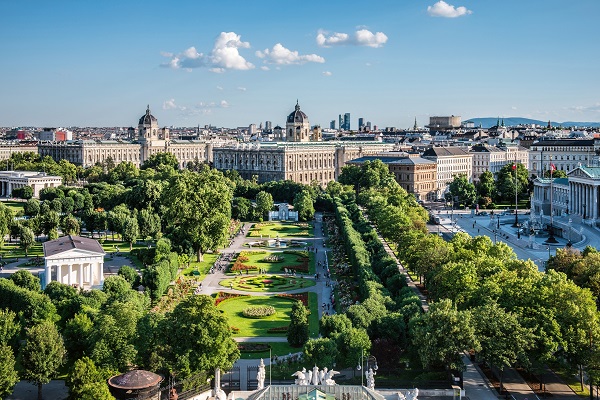
Future energy smart city project in Vienna moves into next phase
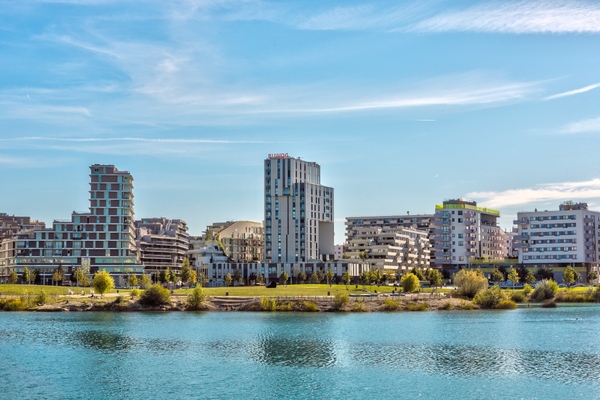
The Aspern Smart City Research project, located in the city-within-a-city development zone of Seestadt, aims to point the way forward for smarter energy systems in urban areas.


The halfway point of the Aspern Smart City Research (ASCR) project in Vienna’s urban development zone of Aspern Seestadt has been reached, with the next ongoing stage focusing on applying the solution concepts tested in the first phase.
The project aims to point the way forward for energy in urban areas and is being undertaken by the City of Vienna (including Wien Energie, Wiener Netze, Wien 3420, and the Vienna Business Agency) and Siemens.
The first phase, which began in 2013, centered around establishing the necessary research infrastructure as the foundation for the collection of real-time data and the practical testing of solutions.
Future energy systems
The basic objective of ASCR is to develop market-oriented, scalable, and economical solutions for the future in urban areas and to make the energy system more efficient and more climate-friendly. The intent is to create workable solutions for residents, grid and building operators, and energy suppliers.
Seestadt is not a conventional urban expansion zone but a city-within-a-city fulfilling a diverse range of urban functions, a business hub creating up to 20,000 jobs and housing for more than 20,000 people, and a new centre for Vienna’s 22nd municipal district, the immediate surrounding area and the wider Centrope region.
Solutions rely on several technologies and are based on the seamless communication of buildings with their occupants, the smart grid – and the energy markets via aggregators – energy service providers, and trading platforms as well as the intelligent charging of electric and hybrid vehicles and the analysis of new approaches for providing thermal energy for decentralised heating and cooling.
“In order to develop a climate-neutral, sustainable economy and society, it will take new approaches and – as is now becoming evident – closer and closer cooperation between urban planners, energy providers, grid operators, the housing industry, property developers, and industry, said CEO of Siemens Austria, Wolfgang Hesoun. “We have found this here in parts of Seestadt Aspern, thanks in no small part to the support of the residents.
Read More
“Due to the current relevance of the challenges, this project now has a profile that extends far beyond the borders of Austria. This is also evident based on the interest of the many international delegations that visit the showroom each year and make use of the experts’ know-how.”
Among the innovations that have been tested are:
- building information modelling (Bim) Viewer: provides operators new insights into their buildings and installed products
- building energy management system (Bems): allows for seamless energy management between buildings and power grids and can ensure the energy- and cost-optimised operation of entire buildings
- Desigo CC: an integrated, scalable, and open building management platform for the management of high-performance buildings
- Sicam A8000: a modular device series for telecontrol and automation applications in all areas of the energy supply with high availability requirements
- Sicam enhanced grid sensor (EGS): these provide transparency regarding capacity utilisation in low-voltage infrastructure. They serve as the basis for solutions for the digitalisation of the distribution network
- Sicam ChargeControl: coordinated charging management for reducing the burden on the lowest grid levels.
“The innovations that were pilot-tested under the research company are already being used, for example, in Austria in current construction projects being completed by Bundesimmobiliengesellschaft. In addition, the knowledge gained is already being applied in newly developed and enhanced Siemens products and solutions,” said Hesoun.
“To develop a climate-neutral, sustainable economy and society, it will take closer and closer cooperation between urban planners, energy providers, grid operators, the housing industry, property developers, and industry”
Although the project has already achieved considerable carbon dioxide reductions thanks to optimally matched generation, storage, and consumer components, Hesoun admits there is still more work to be done.
“Under the right conditions (for example, the availability of solar/ground water), urban districts can already be operated in a thermally self-sufficient manner and with a high share of self-generated energy.
“The more renewable energy is fed into the grid or the more new electrical consumers – such as electric vehicles are used, the more likely it is that the grid will be overloaded. “In order to prevent this, it’s important to make buildings and grids smarter. The role that state-of-the-art monitoring and analysis tools, intelligent sensor technology, and digital management systems play here is still widely underestimated.”
Why not try these links to see what our SmartCitiesWorld AI can tell you.
(Please note this is an experimental service)
How does the building energy management system optimize energy use in buildings?What role do smart grids play in preventing electrical grid overloads?How can intelligent charging management support electric vehicle integration?In what ways does building information modelling improve urban energy efficiency?How do Sicam enhanced grid sensors enhance low-voltage infrastructure transparency?AspernBatteriesCommercial buildingsEnergy & EnvironmenthousingRenewablesSeestadtSiemenssmart gridssolar powerurban spaceVienna
Latest City Profile
SmartCitiesWorld Newsletters (Daily/Weekly)
You may also like these related articles...
BECOME A MEMBER
© 2026 SmartCitiesWorld
Smart Cities World Ltd, 37 Lombard Street, London, EC3V 9BQ