









BUILD YOUR OWN
RESOURCE LIBRARY



Podcasts
Cities Thriving on Lighting, Episode 2 – Simplicity by design in smart lightingSponsored by Paradox Engineering
Cities Thriving on Lighting, Episode 1 – Lighting as the backbone of the smart citySponsored by Paradox Engineering
Opinions

Transforming indoor public safety with smart sensor networksSponsored by Motorola Solutions
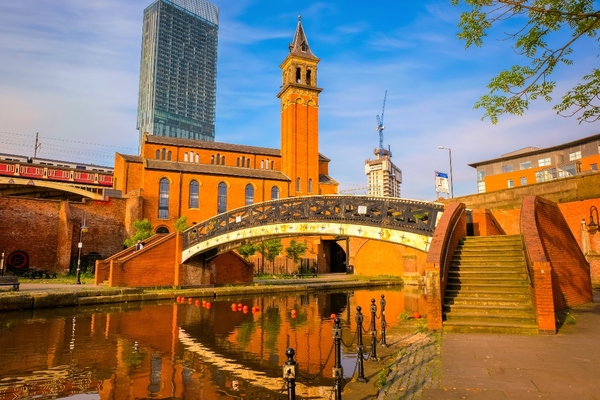
Manchester progresses plans to buy own solar farm
Producing renewable energy directly would improve energy security and give the the UK city’s council greater certainty over future costs, as well as support its climate change action plan.


The UK city of Manchester is advancing its plans to buy its own solar farm to cut carbon emissions.
The council’s executive will be asked to give the green light for the council to enter into negotiations with companies developing solar photovoltaic facilities later this month.
Potential sites
There are already two potential options on the table – a 45.3W scheme in the south of England and two other schemes in the south which would give a combined 58MW – both options are of a scale which would meet the council’s requirements.
The council reports that no suitable sites of the size required (around 100 hectares) have been identified in Manchester or Greater Manchester. Further options could be considered as discussions move forward with other developers.
The Council’s Climate Change Action Plan 2020-25 sets out to halve its direct carbon emissions by 2025 in support of the city’s goal to become zero carbon by 2038. Under the plan a carbon reduction of 7,000 tonnes a year – equating to almost half of the total saving by 2025 – is being targeted through large scale renewable energy generation. Producing renewable energy directly would also improve energy security and give the council greater certainty over future costs.
“Owning our own solar farm would not only reduce our carbon emissions by thousands of tonnes a year, it also has the potential to reduce our energy costs over time and protect us from price rises in a volatile market
Any purchase of a solar farm would be funded through borrowing which would be financed over the life of the asset from the reduced expenditure with other energy providers, and potentially generation of surplus power which could then be sold.
The alternative option of power purchase agreements, which would involve the council purchasing renewable energy directly from a renewable energy source and also help the city meet carbon reduction targets, remains on the table as insurance should the solar farm option not prove feasible. The council reports, though, at this stage it is considered that purchasing a facility would offer greater benefits.
Read More
“The council’s Climate Change Action Plan 2020-25 sets out how we will halve our direct carbon emissions by 2025 as part of the wider push to make the city zero carbon by 2038,” said councillor Tracey Rawlins, executive member for environment.
She added: “One of the key ways in which we intend to achieve this is through either generating our own renewable energy or buying energy directly from a renewable energy source.”
“Owning our own solar farm would not only reduce our carbon emissions by thousands of tonnes a year, it also has the potential to reduce our energy costs over time and protect us from price rises in a volatile market.
“If the council’s executive agrees, the next step will be for us to enter into detailed negotiations for the potential purchase of a solar farm.”
Why not try these links to see what our SmartCitiesWorld AI can tell you.
(Please note this is an experimental service)
How will owning a solar farm improve Manchester's energy security?What financial benefits could Manchester gain from solar farm ownership?How does solar farm ownership align with Manchester's carbon reduction goals?What challenges exist in finding suitable solar farm sites near Manchester?How might surplus solar power generation be utilized or sold by the council?Latest City Profile
SmartCitiesWorld Newsletters (Daily/Weekly)
You may also like these related articles...
BECOME A MEMBER
© 2026 SmartCitiesWorld
Smart Cities World Ltd, 37 Lombard Street, London, EC3V 9BQ