










BUILD YOUR OWN
RESOURCE LIBRARY



Podcasts

Cities Thriving on Lighting, Episode 2 – Simplicity by design in smart lightingSponsored by Paradox Engineering
Cities Thriving on Lighting, Episode 1 – Lighting as the backbone of the smart citySponsored by Paradox Engineering
Opinions

Transforming indoor public safety with smart sensor networksSponsored by Motorola Solutions
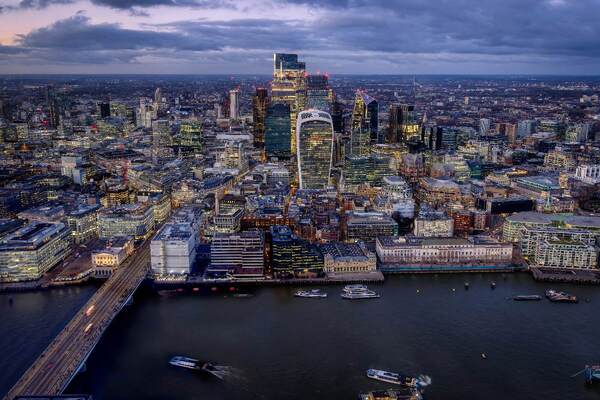
Report reveals all Londoners breathing cleaner air
Report examines air quality following first year of the expanded ultra low emission zone shows substantial improvement in outer London and across the capital.


A London City Hall report, reviewed by an independent advisory group of experts, reveals that the ultra low emission zone (Ulez) has led to substantial improvements in air quality in outer London and across the capital.
Particle emissions (PM2.5) from vehicle exhausts are estimated to be 31 per cent lower in outer London in 2024 than they would have been without the Ulez expansion. Alongside NO2 and PM2.5 reductions, NOx (nitrogen oxides) emissions from cars and vans are also estimated to be 14 per cent lower in outer London.
Emissions reduction
The biggest reductions in NO2 levels have been in central London (54 per cent) but there have also been substantial reductions in inner London (29 per cent) and outer London (24 per cent).
The report finds that the boroughs that have seen the biggest reductions in NOx emissions due to the Ulez expansion are Sutton, Merton, Croydon, Harrow and Bromley, where harmful emissions are estimated to be around 15 per cent lower in 2024 than would be expected without the expansion to outer London, which covers a large area of around 1250km2.
Thanks to all phases of the Ulez, NOx emissions from road transport are estimated to be 36 per cent lower across London in 2024, a saving of around 3400 tonnes – the equivalent of approximately one year of emissions from all passenger car trips in Los Angeles.
“Today’s report shows that Ulez works, driving down levels of pollution, taking old polluting cars off our roads and bringing cleaner air to millions more Londoners”
The report also shows that the Ulez has led to savings in carbon emissions. Cumulatively between 2019 and 2024, the equivalent of nearly three million one-way passenger trips between Heathrow and New York has been saved in carbon due to Ulez as a whole.
Deprived communities are seeing some of the biggest benefits. For some of the most deprived communities living near London’s busiest roads, there was an estimated 80 per cent reduction in people exposed to illegal levels of pollution in 2023 – this increases to 82 per cent in outer London, compared to a scenario without the Ulez.
Read More
Data from the report, alongside independent analysis, has found that the Ulez expansion has not impacted footfall or retail and leisure spending in either outer London or London as a whole. Visitor footfall in outer London increased by almost two per cent in the year after the London-wide Ulez expansion.
“When I was first elected, evidence showed it would take 193 years to bring London’s air pollution within legal limits if the current efforts continued,” said mayor of London, Sadiq Khan. “However, due to our transformative policies we are now close to achieving it this year. Today’s report shows that Ulez works, driving down levels of pollution, taking old polluting cars off our roads and bringing cleaner air to millions more Londoners.
“Improving air quality through initiatives like the ultra low emission zone in London is crucial for protecting public health and reducing the burden of disease”
“The decision to expand the Ulez was not something I took lightly, but this report shows it was the right one for the health of all Londoners. It has been crucial to protect the health of Londoners, support children’s lung growth, and reduce the risk of people developing asthma, lung cancer and a host of other health issues related to air pollution.
“With boroughs in outer London seeing some of the biggest reductions in harmful emissions and London’s deprived communities also seeing greater benefits, this report shows why expanding Ulez London-wide was so important.
“Thanks to Ulez and our other policies, all Londoners are now breathing substantially cleaner air – but there is still more to do, and I promise to keep taking action as we build a greener, fairer London for everyone.”
Vehicle upgrades
TfL data also shows that Londoners have continued to upgrade their vehicles to cleaner models with 96.7 per cent of vehicles seen driving in London now Ulez-compliant, up from 91.6 per cent in June 2023 and 39 per cent in February 2017, when changes associated with the Ulez began. Van compliance in outer London is over 90 per cent for the first time (90.7 per cent). In February 2017, just 12 per cent of vans met the Ulez standards, demonstrating the schemes’ impact on reducing the number of more polluting older vans driving in London.
The data also shows there were nearly 100,000 fewer non-compliant vehicles detected in London on an average day in September 2024 compared to June 2023, when the mayor announced his plans to extend the Ulez to outer London – a 58 per cent reduction in non-compliant vehicles.
London’s air quality is reportedly improving at a faster rate compared to the rest of England (2017-2024). This is particularly notable in outer London where concentrations have improved more rapidly over recent years and are now similar to the rest of England average, which has historically been lower than London.
“Improving air quality through initiatives like the ultra low emission zone in London is crucial for protecting public health and reducing the burden of disease,” said Dr Maria Neira, director, department of environment, climate change and health at the World Health Organisation. “Cleaner air leads to healthier communities, lower rates of respiratory and cardiovascular illnesses, and a better quality of life for all residents. The World Health Organisation commends the efforts of cities like London in implementing measures to reduce emissions from vehicles and improve air quality, which ultimately contribute to a healthier and more sustainable urban environment.”
A group of independent air quality analysis experts was set up to assist Transport for London (TfL) and the Greater London Authority (GLA). The Ulez Advisory Group had a technical function. It was not a forum for policy commentary or for advising the GLA on its objectives for clean air policies or wider policy issues. Members of the group include Gary Fuller (chair), Imperial College London, UK; Anna Font, IMT Nord Europe, France; David Carslaw, University of York, UK; Elizabeth Fu, AirParif, France; Ludo Vandenthoren, Mutualités Libres, Belgium; and Martin Lutz, Formerly head of air quality management at Berlin City Government, Berlin.
For more information about the One Year report, go to: www.london.gov.uk/ulez
Why not try these links to see what our SmartCitiesWorld AI can tell you.
(Please note this is an experimental service)
How has the Ulez expansion impacted NOx emissions in outer London?What health benefits result from reduced PM2.5 and NO2 levels?How has vehicle compliance improved since Ulez implementation began?What economic effects has Ulez had on retail and visitor footfall?How do Ulez emissions reductions compare to other UK regions?air qualityclimate actionClimate change/ResilienceEnergy & EnvironmentGovernance and CitizenRoadSustainable Development Goals
Latest City Profile
SmartCitiesWorld Newsletters (Daily/Weekly)
You may also like these related articles...
BECOME A MEMBER
© 2026 SmartCitiesWorld
Smart Cities World Ltd, 37 Lombard Street, London, EC3V 9BQ