














BUILD YOUR OWN
RESOURCE LIBRARY



Solar programme to upgrade health facilities across India
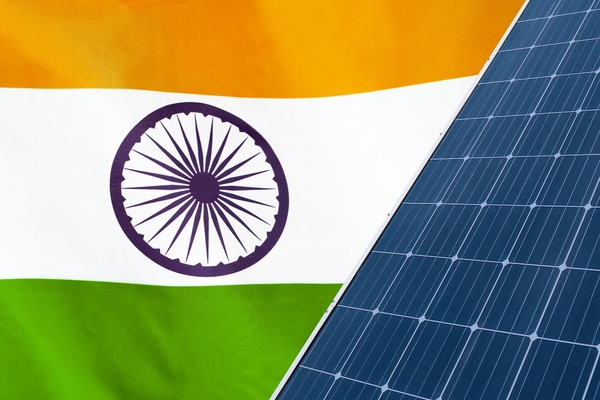
The Energy for Health solar programme aims to transform the country’s public health systems, build sustainability and address critical climate issues.


An initiative to upgrade 25,000 health facilities across India with solar energy aims to transform the country’s public health systems and address critical climate issues.
The Energy for Health programme is a collaboration with the Ministry of Health and Family Welfare, Government of India, State Health Missions and Selco Foundation, and has received initial funding of €48m from the Ikea Foundation.
Solar energy solutions
According to a 2019 healthcare climate footprint report by Health Care Without Harm, in collaboration with Arup, if the healthcare sector were a country, it would be the fifth largest greenhouse gas emitter on the planet.
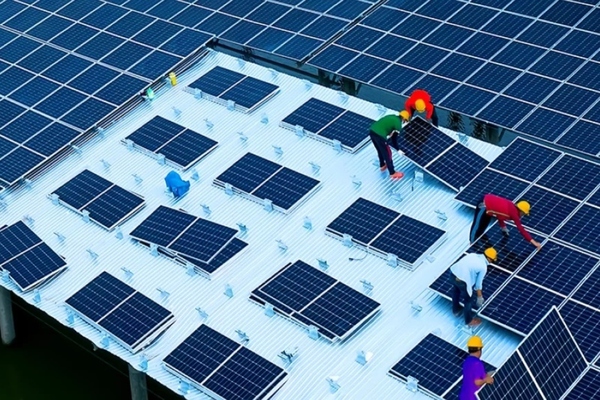
The Energy for Health initiative recognises climate adaptation and mitigation as being central to all efforts to upgrade the public health facilities across the world. It will bring solar energy solutions with efficient medical and electrical equipment to 25,000 healthcare facilities in 12 states by 2026. The diversity in terms of topography, socio-economic vulnerabilities, disease burden and climate that exists across the states will contribute to the programme serving as a showcase of innovative approaches, models and processes relevant that could be used in similar contexts in other parts of the world.
“Decentralised renewable energies represent a key opportunity to accelerate electrification of healthcare facilities, including in remote areas”
“Reliable electricity in healthcare facilities is essential to save lives and to provide quality healthcare. And yet, one billion people around the world are still served by health-care facilities without reliable electricity or with no electricity access at all,” said Dr Maria Neira, assistant director-general ai, Division of Healthier Populations, and director, Department of Environment, Climate Change and Health, at Who.
“Decentralised renewable energies represent a key opportunity to accelerate electrification of healthcare facilities, including in remote areas. I congratulate the Government of India and our partners from Selco Foundation and Ikea Foundation for this critical programme, which will have a transformative impact on strengthening the health system.”
Read More
The initiative aims to reach over 170 million people across the 12 states and improve working conditions for more than 160,000 frontline health staff at these health facilities. Across the 25,000 public health facilities, this will add ~100MW of solar energy capacity in the country and mitigate over three million tonnes of CO2e emissions over a 20-year period. These will directly contribute to India’s Net Zero targets, while also creating a paradigm shift on how health targets can be achieved for resource constrained communities across the world in an efficient manner.
In addition, the programme will also improve the local technical network for solar energy, which could potentially also have indirect impact on local economies and boost adoption of solar across other sectors as well.
“This initiative will improve healthcare outcomes and reduce emissions, by providing reliable and renewable energy to thousands of clinics”
“We strongly believe caring for the health of people and our planet must go hand-in-hand,” said Per Heggenes, CEO of the Ikea Foundation. “This initiative will improve healthcare outcomes and reduce emissions, by providing reliable and renewable energy to thousands of clinics. Our hope is that the success of this programme can serve as a model for building effective and efficient health systems globally.”
The Selco Foundation’s mission is to develop holistic solutions that use sustainable energy as a catalyst to address poverty alongside ensuring environmental sustainability. The Ikea Foundation is a strategic philanthropy that focuses its grant-making efforts on tackling the two biggest threats to children’s futures: poverty and climate change.
Why not try these links to see what our SmartCitiesWorld AI can tell you.
(Please note this is an experimental service)
How will solar energy improve healthcare service reliability in remote facilities?What are the expected CO2 emission reductions from this solar programme?How can decentralised renewable energy accelerate electrification in healthcare?In what ways will the programme enhance working conditions for health staff?How might local economies benefit from improved solar energy networks?climate actionClimate change/ResilienceEnergy & EnvironmentHealth & Social CareIndianet zeroSDGssolar power
Latest City Profile
SmartCitiesWorld Newsletters (Daily/Weekly)
You may also like these related articles...
BECOME A MEMBER
© 2026 SmartCitiesWorld
Smart Cities World Ltd, 27 Clements Lane, London, EC4N 7AE