










Announcements at the WEF Summit included news of the first cohort for a global coalition dedicated to advancing high-quality, people-centred urban development.
The 2025 Urban Transformation Summit, convened by the World Economic Forum, concluded with a bold call to action to reimagine cities as “the engines of local and global economic growth” for a new era shaped by climate change, inequality and technological disruption.
New initiatives announced at the event included a toolkit for innovation ecosystems based on good practice from global cities while plans were outlined to pilot new resilience finance models. Meanwhile, the pioneering cities were launched for the Davos Baukultur Alliance to advance people-centred urban development.
Held under the theme, Accelerating Innovation to Unlock Growth and Resilience, the summit in San Francisco brought together more than 300 leaders from 30 countries, including mayors, ministers, CEOs, investors and civil society representatives, to turn shared ambition into tangible results.
At a time of growing economic uncertainty and deepening political divides, the summit underscored that the next phase of growth will be driven by innovation ecosystems, resilient infrastructure and human-centred economies. Over three days of high-impact discussions, participants advanced practical frameworks and partnerships that connect investment, innovation and inclusion.
“Cities are where the future of the global economy will be written,” said Jeff Merritt, head of urban transformation, World Economic Forum. “The challenge, and opportunity, is to ensure that growth fosters shared prosperity, strengthens resilience and nurtures the ecosystems, cultures and histories that sustain and inspire us.”
“Closing the resilience investment gap isn’t just about financing risk – it’s about financing the future”
City leaders, investors and insurers outlined plans to pilot new finance models to close the $4.3 trillion annual resilience investment gap and position climate adaptation as a driver of long-term competitiveness. Through the Resilience Finance Taskforce, underwritten by Tokio Marine Group and convened by the Resilient Cities Network, the Forum and its partners will help build an investable market for urban resilience, linking city planning with private capital and measurable risk reduction.
“Closing the resilience investment gap isn’t just about financing risk – it’s about financing the future,” said Brad Irick, managing eOfficer and co-head of International Business, Tokio Marine.
“By embedding climate adaptation into the core of economic strategy, we can protect communities while creating more competitive, investable cities.”
The World Economic Forum, together with the Government of Karnataka, Greater Bengaluru Authority, and a coalition of public and private collaborators, announced at the summit the launch of Yes/Bengaluru. The initiative is inviting start-ups to deploy and scale solutions that address the city’s most pressing challenges. Key collaborators include Anthill Ventures, AWS, Cisco, Deloitte, Johnson Controls, Rainmatter Foundation and Salesforce.
Other initiatives and alliances launched at the Summit include:
Global tourism and destination leaders called for stronger cross-sector collaboration across infrastructure, finance, technology, skills and policy to unlock the $11 trillion travel and tourism sector’s potential as a driver of resilient, sustainable and inclusive growth. New efforts were outlined to accelerate investment and innovation that transform destinations into engines of sustainable growth, job creation and community resilience.
“Tourism should celebrate the soul of a city, not consume it,” said José Antonio Donaire, commissioner for sustainable tourism management, Barcelona City Council. “Through cross-sector collaboration, we’re proving that sustainable tourism can protect heritage, strengthen communities and power a more inclusive, creative urban economy.”
City officials and executives from global sports organisations and major companies spanning finance, media, technology, infrastructure and consumer goods came together to develop a shared vision for leveraging sport and major events as engines of innovation and community impact. In parallel, a growing coalition of public and private stakeholders, including Mastercard, AB InBev, and the City of Washington DC, announced plans to establish a global community to advance 24-hour economies that promote economic growth and community wellbeing.
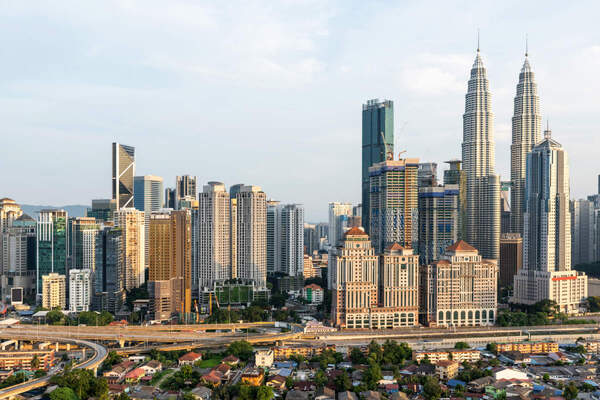
Six global cities – Kuala Lumpur, Medellín, Montreal, Nairobi, San Francisco and Utrecht – were announced as the first cohort of pioneering cities under the Davos Baukultur Alliance, a global coalition dedicated to advancing high-quality, people-centred urban development. The initiative positions these cities as real-world testbeds and beacons of innovation, demonstrating how thoughtful design, planning and governance can drive vibrant communities and resilient local economies.
“By breathing new life into underutilised spaces, Kuala Lumpur demonstrates how heritage, sustainability and innovation can move forward together,” said Zaliha Mustafa, Minister in the Prime Minister’s Department (Federal Territories), Malaysia. “This is the pathway to greater global competitiveness and liveability.”
World Economic Forum partners and Davos Baukultur Alliance members, including KPMG, Velux Group, Bankers Without Boundaries, UN-Habitat, Habitat for Humanity International, C40 Cities and the World Cities Culture Forum, announced new commitments to help scale these efforts, from embedding long-term value in financing models to unlocking private capital for urban renewal and strengthening global peer-learning networks.
Complementing this work, new frameworks and partnerships were unveiled to embed quality and liveability into the next generation of urban development:
At the summit, the World Economic Forum, in collaboration with UN-Habitat, also announced the 2025 Awards of Distinction for Public-Private Collaboration in Cities, recognising exemplary partnerships that advance innovative, inclusive and sustainable urban solutions.
Public and private sector leaders from Harar (Ethiopia), Jersey City (US) and Kigali (Rwanda) were celebrated for tackling critical urban challenges through public-private collaboration – eliminating plastic waste, expanding equitable access to healthcare and delivering affordable, green and climate-resilient housing. Together, these initiatives demonstrate how civic innovation and partnership can accelerate progress towards healthier, more inclusive cities.
Why not try these links to see what our SmartCitiesWorld AI can tell you.
(Please note this is an experimental service)
How can innovation ecosystems foster equitable entrepreneurship in global cities?What finance models effectively close the urban resilience investment gap?How does public-private collaboration enhance sustainable urban development?Which strategies integrate climate adaptation into economic urban planning?How can digital inclusion improve citizen engagement in city governance?