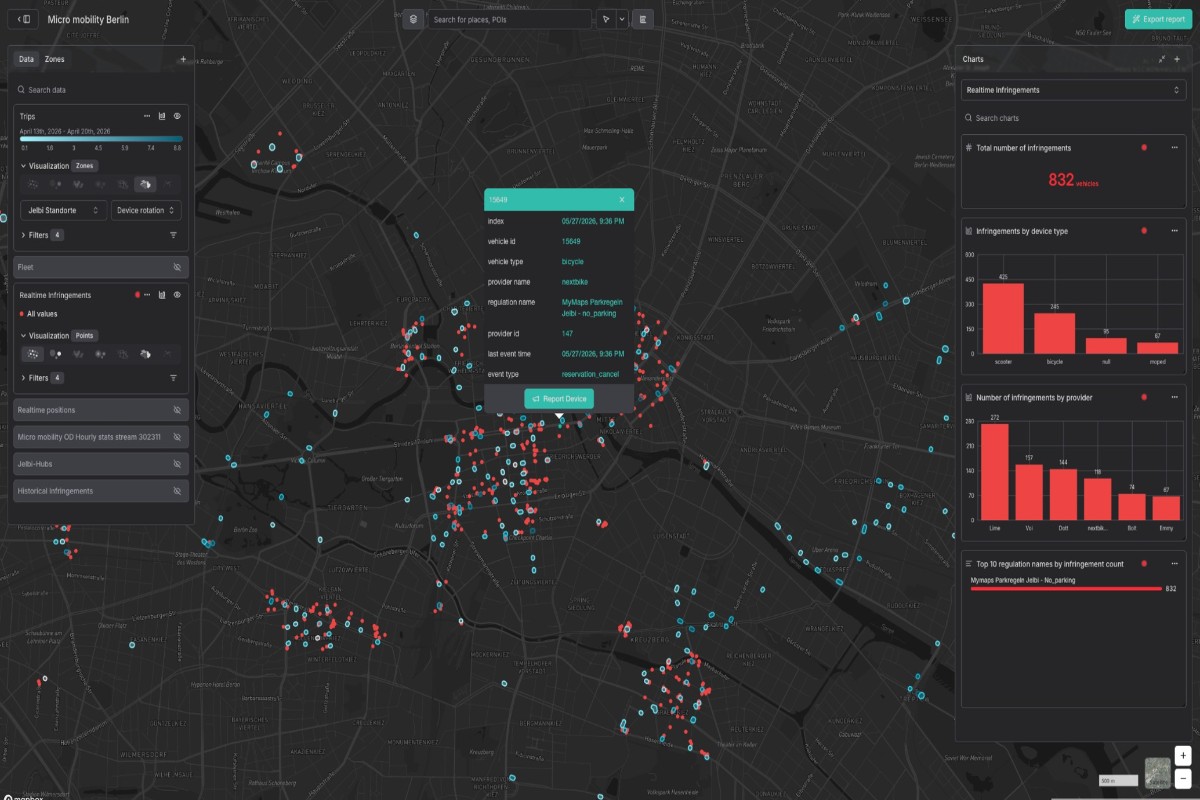








The web-based tool displays how any location in England and Wales is connected to everyday services by walking, driving, cycling and public transport.
At a glance
Who: UK government’s Department for Transport (DfT).
What: DfT has launched a web-based connectivity tool for planning professionals that scores places in England and Wales on how well connected they are to health services, education, shopping, leisure and workplaces. It combines transport and land‑use data in a way that generates the first nationally agreed connectivity score for every location.
Why: Historically, it has been difficult measure what a sustainable location is in transport terms. The tool addresses this by providing an evidence-based standard to ensure, for example, new homes, jobs and services are located where they can be accessed by sustainable modes of transport and to help to reconnect underserved communities.
When: The trial version of the tool was launched last June. Planners and built environment professionals can access the complete tool, and a second ‘lite’ version has gone live to the public. It is already being used to inform major growth projects, including supporting the work on new towns.
The UK government’s Department for Transport (DfT) has introduced a connectivity tool for planning professionals that scores places in England and Wales on how well connected they are to health services, education, shopping, leisure and workplaces.
The web-based tool will display how any location in England and Wales is connected to everyday services by walking, driving, cycling and public transport and plot new transport routes to understand how these would affect an area’s connectivity.
According to the DfT, sustainable development is a core aim of the UK’s planning system, but progress has been hindered by the lack of a clear way of measuring what is a sustainable location in transport terms. The connectivity tool tackles this problem by combining transport and land‑use data in a way that generates the first nationally agreed connectivity score for every location.
A trial version of the tool was launched last June. Now planners and built environment professionals can access the complete tool, and a second ‘lite’ version has gone live to the public, allowing communities to explore connectivity in their area and understand how transport links support access to other services.
“The connectivity tool gives planners and professionals the evidence they need to make better decisions about where development should happen, ensuring communities are well connected to jobs and services”
By establishing a clear, evidence‑based standard, the DfT claims the tool will:
“Transport is central to unlocking growth. The connectivity tool gives planners and professionals the evidence they need to make better decisions about where development should happen, ensuring communities are well connected to jobs and services,” said Lilian Greenwood, minister for local transport.
“By making the tool widely available, we are setting a new national standard for measuring connectivity and supporting sustainable growth across England and Wales.”
The DfT said the connectivity tool is already being used to inform major growth projects. It is currently supporting the work on new towns, helping to understand the opportunities to make new towns accessible, well-connected and sustainable, in line with the New Towns Taskforce’s recommended placemaking principles.
Why not try these links to see what our SmartCitiesWorld AI can tell you.
(Please note this is an experimental service)
How does the connectivity tool integrate transport and land-use data effectively?In what ways can the tool support planning for sustainable transport infrastructure?How can the tool help reconnect underserved communities through improved access?What metrics define the nationally agreed connectivity score for locations?How is the tool being applied to enhance accessibility in new town developments?