












 22 - 26 June 2026: Find out more

BUILD YOUR OWN
RESOURCE LIBRARY



Podcasts

Cities Thriving on Lighting, Episode 2 – Simplicity by design in smart lightingSponsored by Paradox Engineering

Cities Thriving on Lighting, Episode 1 – Lighting as the backbone of the smart citySponsored by Paradox Engineering
Opinions

Transforming indoor public safety with smart sensor networksSponsored by Motorola Solutions
FIA launches index to help bodies improve safety footprint
The Federation International Automobile’s Road Safety Index aims to provide organisations with a methodology to assess their road safety performance.


The Federation International Automobile (FIA) has introduced the FIA Road Safety Index to help onboard organisations in the effort for safer roads.
FIA’s Road Safety Index sets out to provide organisations with a methodology to assess their road safety performance and calculate their safety footprint, relying on a similar concept as the carbon footprint calculators.
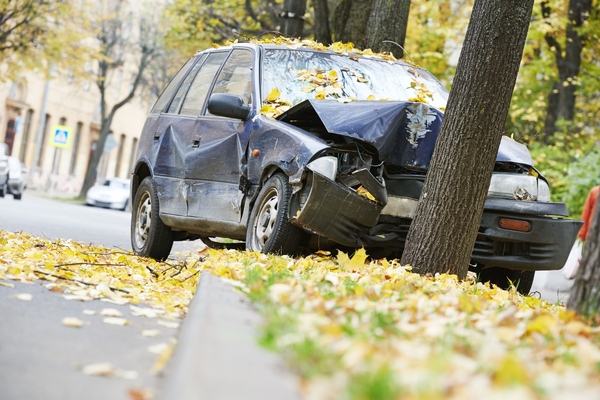
Road crashes
An organisation’s safety footprint refers to the number of fatalities and seriously injured persons as a result of road crashes occurring within its entire value chain.
“The FIA Road Safety Index is a milestone for traffic safety, and it is one of the FIA’s contributions to achieve the United Nations’ target of halving road traffic deaths and injuries by 2030. The index will help organisations report on their ambitions, actions, and results,” said Tim Shearman, deputy president for automobile mobility and tourism, FIA.
“It is a true evidence-based prevention tool that is made available to contribute to building a culture of safe mobility. It is my hope that responsible businesses will embrace it to measure their safety footprint and that, ultimately, it will enable to improve safety worldwide, particularly in low- and middle-income countries where the vast majority of road crashes occur.”
Read More
The index offers a systematic approach to identify organisations’ value chains and assess how traffic safety is affected by their range of services or products. It is built on a rating system which helps evaluate to what extent an organisation is managing its safety impact.
Before its official launch, the Road Safety Index project began in 2020 with a feasibility study that to define a prototype. Since the autumn of 2021, Autoliv, Ikea, TotalEnergies, the Swedish transport administration Trafikverket, and two FIA Clubs, the Automobile Club Association (ACA – France) and the Automóvil Club del Uruguay (ACU) have taken part in six pilot projects.
“The implementation of safe system principles into the value chain and operations of public and private organisations everywhere is a game changer for global road safety”
The pilot phase finalised the detailed methodology for the first three stages of the six-step evaluation that is now available to all organisations around the world.
“Autoliv’s vision is ‘saving more lives’. The implementation of safe system principles into the value chain and operations of public and private organisations everywhere is a game changer for global road safety,” said Dr Cecilia Sunnevang, VP research of automotive safety supplier, Autoliv.
“The FIA Road Safety Index is the first practical proposal of how this might be done and evaluated. Being part of piloting and refining the FIA Road Safety Index has reconfirmed how important this approach will be, but also brought to light the practical challenges of implementing it.”
“It is my hope that responsible businesses will embrace it to measure their safety footprint and that, ultimately, it will enable to improve safety worldwide”
“Safety is fundamental in Ikea supply chain operations. We recognise our shared responsibility to enhance road safety and to achieve global road safety goals as outlined in the UN Sustainable Development Goals,” added Elisabeth Munck af Rosenschöld, supply chain operations sustainability manager, Ikea.
“One area that we focus on right now is incident reporting and measuring our road safety footprint. To gain speed, we took part in the pilot of the FIA Road Safety Index. Our ambition is that, together with other companies, we can benchmark and learn from each other.”
FIA reports the methodology will be further expanded in 2023, thanks to the support of the FIA Foundation, and will include specific modules to increase the safety of employees, contractors, third parties, and clients or customers.
Why not try these links to see what our SmartCitiesWorld AI can tell you.
(Please note this is an experimental service)
How does the FIA Road Safety Index measure an organisation's safety footprint?What are the key stages in the FIA Road Safety Index evaluation process?How can organisations integrate safe system principles into their value chains?What role did pilot projects play in developing the FIA Road Safety Index?How will the FIA Road Safety Index expand to include employee and contractor safety?
Latest City Profile
Latest Urban Exchange Podcast
Latest Special Report
SmartCitiesWorld Newsletters (Daily/Weekly)
You may also like these related articles...
BECOME A MEMBER
© 2026 SmartCitiesWorld
Smart Cities World Ltd, 37 Lombard Street, London, EC3V 9BQ