














BUILD YOUR OWN
RESOURCE LIBRARY



Opinions
Beyond video: how cameras as IoT sensors are changing city safety operationsSponsored by Axis Communications

Building smarter cities: scaling sustainability and efficiency with smart city platformsSponsored by ST Engineering
Berlin progresses state building decarbonisation programme
As part of the Federal government’s decarbonisation programme, Berlin State Library is working with Siemens to reduce energy consumption and emissions.


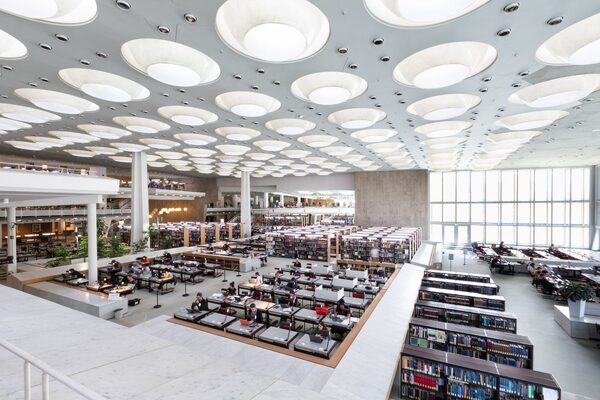
Berlin State Library (Staatsbibliothek zu Berlin) is working with Siemens to reduce its energy consumption, lower its CO₂ emissions and better protect valuable cultural assets.
To achieve this, Siemens installed intelligent building technology that reduces energy consumption by 52 per cent and saves 3,745 tons of CO₂ annually.
National climate programme
At the same time, the new technology ensures stable temperature and humidity levels throughout the building – essential for preserving the library’s more than 32 million media items over the long term.
The project costs – around €20m – are fully covered by guaranteed savings in energy costs. This is made possible with energy savings contracting, a service Siemens offers to public as well as private customers.
“With guaranteed energy cost savings fully financing all project costs, this cooperation serves as a blueprint for reaching sustainability targets for millions of cultural facilities around the globe”
The Staatsbibliothek zu Berlin project is part of the company’s ongoing collaboration with Berlin’s cultural buildings that began in 2014. The library’s Potsdamer Strasse building is a protected historic complex with around 106,000 square metres of gross floor area. Carried out as part of the federal government’s decarbonisation programme, the Siemens project contributes to the programme’s 2030 target of reducing CO₂ emissions from state buildings by 65 compared to their 1990 levels.
New technologies installed by Siemens include the Desigo building automation system, room operator units, sensors and a cloud-based energy and asset management platform. Ventilation is optimised through flexible systems for heating, ventilation and air-conditioning. In addition, 5,300 LED lights consume up to 80 per cent less electricity than the building’s old conventional lighting.
Read More
Over the years, Siemens has modernised seven major cultural sites in Berlin, such as the Neue Nationalgalerie. Between 2014 and 2024, around €25m in energy costs were saved and 3,745 tons of CO₂ emissions were avoided annually.
“The Berlin State Library has a rich history spanning more than 360 years. To preserve its valuable, high-diversity assets even better, it requires consistent environmental parameters. Siemens is delighted to supply the technology that enables it to sustain these conditions, while also reducing energy consumption by 52 percent,” said Constantin Ginet, executive vice president, sustainability, Siemens Smart Infrastructure Buildings.
“The latest contract, focused on services, builds on the success of the initial phase of the project. With guaranteed energy cost savings fully financing all project costs, this cooperation serves as a blueprint for reaching sustainability targets for millions of cultural facilities around the globe.”
Why not try these links to see what our SmartCitiesWorld AI can tell you.
(Please note this is an experimental service)
How does Siemens' building automation system reduce energy consumption effectively?What role does energy savings contracting play in financing decarbonisation projects?How do stable temperature and humidity levels protect cultural assets in libraries?Which technologies contribute most to CO₂ emissions reduction in historic buildings?How can this Berlin project serve as a model for global cultural facilities?Berlinclimate actionClimate change/ResilienceCultural spaceEnergy & EnvironmentMunicipal buildingsurban space
Latest City Profile
SmartCitiesWorld Newsletters (Daily/Weekly)
You may also like these related articles...
BECOME A MEMBER
© 2025 SmartCitiesWorld
Smart Cities World Ltd, 27 Clements Lane, London, EC4N 7AE