








BUILD YOUR OWN
RESOURCE LIBRARY



Podcasts
Cities Thriving on Lighting, Episode 2 – Simplicity by design in smart lightingSponsored by Paradox Engineering
Cities Thriving on Lighting, Episode 1 – Lighting as the backbone of the smart citySponsored by Paradox Engineering
Opinions

Transforming indoor public safety with smart sensor networksSponsored by Motorola Solutions
Seoul expands early morning autonomous bus service
The city will continue expanding autonomous bus services on high-demand, early-morning routes to improve access for citizens who need to travel at early hours.


 At a glance
Who: Seoul Metropolitan Government (SMG).
What: SMG plans to introduce a new early-morning autonomous bus route, designed to depart 30 minutes earlier than the previously scheduled first regular bus.
Why: To improve transportation access for early-morning commuters.
When: The new service launched on 16 April 2026.
The Seoul Metropolitan Government (SMG) plans to introduce a new early-morning autonomous bus route designed to depart 30 minutes earlier than the previously scheduled first regular bus, aimed at supporting early-morning commuters.
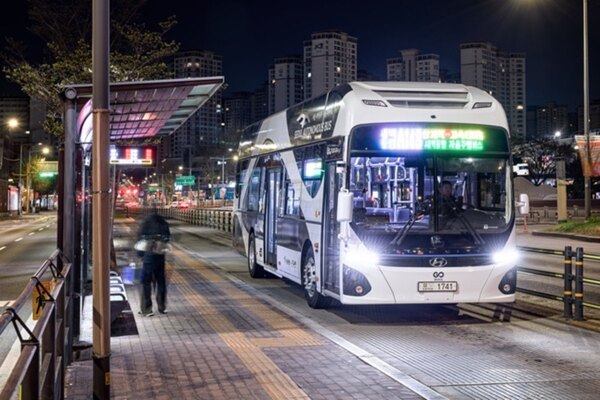
The City currently operates two early-morning autonomous routes – A160 (Dobongsan Station–Yeongdeungpo Station), launched in 2024, and A741 (Gupabal Station–Yangjae Station) – launched last month.
Enhancing passenger safety
On weekday early mornings, the A148 will depart from Sanggye Station and travel a 22.1-km round-trip route, passing through Miasageori, Gyeongdong Market, and Apgujeong Station before reaching the Express Bus terminal.
The route operates as an express service, stopping only at major bus stops. The A148 will stop at 41 key locations with high demand for first-bus service along the existing Route 148, SMG reports, allowing it to reach its destination approximately 15 minutes faster per trip than the standard Route 148.
To enhance passenger safety, the A148 integrates onboard sensor data with City-provided intersection signal information, helping prevent sudden stops at intersections and ensuring stable operation in GPS dead zones.
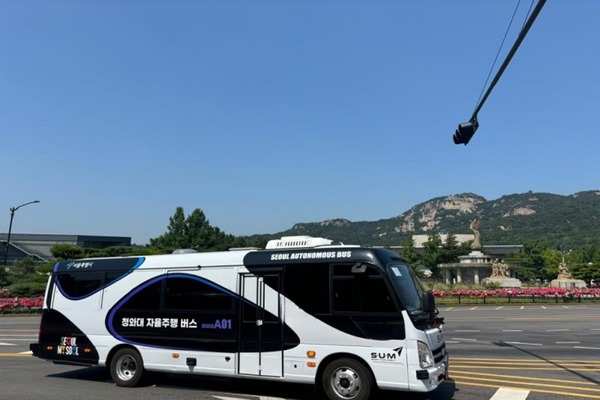
The A148 autonomous bus is a large vehicle with 31 seats, based on the Hyundai Elec City model, and equipped with proprietary autonomous driving software. It is manufactured and operated by SUM, which has previously deployed autonomous buses in areas such as Cheong Wa Dae (Office of the President) and on late-night routes across Seoul.
To enhance passenger safety, the A148 integrates onboard sensor data with City-provided intersection signal information, helping prevent sudden stops at intersections and ensuring stable operation in GPS dead zones.
Read More
The City also collects and provides real-time traffic signal data – including signal phases and remaining time – for major intersections with six or more lanes. The A148 utilises data from 98 intersections along its route, further reducing abrupt braking.
The A148 route also covers the section between Sanggye Station and Suyu Station, which is not included in the existing Route 148. For safety reasons, passengers will not be allowed to board if there are no available seats. Riders are encouraged to check seat availability in advance using Bus Information Terminals (BIT) or the LED seat display on the front of the bus.
The City reports it will continue expanding autonomous bus services on high-demand early-morning routes to improve transportation access for citizens who need to travel at early hours, particularly amid constraints on increasing bus frequency due to driver shortages.
Seoul also plans to introduce an additional route, A504 (Geumcheon-gu Office–Gwanghwamun), in late April and gradually expand services to build a citywide autonomous bus network.
Latest City Profile
SmartCitiesWorld Newsletters (Daily/Weekly)
You may also like these related articles...
BECOME A MEMBER
© 2026 SmartCitiesWorld
Smart Cities World Ltd, 37 Lombard Street, London, EC3V 9BQ