













BUILD YOUR OWN
RESOURCE LIBRARY



Opinions
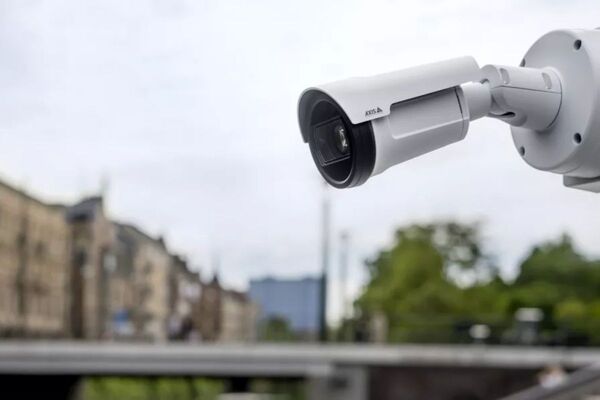
Beyond video: how cameras as IoT sensors are changing city safety operationsSponsored by Axis Communications

Building smarter cities: scaling sustainability and efficiency with smart city platformsSponsored by ST Engineering
OnDemand Webinar: How sensors, AI, and digital twins can shape the future of urban transport
Webinars08 Oct 2025
Delve into the how the convergence of visual sensors, IoT devices, and artificial intelligence are revolutionising urban mobility.


Date recorded: Thursday 27 November 2025
Length: 60 minutes + Q&A
Cities around the world are rethinking how people and vehicles move through urban spaces, driven by growing demands for safety, sustainability, and efficiency. As technology evolves, the combination of visual sensors, IoT devices, and artificial intelligence is enabling cities to make data-driven mobility decisions in real time.
In this webinar, supported by Axis Communications, we explore how these technologies are converging to create smarter, safer, and more adaptive urban mobility systems. From the rise of multi-sensor ecosystems to the integration of AI-powered analytics, participants will hear how cities and technology providers are transforming traditional mobility operations.
Discover how cameras are evolving into intelligent visual sensors, capturing data that can improve parking management, optimise traffic flow, and enhance pedestrian safety.
The discussion also looks at how this data feeds into digital twins – virtual models that allow cities to test, simulate, and improve mobility planning before implementing changes in the real world. Viewers will gain insight into how digital twins are being used to manage congestion, monitor air quality, and design more resilient transport networks.
Key talking points:
- How cities are using camera and IoT sensor data to improve mobility efficiency and safety
- The growing role of AI, deep learning, and computer vision in traffic and environmental monitoring
- The shift from single-sensor to multi-sensor ecosystems combining imagery, radar, and audio
- How digital twins enable predictive, data-driven mobility planning
- Challenges and opportunities in scaling AI and sensor technologies within urban networks
- Real-world case studies from Europe demonstrating measurable impact.
This session provides valuable insights for city leaders, transport authorities, and technology partners seeking to accelerate their smart mobility strategies.
When you watch this, we may share your data with Axis Communications in line with our Privacy Policy, and through carefully-evaluated legitimate interest.
Speakers
 |
Riccardo Corbucci President Roma Capitale, Committee for Statute and Technological Innovation
Riccardo Corbucci is a sociologist, journalist and councillor for the Capitoline Assembly of Rome, where he serves as President of the Committee for Statute and Technological Innovation, Roma Capitale and Vice-Chairman of the Trade and Productive Activities Committee. In 2017, he was a consultant to the Parliamentary Commission of Inquiry on Digitalisation and Innovation. In 2014, he published Il palazzo di vetro. La trasparenza nella lotta alla corruzione (The Glass Palace: Transparency in the Fight Against Corruption) (Editori Riuniti). |
|
 |
Andrea Sorri Segment Development Manager, Smart Cities Axis Communications
Andrea Sorri creates and implements the most efficient strategies for Smart Cities, focusing on public safety, mobility and environmental monitoring. He has been doing it at Axis for 25 years, especially on key market segments. Passionate about innovation and technology, and thrilled to face the challenges posed by AI ethics. |
|
 |
Gianmaria Giaconia Europe Director – International Markets Development Almaviva
Steering Almaviva’s Europe market development, Gianmaria’s focus is on sculpting robust commercial strategies that drive growth and market share. With a foundation grounded in MBA acquired knowledge, his role is to foster customer relationships and spearhead new business development initiatives. The past years in the Transportation industry have honed his expertise in sales, bid management and customer relations, enabling our teams to deliver customer-centric solutions that resonate in the transportation and logistics sector. |
|
 |
Luke Antoniou SmartCitiesWorld
Luke has been reporting on the implementation of smart technologies that benefit citizens and the public sector since 2017.
He has a particularly keen interest in smart and sustainable mobility and its role in influencing the decisions of urban planners, citizens and governments alike.
As rapid urbanisation continues, he keeps his finger on the pulse of the myriad urban challenges facing local and central governments, making new connections in the public and private sectors and finding new angles from which to cover the latest smart city developments around the world. |
Sponsored by:

Why not try these links to see what our SmartCitiesWorld AI can tell you.
(Please note this is an experimental service)
How do AI and deep learning improve traffic and environmental monitoring?In what ways do digital twins enhance predictive urban mobility planning?How can multi-sensor ecosystems optimize pedestrian safety and traffic flow?What challenges exist in scaling AI and sensor technologies in cities?How does integrating IoT sensor data improve congestion management efficiency?AI and Machine LearningcongestionConnectivity & DataDatadigital twinsInternet of Things (IoT)mobilityPlanningRenewablesresilienceSensors
Latest City Profile
SmartCitiesWorld Newsletters (Daily/Weekly)
You may also like these related articles...
BECOME A MEMBER
© 2025 SmartCitiesWorld
Smart Cities World Ltd, 27 Clements Lane, London, EC4N 7AE