














































Discover how Sunderland is turning a strong, city‑wide data foundation into real‑world impact by using secure, scalable AI to transform planning, services, and community outcomes.
Discover how this year’s Cities Climate Action Summit puts the spotlight on the switch to clean and renewable energy, and the importance of energy-efficiency.
Find out how Dublin is innovating to improve experiences and services for its communities in the latest SmartCitiesWorld City Profile, including digital twin projects, traffic reduction, and economic growth.
Discover how the city of Madrid is innovating to become a smarter, more sustainable city that’s able to deliver improved services to residents and visitors alike.
Tune into the SmartCitiesWorld podcast to understand the world of sovereign AI for cities, featuring PNY Technologies’ Youssef Nadiri as our expert guest.
Tune in for the latest Urban Exchange where we get a first-hand account of city resilience measures from Quezon City following unexpected extreme rainfall.
Gareth Tang, President of Urban Solutions at ST Engineering, explains how urban AI applications are set to evolve, detailing projects where AI is already making significant impact.
SmartCitiesWorld’s senior editor Luke Antoniou on the launch of the new AI CityXchange, at a time where dialogue and knowledge sharing is critical between cities and their partners to use AI technology for public good.
The close relationship between lack of access to green financing and tech and the equitable transition to a greener economy risks further economic inequalities.
The World Economic Forum’s report found the transition is still progressing but has lost some momentum in the face of increasing uncertainty worldwide.
Report by WEF and Deloitte highlights exponential growth in satellite tech and its applications across sectors, including disaster response and renewable energy.
The virtual Global Collaboration Village platform facilitated discussion at the WEF annual meeting 2024 and helped to expand public-private partnerships.
The Alliance of CEO Climate Leaders has signed an open letter ahead of Cop28 calling on public and private sector leaders to accelerate net zero actions.
The Alliance for Urban Innovation aims to connect urban innovators and entrepreneurs to new markets while helping to build more resilient local economies.
Ahead of the G7 Sustainable Urban Development Ministers’ meeting in Japan, WEF has issued a six-point call-to-action to accelerate sustainable urban development.
Announced at Davos, the centre will promote responsible production and use of technologies such as AI, machine learning, blockchain, VR and quantum computing.
The World Economic Forum unveiled a prototype metaverse at its Annual Meeting 2023 where organisations can convene to tackle the world’s pressing challenges.
Findings are based on a pilot that took place in the South Aegean and West Mediterranean region of Turkey in the wake of the country’s worst wildfires.
WEF report reveals cost of living crisis as biggest short-term risk while failure of climate mitigation and climate adaptation are largest long-term concerns.
Toolbox of Solutions contains more than 300 case studies from 150-plus cities and enables users to access solutions based on each city’s strategic priorities.
WEF’s Alliance for Clean Air is releasing a guide to help businesses measure air pollutant emissions across value chains and create emission inventories.
Global Partnership for Local Investment aims to increase the prosperity of 100 cities by 2030 and will curate successful models of public-private collaboration that can be scaled globally.
A survey by the World Economic Forum finds that more than seven in 10 adults, including a majority in every single country, expect climate change to have a severe effect in their regions over the next 10 years.
Four reports on city financing models, technology adoption, urban inclusion, and climate preparedness, explain why cities should eradicate siloed thinking and take a systems approach to deliver urban transformation projects.
The six-month Medicine from the Sky programme, in collaboration with the World Economic Forum, aims to document how health systems in remote parts of the state respond to the integration of drone-based supply chains.
Aimed at public and private sector decision-makers in the AI ecosystem, it aims to provide a better understanding of how equity and inclusion, by design, can be adopted.
The centres are joining the Transitioning Industrial Clusters towards Net Zero initiative which builds cross-industry and cross-cluster partnerships to better implement low-carbon technologies.
It is convening organisations across the public and private sectors, experts and academics to accelerate development of governance and policy frameworks.
The Global Collaboration Village has been unveiled at the annual Davos meeting and aims to use new technology to shape innovative solutions to help address critical global challenges.
It seeks to provide an in-depth overview of policy in seven jurisdictions around the world to help assess the impact on five key low-carbon emitting technologies.
It will work with the China Academy of Information and Communication Technology in a multi-year collaboration to increase both understanding and capacity of the technology in cities around the world.
This was one of the clear messages to come out of the World Economic Forum’s inaugural Urban Transformation Summit, an initiative which aimed to forge a path for more sustainable and inclusive cities.
Participating cities have designated neighbourhoods which will serve as urban testbeds for new businesses, products and services that can improve quality of life for local residents and mitigate social and environmental challenges.
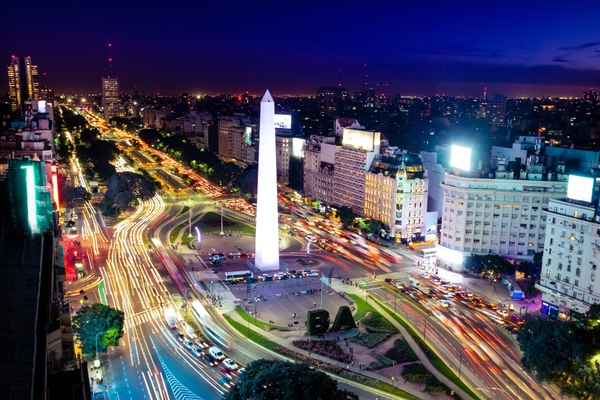
The Argentine capital was recognised for its municipal solid waste management plan and its aim to develop circular economy models for each waste current.
The new centre has selected three diverse metropolitan areas in the US to participate in a series of City Strategy Dialogues designed to help jumpstart new public-private collaboration.
The interactive digital platform contains more than 200 practical solutions to help city leaders, national governments and businesses evaluate and identify optimal solutions.
The Medicine from the Sky initiative aims to improve equity in healthcare while enabling healthcare access for isolated populations and hazard-prone areas.
World Economic Forum said AI can act as an intelligent layer across many applications and has advanced a set of principles for the energy industry to deploy the technology in a safe and trustworthy way.
The centre aims to increase public-private collaboration in cities and advance a more inclusive and sustainable model for urban development, drawing on the forum’s network.
The Circular Shapers programme aims to leverage grassroots change to transform cities into centres of circular economy innovation to improve reuse and eliminate waste.
The line-up includes young tech companies representing 26 economies focused on areas spanning urban infrastructure and cleantech to logistics and mobility.
The World Economic Forum said AI’s potential requires strong buy-in from citizens and governments, based on their trust that applications and technologies making use of it are built and used ethically.
The strategy will help Los Angeles map out challenges identified by local, diverse stakeholders surrounding public airspace and property rights – and implement solutions to these issues.
The forum has focused on FRT for passengers boarding aircraft and the toolkit’s questionnaire has been tested by Tokyo-Narita Airport, which will encourage other airports to adopt this framework.
The World Economic Forum has chosen the cities to pioneer a global policy roadmap developed by its G20 Smart Cities Alliance for the ethical and responsible use of data and technology.
Key insights highlighted in the report include blockchain technology’s fragmentation both worldwide and within jurisdictions, overlaps, gaps, as well as conflicts in standard-setting.
The cities of Boise, Dallas, Detroit and Tucson are among those committing to help combat extreme heat and wildfires, as well as other adverse effects of climate change, by protecting and planting more trees.
Unprecedented disruptions from the coronavirus pandemic risks cancelling out recent progress unless there is urgent action at national, regional and global levels.
The framework aims to operationalise use cases and is designed to be deployed and tested as a tool to mitigate risks from potential unethical practices of the technology.
A new report by eDelivery explores how retailers and carriers are looking for new ways to reduce carbon emissions and meet customer expectations of sustainability.
Signify and Elektron have so far replaced 500 of the 1,000 streetlights with energy-efficient LEDs and connected 250 of those to its wireless lighting system.
A report by the World Economic Forum also finds that traffic congestion is expected to add the equivalent of 11 minutes to each passenger’s daily commute in the top 100 cities.
Scale 360 aims to harness the potential of technology innovation and smart policy to fast-track the circular economy through nationally led challenges.
The Shared, Electric and Automated Mobility Governance Framework is a set of sustainable mobility guidelines aimed at helping cities reduce congestion and pollution.
The World Economic Forum and Accenture have designed a framework and visual roadmap with key questions to ask when building a blockchain business case.
The alliance will unite municipal, regional and national governments as well as private sector partnerships and citizens around a shared set of guiding principles on tech governance.
The Global Fourth Industrial Revolution councils will work together to develop policy guidance and address governance gaps in areas such as AI, IoT and blockchain.
The Grid is a network for the city’s urban tech community, consisting of 70 organisations from different industries to share ideas and build partnerships
Forty CEOs from around the world have backed the GSMA’s cross-industry Digital Declaration, launched at the World Economic Forum annual meeting in Davos
Cyber-security experts at Davos hope those democracies that have not signed the Paris Call for Trust and Security in Cyberspace will join the multi-stakeholder initiative
A coalition of G20 cities will help ensure that global smart city efforts are built upon a common set of human-centred principles and shared policy frameworks
At its annual meeting in Davos, WEF is launching an initiative aimed at helping the civil society prepare for and respond to the Fourth Industrial Revolution