








BUILD YOUR OWN
RESOURCE LIBRARY



Podcasts
Cities Thriving on Lighting, Episode 2 – Simplicity by design in smart lightingSponsored by Paradox Engineering
Cities Thriving on Lighting, Episode 1 – Lighting as the backbone of the smart citySponsored by Paradox Engineering
Opinions
Transforming indoor public safety with smart sensor networksSponsored by Motorola Solutions
How smart building retrofit gives Milan’s Porta Nuova business district a sustainable edge
SmartCitiesWorld Advisory Board Chair, Paul Wilson, reports from Siemens’ Smart Infrastructure Italian Press Tour on the green transformation of Milan’s Porta Nuova business district.


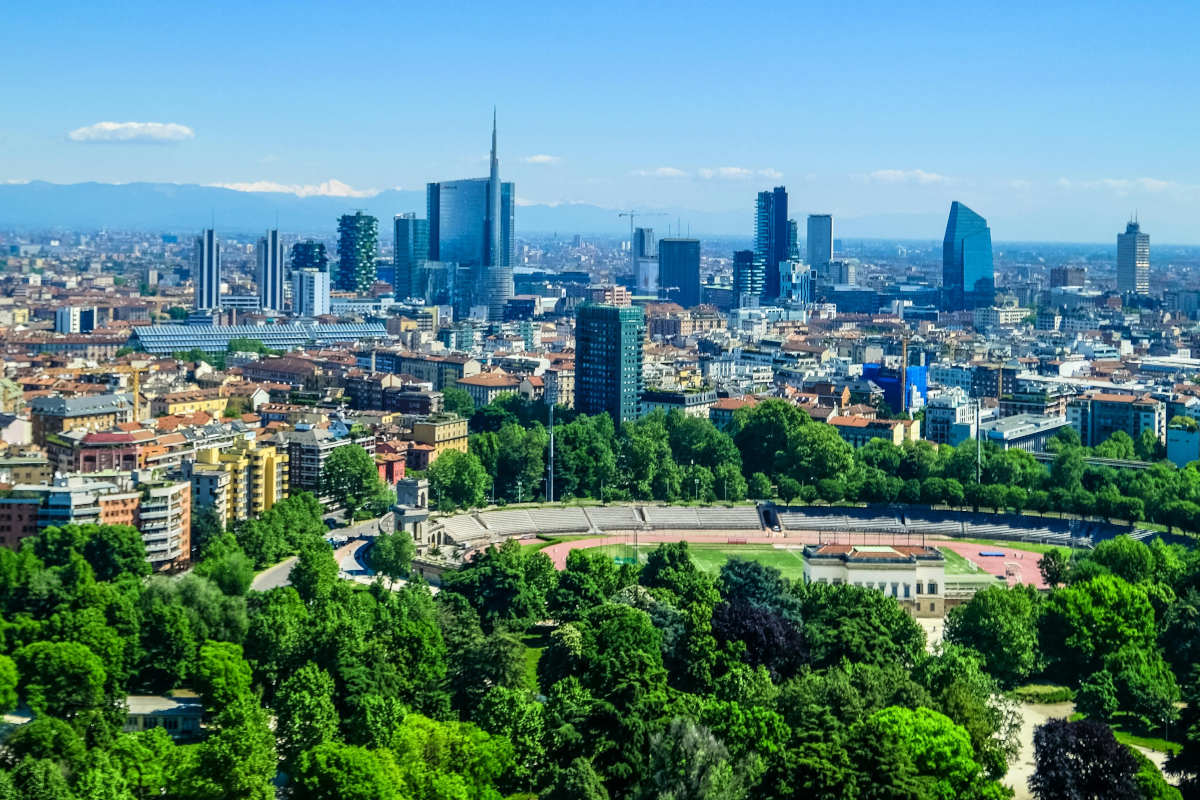
Twenty years ago, Milan’s business district Porta Nuova, looked rather different. Neglected, abandoned, a no-go area. Today it is mixture of tall, gleaming, squat-and-curvy, and tree-covered offices and residential buildings that lead the world for innovation, sustainability and design. Its famous residential Bosco Verticale building, won ‘most beautiful and innovative skyscraper in the world’ shortly after opening in 2014, and the awards and accolades keep on coming.
The property developer behind the successful business district is COIMA, a fifty-year-old Milanese company that ‘strives to be the pride of Italy in real estate’. COIMA specialises in structuring sophisticated real estate investment funds, attractive to large institutional investors, focused on sustainable urban regeneration. Its funds have attracted €4.5bn of investment in the last five years alone. These funds contribute to an institutional investors ESG portfolio, and unlock innovative approaches to real-world decarbonisation above and below ground.
The district shares an innovative geo-thermal grid for warming in winter and cooling in summer. COIMA commissioned the drilling of 13 bore holes deep into a subterranean lake below the site, that now heats and cools its buildings. Seventy-five per cent of all energy currently comes from renewable sources or is produced and self-consumed. Thanks to tenant commitment, Porta Nuova will achieve carbon neutrality this decade.
The abundant green space in the district reduces local urban heat island effects, improves air quality, and increases wellbeing for workers and residents alike. The immediate transport layout favours active travel and has only been made possible by taking the multi-lane road, that transverses the district, into a new tunnel.
More than 10m people visit the district annually – more than 25,000 per-day on average. Occupancy rates are strong, and there are many firsts. In 2022 it was the first district in the world that received both of the industry’s most well-known certifications – LEED and WELL for Communities.
All of this calm sophistication and beautiful-looking Milanese elegance, takes a lot of ongoing operational management, which is carefully hidden behind the scenes. To achieve this COIMA needed a buildings management systems partner who was highly reliable, scalable and innovative, who could match the scale of its ambition. COIMA chose Siemens. And the relationship has flourished for over a decade, with 30 COIMA-owned buildings in Milan now using Siemens’ building technology and services.
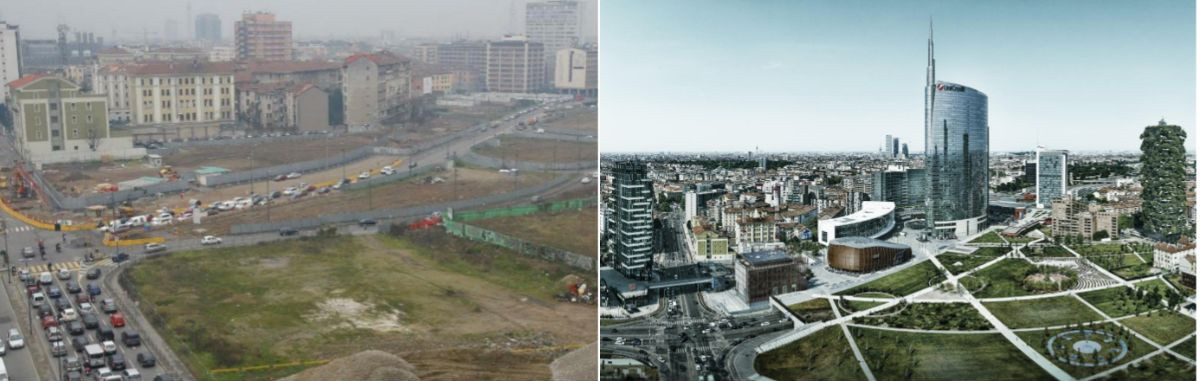
Porta Nuova: before and after COIMA redevelopment
Siemens’ open digital business platform strategy, aimed at accelerating digital transformation in different contexts, is called the Siemens Xcelerator portfolio. Siemens’ integrated building management system, Desigo CC, is an important part of this Xcelerator platform strategy.
Desigo CC’s open design and API capabilities enable a community of third party developers and partners to contribute to its building systems management ecosystem. It works comfortably with cloud-based building data aggregation platforms, such as Building X, which is also developed by Siemens.
This approach gives a high level of cybersecurity protection, while orchestrating all building operations into a single, centrally monitored system. Being able to oversee all solutions and systems in a building – such as heating, ventilation, and air conditioning (HVAC), lighting, room automation, fire safety, as well as electrical distribution – improves operational efficiency, reliability and system longevity.
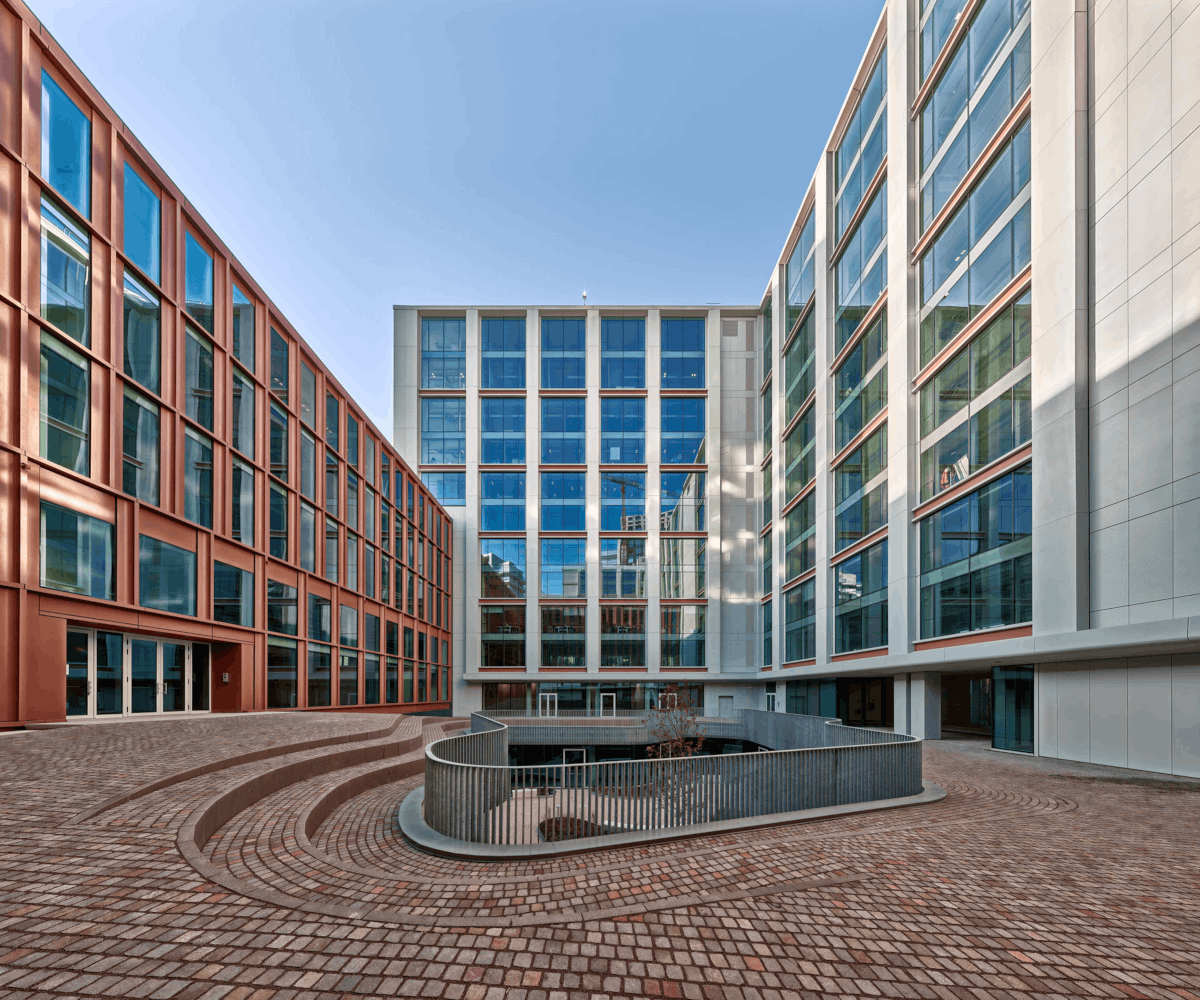
The “Pirelli 35” commercial building delivers energy savings of 60 per cent, cutting 2,000 tons of CO₂ emissions annually
COIMA’s latest project with Siemens is the “Pirelli 35”. A 45,000m2, 11-storey architect-designed building, which they aim to turn into a smart and energy efficient property. Once complete, the 65-year-old building will give strong environmental performance to its 40 commercial tenants, by reducing their energy consumption by approximately 60 per cent, and CO2 emissions by 2,000 tons, annually.
As in most smart buildings, thousands of sensors are deployed, wired and wirelessly. They monitor different environmental factors including air quality, energy consumption and CO2 levels, and blend that with local open data, such as weather data. The result is both optimised energy efficiency for tenants – good for profit and planet, and increased occupant well-being, which in turn is good for productivity and safety. Rents are more expensive than other local properties, and that’s because of the energy savings, the inherent building intelligence, and the quality environment.
“In major cities, many buildings could benefit from digitalisation, transforming into smarter and more energy efficient assets”, said Susanne Seitz, CEO Buildings at Siemens Smart Infrastructure. “Pirelli 35 is a prime example of this, serving as a blueprint for sustainable urban regeneration. It showcases how buildings can be modernised with building and electrification technology to meet Europe’s 2030 net zero goals while maintaining their architectural heritage.”
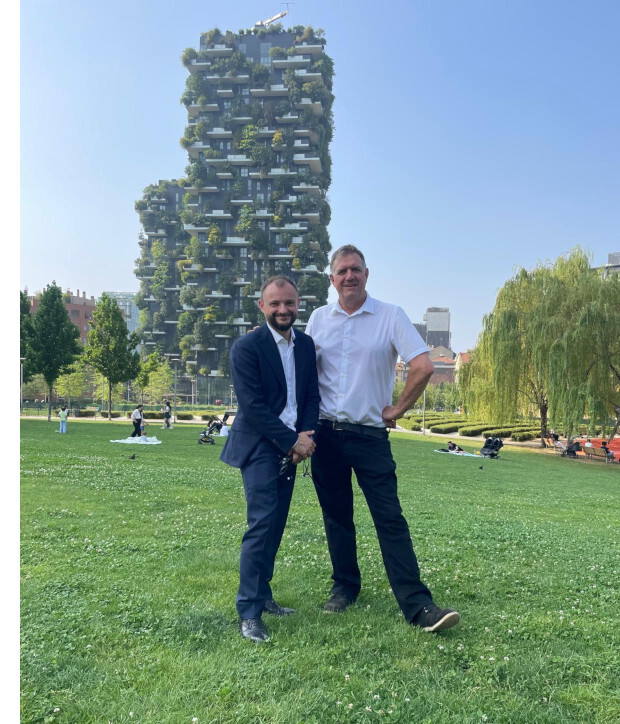
"Thanks to our partnership with Siemens and the implementation of cutting-edge tech, we are able to transform Pirelli 35 into a truly smart building. Its LEED Platinum and WELL Gold certifications, as well as its nZEB labelling, stand as testament to a broader commitment – not just to smart infrastructure, but to sustainability, health, and the evolving standards of urban living," said Stefano Corbella, Sustainability Officer at COIMA (pictured right with Paul Wilson).
On the day of the Siemens Smart Infrastructure press tour, the weather was well into the 30Cs. It was easy to appreciate the calming and cooling effects of the outdoor green spaces created by COIMA around its buildings, along with the indoor climate, created by Siemens intelligent building management system’s control of the air conditioning, using its open API connection with open weather data.
Why not try these links to see what our SmartCitiesWorld AI can tell you.
(Please note this is an experimental service)
How does the geothermal grid in Porta Nuova reduce energy consumption?What role does Siemens Desigo CC play in building management efficiency?How do sensors optimize energy use and occupant well-being in smart buildings?What sustainability certifications has the Pirelli 35 retrofit achieved?How does urban green space in Porta Nuova improve local climate resilience?climate actionClimate change/ResilienceCommercial buildingsEnergy & Environmentresilienceurban space
Latest City Profile
SmartCitiesWorld Newsletters (Daily/Weekly)
You may also like these related articles...
BECOME A MEMBER
© 2026 SmartCitiesWorld
Smart Cities World Ltd, 37 Lombard Street, London, EC3V 9BQ