








BUILD YOUR OWN
RESOURCE LIBRARY



Opinions

Transforming indoor public safety with smart sensor networksSponsored by Motorola Solutions

How AI will define cities and mobility in 2026Sponsored by ST Engineering
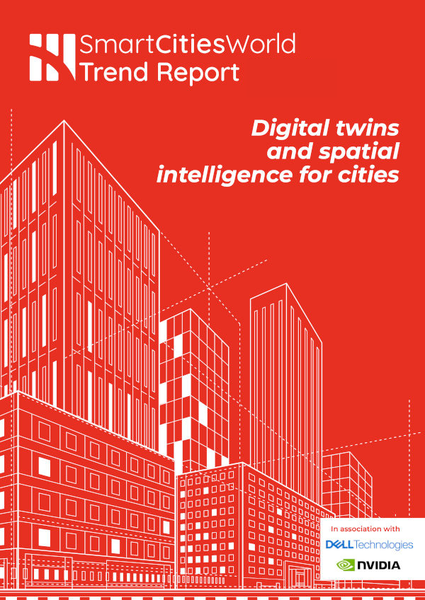
Trend Report: Digital twins and spatial intelligence for cities
Discover how digital twins and spatial intelligence are revolutionising urban transport, infrastructure resilience, and community equity in cities worldwide.


Download the trend report now
In this SmartCitiesWorld Trend Report, supported by Dell Technologies and NVIDIA, we’re exploring the impact of digital twins and spatial intelligence on urban environments across the world.
Against a backdrop of mounting challenges for, from climate adaptation to economic recovery, digital twins – dynamic, data-rich virtual models of physical assets and systems – combined with spatial intelligence, are enabling cities to monitor, simulate, and optimise everything from traffic flow to infrastructure resilience in real time. In this report, we look at a number of real-world projects in cities and the cities ecosystem to understand how these technologies are combining to smarter, greener, more community-centric outcomes.
Key highlights include:
- Transport and traffic flow: how cities like Dublin, Los Angeles, Helsinki, and London are using digital twins to move from reactive to predictive traffic management, reduce congestion, lower emissions, and coordinate multimodal mobility
- Resilience and safety: how digital twins are helping cities such as Cambridge, Las Vegas, Copenhagen, Rotterdam, and Barcelona monitor infrastructure health, simulate climate risks, and coordinate emergency responses
- Community outcomes: how digital twins deliver tangible benefits – cleaner air, safer streets, and more inclusive access to services. Case studies from London, Paris, New York, Helsinki, and Chicago illustrate how these technologies support environmental justice, public engagement, and transparent decision-making.
- Innovation in action: a special feature on Mohammed VI Polytechnic University (UM6P) in Morocco demonstrates how AI-powered digital twins are creating smart, sustainable campuses that serve as scalable models for cities.
You may also be interested in...
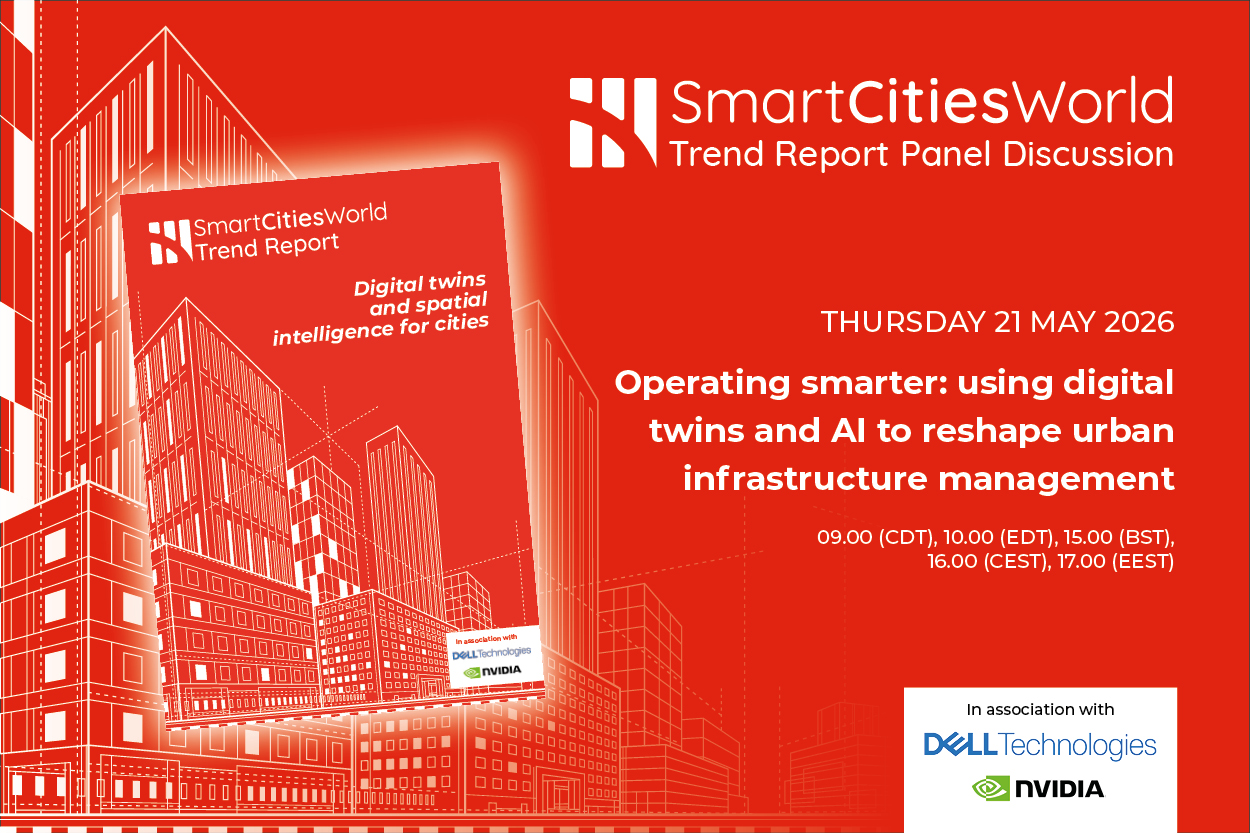
On 21 May 2026 we’re hosting an accompanying panel discussion that will explore how smart campus initiatives can act as real-world testbeds for urban infrastructure innovation, drawing on the experience of Mohammed VI Polytechnic University (UM6P) in Morocco and its AI-powered digital twin programme.
Using UM6P’s AI-powered campus pilot as an example, the session will examine how AI-enabled digital twins can bring together previously siloed operational systems – from energy and water management to security, lighting, and asset maintenance – into a single, unified operational view. Expert speakers from project partners including Dell Technologies, NVIDIA, Akila and UM6P will discuss how this integrated approach supports faster fault detection, predictive maintenance, and more efficient use of human resources, helping operations and maintenance teams move from reactive to proactive management.
Register for this session now to gain insights on how digital twins can be deployed to create smarter spaces in cities.
Why not try these links to see what our SmartCitiesWorld AI can tell you.
(Please note this is an experimental service)
How can digital twins reduce urban traffic congestion and emissions?How would spatial intelligence improve infrastructure resilience to climate risks?Which datasets enable AI-powered digital twins for predictive maintenance?How can cities use digital twins to enhance equitable access to services?How should governance models enable citizen engagement with urban digital twins?AI and Machine Learningcitizen engagementCitizen SecuritycongestionConnectivity & Datadigital twinsEnergy & EnvironmentGovernance and Citizenresilience
Latest City Profile
SmartCitiesWorld Newsletters (Daily/Weekly)
You may also like these related articles...
BECOME A MEMBER
© 2026 SmartCitiesWorld
Smart Cities World Ltd, 37 Lombard Street, London, EC3V 9BQ