



Sunderland City Council and North East Combined Authority recently staged an event to highlight how 5G is driving regional innovation and connectivity.
Sunderland City Council has led an event highlighting the Northeast of England’s pioneering role in advanced wireless innovation at the 5G Innovation Regions (5GIR) Showcase.
Bringing together industry leaders, government representatives and technology innovators, the event celebrated the progress, impact and future potential of advanced wireless infrastructure use cases across key sectors, including smart port operations, agritech, connected transport and creative industries.
The council worked with the North East Combined Authority on the initiative to drive regional innovation and connectivity. The 5GIR programme has helped to establish the Northeast as a national leader in digital innovation, demonstrating close partnerships with industry, academia and technology providers.
With investment from the Department for Science, Innovation and Technology (DSIT), the region has accelerated the deployment of technologies that are shaping the future of connectivity, industry and sustainability.
“Our goal encompasses more than leveraging technology alone, it’s focused on the impact technological advancement has on people’s lives, prospects and the opportunities it opens for them”
Opening the event at City Hall in Sunderland, Patrick Melia, chief executive of Sunderland City Council and digital lead officer for the North East Combined Authority, reinforced the region’s commitment to harnessing technology for economic growth, social impact and environmental sustainability.
“5G innovation is not just about infrastructure, but about real-world benefits,” said Melia. “Our goal encompasses more than leveraging technology alone, it’s focused on the impact technological advancement has on people’s lives, prospects and the opportunities it opens for them.”
Rob Hamilton, chief economist at the North East Combined Authority, added: “Technology must serve a purpose, driving real benefits for businesses and communities across the Northeast.
“5G infrastructure is underpinning the region’s ambitions for economic resilience, digital inclusion and future skills development.”
The showcase event focused on the impressive progress across four main projects, each demonstrating the role of advanced wireless technologies, including 5G, in reshaping regional industries:
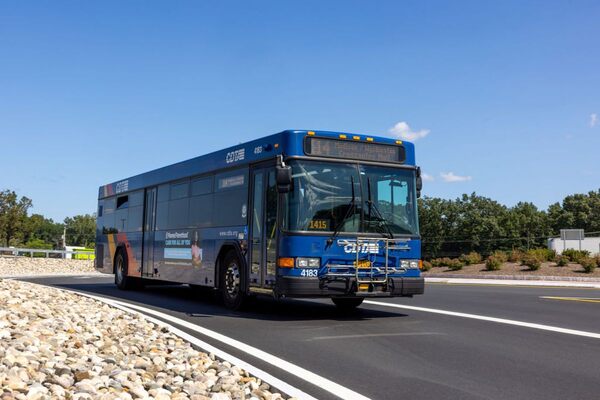
This leverages 5G to improve the movement of people and goods across the region. “5G connectivity is enabling real-time traffic management, multimodal journey planning and enhanced safety measures,” said Mark Wilson from Sunderland City Council’s Highways Authority. “By integrating live data, we are creating a smarter, more efficient transport network across our region, whilst demonstrating how this can be transferred and implemented throughout the UK.”
Adrian Molloy, head of delivery at Boldyn Networks, discussed the role of 5G private networks in enabling autonomous vehicle integration and AI-driven analytics for transport efficiency. Simon Edwards, senior researcher in Inclusive Mobility at Newcastle University, further emphasised the role of CITS in supporting connected and autonomous vehicle (CAV) trials, highlighting the potential for real-time data exchange between vehicles and infrastructure to optimise mobility solutions.
Two use cases were introduced in the field of creative industries: live 360 degree video broadcasting and the Sunderland Expo Pavilion, one of the UK’s largest immersive screens, developed in collaboration with Animmersion and ArtAV.
“The Expo Pavilion serves as a dynamic digital canvas, showcasing the city’s culture, music and heritage,” said Marion Dixon, assistant director Regulatory Services and Events at Sunderland City Council. “It’s been incredible to see live demonstrations in Keel Square – broadcast in real time using 5G-enabled cameras and dual-SIM broadcasting technology – redefining audience engagement as we merge technology and creativity to bring digital content to life in public spaces.”
On the second day, attendees visited Port of Tyne’s Innovation Hub, where Dr Jo North, innovation ecosystem director, and Mark Stoner, chief financial officer at the port, highlighted how 5G is transforming port operations. “The expansion of our private 5G network, in partnership with BT and Ericsson, is enabling real-time monitoring of road conditions, vehicle movements and environmental impact,” said Stoner. “This enhanced connectivity allows us to proactively manage safety risks, optimise logistics and improve operational efficiency across the port.
“By leveraging data-driven insights, we are creating a smarter, safer and more sustainable port environment that supports the wider supply chain and maritime industry.”
The implementation of AI-enhanced monitoring, vehicle tracking and automated maintenance insights, are further reinforcing the port’s vision to become a smart, green and fully connected logistics hub.
The showcase concluded with a visit to Newcastle University’s Nafferton Farm, where attendees explored advanced wireless farm sensors for soil health monitoring and methane reduction. Dr Elisa Lopez Capel, senior lecturer in soil science at Newcastle University, demonstrated how LoRaWAN-connected sensors are providing continuous soil condition data, while James Standen, director of Newcastle University Farms, detailed the use of IoT technology in precision agriculture to improve sustainability and efficiency.
Dr Hannah Davis of Newcastle University introduced the methane monitoring use case, explaining its critical role in reducing agriculture’s carbon footprint. By leveraging advanced wireless infrastructure, researchers have developed low-cost methane sensors, which are now installed in the dairy parlour at Nafferton Farm. This technology advances environmental sustainability whilst unlocking opportunities for carbon credits and additional revenue streams.
Why not try these links to see what our SmartCitiesWorld AI can tell you.
(Please note this is an experimental service)
How does 5G improve real-time traffic management in Connected Intelligent Transport Systems?What role do 5G private networks play in autonomous vehicle integration?How is 5G technology enhancing live 360-degree video broadcasting in creative industries?In what ways does 5G enable smarter and safer port operations at Port of Tyne?How do wireless sensors contribute to methane reduction in agritech applications?