



Discover how this year’s Cities Climate Action Summit puts the spotlight on the switch to clean and renewable energy, and the importance of energy-efficiency.
The 2024 Cities Climate Action Summit will focus on innovative funding mechanisms and strategies to mobilise private finance for urban climate initiatives as one of its central themes.
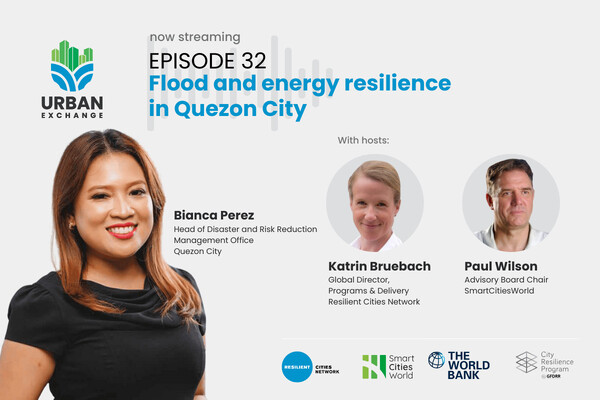
Tune in for the latest Urban Exchange where we get a first-hand account of city resilience measures from Quezon City following unexpected extreme rainfall.
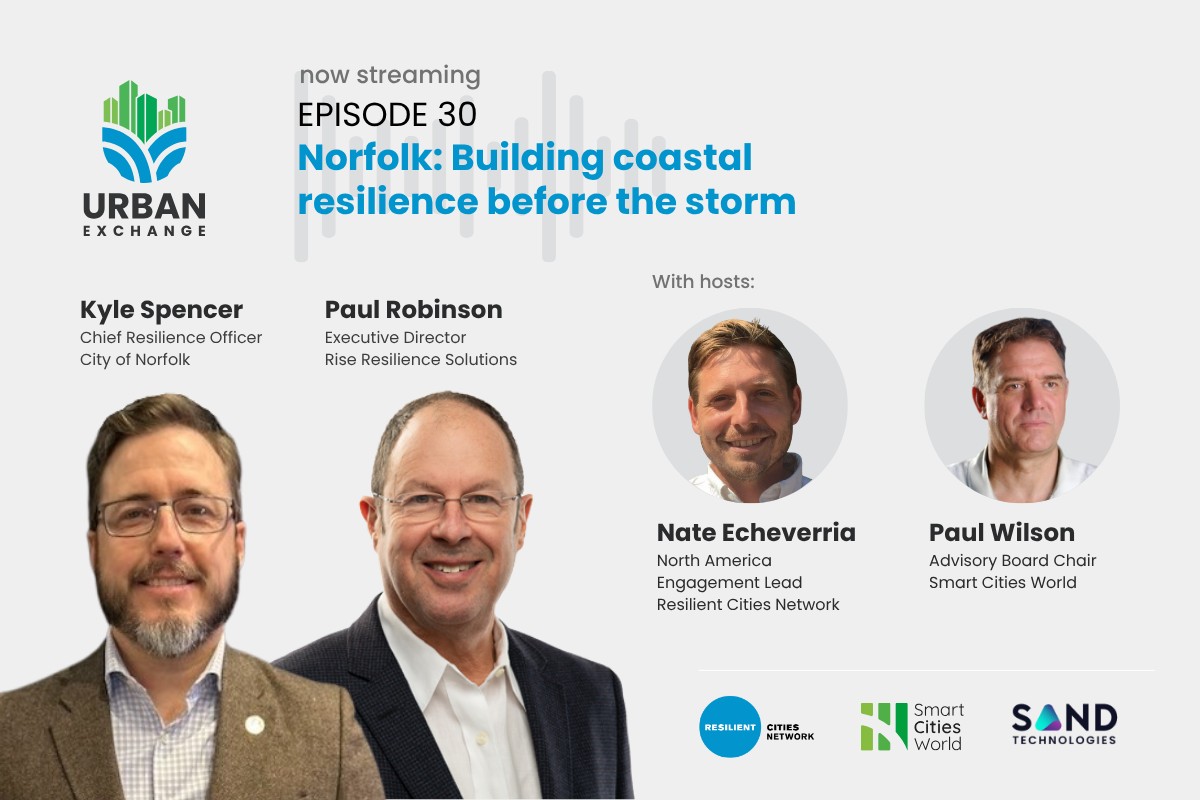
Blending green and grey infrastructure with innovative solutions like 3D printed reefs, discover how the City of Norfolk is tackling its coastal challenges head on.
John Fitzgerald, Project Director, Linesight, explains why major reskilling, outreach work by government and the right messaging will be key to realising benefits.
Find out how Dublin is innovating to improve experiences and services for its communities in the latest SmartCitiesWorld City Profile, including digital twin projects, traffic reduction, and economic growth.
Download our latest report to uncover how artificial intelligence is being used to support cities in how they plan and operate city services to ensure they are vibrant, sustainable and economically thriving modern spaces.
Tune into the SmartCitiesWorld podcast to understand the world of sovereign AI for cities, featuring PNY Technologies’ Youssef Nadiri as our expert guest.
Tune in for the latest Urban Exchange where we get a first-hand account of city resilience measures from Quezon City following unexpected extreme rainfall.
Our editorial newsletter pulls together our latest news items into one email, direct to your inbox. We also feature our latest city interviews, Special Reports and Guest Opinions.
Report finds AI could add 30 trillion litres of annual water demand, but reuse and infrastructure investments can help offset demand and protect communities.
Community-First AI Infrastructure is a five-point commitment to ensure it is “a good neighbour” in the communities in which it builds and operates data centres.
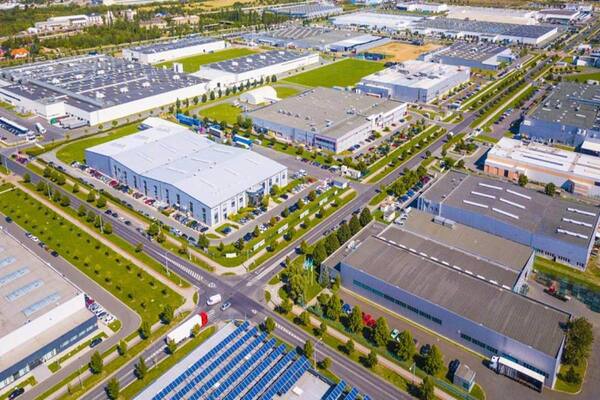
Great Plains Industrial Park and Kansas Proving Grounds in Southeast Kansas is using the technology to transform itself into an AI-enabled innovation ecosystem.
The tech sector could unlock $800bn in value by 2030 if tech companies reduce their negative impacts on natural systems and dependencies on natural resources.
National Grid will deploy advanced AI technology that identifies and prevents wildfire risks across its electric transmission and distribution networks.
Municipalities and private entities worldwide are invited to apply for the pilots which are focused on helping communities prepare before crisis strikes.
Judges at the World Smart City Awards gala said Rome’s visionary strategy is leveraging data, 5G and digital twins to enhance urban governance, improve public services and build resilience.
Itron’s 2025 Resourcefulness Report finds the rapid adoption is due to unprecedented pressures such as surging demand from electrification and AI data centres.
The world’s top 10 resiliency solutions have been chosen in this year’s QBE AcceliCITY Resilience Challenge accelerator programme, managed by Leading Cities.
Smart city is the framework based on Information and Communication technologies that enable the development of sustainable practices to address the urbanisation challenges. Leveraging the technology is one of the foremost pillars of ‘smart cities’ in order to increase efficiencies and improve the quality of resident’s life and the city’s services.
Computer vision and machine learning specialist, Univrses, will work with the Swedish Transport Administration to digitise and manage roadside infrastructure.
City AI Connect will be a single destination for local government leaders to ideate, develop, and test new uses for generative AI with peers across cities.
SmartCitiesWorld Newsletters (Daily/Weekly)
Our editorial newsletter pulls together our latest news items into one email, direct to your inbox. We also feature our latest city interviews, Special Reports and Guest Opinions.
This white paper maps the end-to-end journey from data discovery to implementing complex AI models that can provide customised insight. It puts forward a blueprint for cities to use artificial intelligence to become smarter and more liveable by taking an outcomes-focused approach.