



Report measures and ranks national road safety in the top 100 metros by analysing the most important usage metrics, from VMT and truck activity to pedestrian risk.
At a glance
Who: StreetLight Data.
What: Transportation analytics company StreetLight Data has published its latest US Safe Streets Index that measures and ranks national road safety in the 100 most populated metros overall and across five key impact factors.
Why: To provide planners, engineers, policymakers, and advocates data-driven analytics to pinpoint the most high-risk locations across an entire multimodal network to prioritise the right road safety improvements.
When: Data was collected across the top 100 metros in the US.
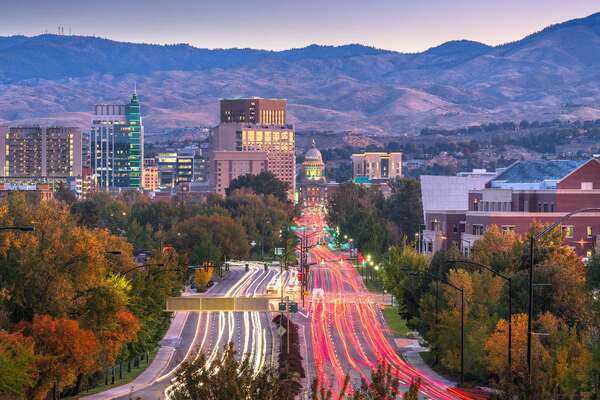
New York-Newark-Jersey City, Boston-Cambridge-Newton, Portland-Vancouver-Hillsboro, Boise City, and Spokane-Spokane Valley have emerged as the safest streets in the US, respectively, according to transportation analytics company StreetLight Data’s US Safe Streets Index.
The new report measures and ranks national road safety in the 100 most populated metros overall and across five key impact factors: vehicle miles travelled (VMT); different vehicle speeds; speed-based pedestrian risk; speeding in residential zones; and trucking activity.
StreetLight’s data scientists measure each of the 100 most populated metros across the five critical inputs, then weigh each factor based on their relative safety impact. This weighted data was used to create an overall ranking of the top 100 metros for road safety. In addition, StreetLight ranked the top 100 metros by each safety factor.
Key findings from US Safe Streets Index, include:
According to Streetlight, data-driven analytics like this can help planners, engineers, policymakers, and advocates pinpoint the most high-risk locations across an entire multimodal network to prioritise the right road safety improvements.
“Road safety is a top issue for planners, engineers, and consultants, but the way communities build and operate their transportation infrastructure varies dramatically,” said Kevin Hathaway, CEO of StreetLight Data, which is a subsidiary of Jacobs.
“This index is StreetLight’s latest effort to connect the dots between once disparate or unavailable data to deliver actionable intelligence to improve transportation safety and operations”
Hathaway continued: “The US Safe Streets Index offers us an opportunity to identify and study metros across the country to understand the best levers for improvement. This index is StreetLight’s latest effort to connect the dots between once disparate or unavailable data to deliver actionable intelligence to improve transportation safety and operations.”
The US Safe Streets Index analysis also found “considerable and unexpected differences” in each metro across the five metrics studied. For example, speed differential is the only factor where New York, first for overall safety, scores outside the top quintile with intersections in the metro a focus of ongoing safety efforts.
Further, Streetlight found smaller metros are overrepresented in the top quintile for speed differential compared to larger cities. Larger cities likely perform worse by this measure due to intersection density in these regions, which are the site of frequent accelerations and decelerations.
To learn more, the US Safe Streets Index: How America’s metros rank across five key road safety factors report is available for free download.