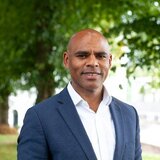


Troy Moon, sustainability coordinator for the City of Portland, Maine, details the city’s approach to sustainability, including engaging with citizens, making equitable and inclusive climate action a community activity and collaboration across city government.
SCW: When you talk about sustainability in Portland, ME, what does that encompass?
Troy Moon: We think about sustainability in terms of the three-legged stool model or interlocking rings, encompassing environmental, economic, and social sustainability. We put a lot of emphasis on all of those elements, rather than solely environmental which some take to be one and the same when discussing sustainability.
Looking at the environmental element, the City of Portland has been a real leader in waste reduction and trying to develop a circular economy. We’ve had an outstanding recycling programme since the late 1990s – we’ve actually been able to reduce our overall waste tonnage by 60 per cent in the last 20 years.
We’ve been active on the policy front promoting good waste management policy at the state level; we were the first city in Maine to have an ordinance restricting plastic bags, we worked on a polystyrene foam ban, and we have a ban on synthetic pesticides. Alongside this, we have spent a lot of time thinking about managing our open spaces in ways that promote habitat and native plants, but we need to weave in economic sustainability as well.
We think about sustainability in terms of the three-legged stool model or interlocking rings, encompassing environmental, economic, and social sustainability
We think it’s really important that we promote and invest in our local businesses because they support our economy by citizens. Importantly, local businesses tend to hire other local businesses for B2B operations, for example, accountancy, cleaning or any type of business services. That circulates money in our economy and helps make our economy stronger. At a city government level, we take great care in being good stewards of our financial resources that the public pays us through their taxes, making sure that we invest those wisely.
The most important leg of that stool is the one concerning social sustainability. We want to make sure that we’re an equitable community. Putting that in the context of climate change, it’s important that we highlight the situation to the community and make sure that we’re not leaving people behind.
From a wellbeing perspective, we want to make sure that everybody in the community is benefiting from electrification and has access to cool spaces, whether that’s through heat pumps in homes and offices or otherwise. We have been explicit in our climate action plan that we want everyone in our community to participate in civic life, regardless of race, ability, gender, identity, education, place of birth or income.
SCW: What has the experience been like in the last year in Portland, considering the global situation with the pandemic, environmental crises and social unrest?
Moon: It’s been time of reckoning, certainly here in the States, with the pandemic, the Black Lives Matter movement, and the resulting protests that really underscore the importance of equity. Making sure that we account for everyone in our community and really work towards justice for people of colour and people on the frontlines was a real priority in developing our climate action plan. How do we make sure that everyone has a voice in our climate action plan?
There are members of our community who are really engaged on climate action, and they’ll sometimes ask why we’re talking about what they’d term “climate 101” so frequently. We know those people would come and participate in public meetings even if we held them at 2am on a Sunday morning, but not everyone has the privilege to be able to engage that way. We have to go out of our way to make sure that everyone understands what we’re trying to do and has an opportunity to input.
It’s easy to go through the motions and have a public meeting and check the boxes, but that doesn’t actually achieve our broader goals of equity and inclusion. It takes time to build relationships and develop trust with people in the community. How are we, as the city government, going to address the needs of the people who don’t always participate in the formal public process purely because of circumstance? It really takes a conscious effort to rethink citizen engagement to make it more inclusive.
SCW: Looking at those three different legs, what are your primary objectives at the moment around sustainability? How do you work with other departments across the city to ensure that solutions are as holistic as they can be?
Moon: We recently adopted our climate action plan and that’s a key focus right now. There are a number of objectives in that plan that we need to achieve, the first of which is 100 per cent renewable energy. For us, that means working locally to develop solar and other renewable resources, but also working at the state level to make sure that there are good policies place. In fact, Maine has a 100 per cent renewable portfolio standard that the City of Portland was a strong advocate for. Good energy policy is going to be key so we can have 100 per cent of our electricity from clean energy.
In conjunction with that, “electrify everything” is a kind of mantra here because we need to move away from fossil fuels as quickly as possible. Sixty per cent of Portland’s emissions are from building emissions – the challenge is how to get people off of oil and gas and install heat pumps, while at the same time improving energy efficiency to reduce demand as much as we can.
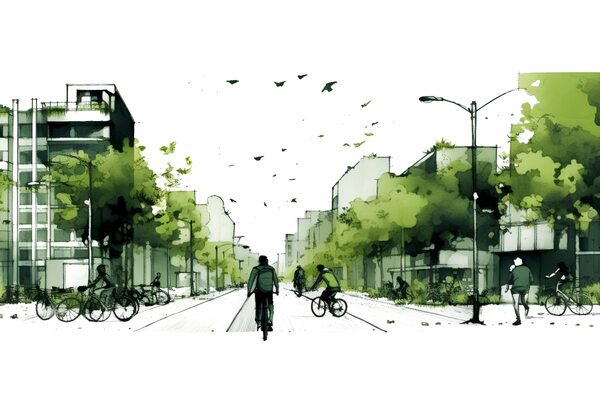
We have a goal both in our climate action plan and in our city’s comprehensive plan to develop what we call “complete neighbourhoods” – places that people can walk, cycle or use transit to get around. The aim is to really reduce the need to have a car to get around the community.
It’s easy to go through the motions and have a public meeting and check the boxes, but that doesn’t actually achieve our broader goals of equity and inclusion
Alongside these objectives is the need to incorporate resilience into all of these plans and projects; even if we stopped carbon emissions today, we’re still going to feel the impacts of climate change, whether that’s in the form of extreme weather, hotter days or sea level rise. We need to make sure that our infrastructure is built in a way that can withstand those issues, so as a city government, it’s really all hands on deck because all of our departments are impacted by those elements.
When I was presenting the draft climate action plan to our city leadership team, it was important to talk specifically about how climate change is going to impact pretty much every department in the city, from public health to housing.
I collaborate closely with a lot of our other city departments on implementing policies around the climate plan. We’ve been able to eliminate parking minimums in most of the city, so we can reduce the cost of building housing and promote transit ridership and cycling. We were able to incorporate new standards requiring EV charging infrastructure for all new parking constructions. We work with parks department to reduce urban heat islands by promoting better tree canopy.
I think one thing SmartCitiesWorld members would be interested in is our work with the public works department on GIS and mapping. Portland has an energy benchmarking board and we get our GIS team to help us develop geolocation services to better track all of our parcels and help us with our flood-mapping. It’s a great partnership and really shows there’s something for everybody in the city to work on in the climate action plan.
Looking at broader technology implementation in the city, how important has it been to invest in solutions that are really bespoke to your challenges?
Moon: I’ve been working on smart city elements in the city of Portland for a number of years now, and there are always vendors trying to sell us solutions in search of a problem. We’re very conscious about identifying what our problem really is and then whether there is a good technological solution to it.
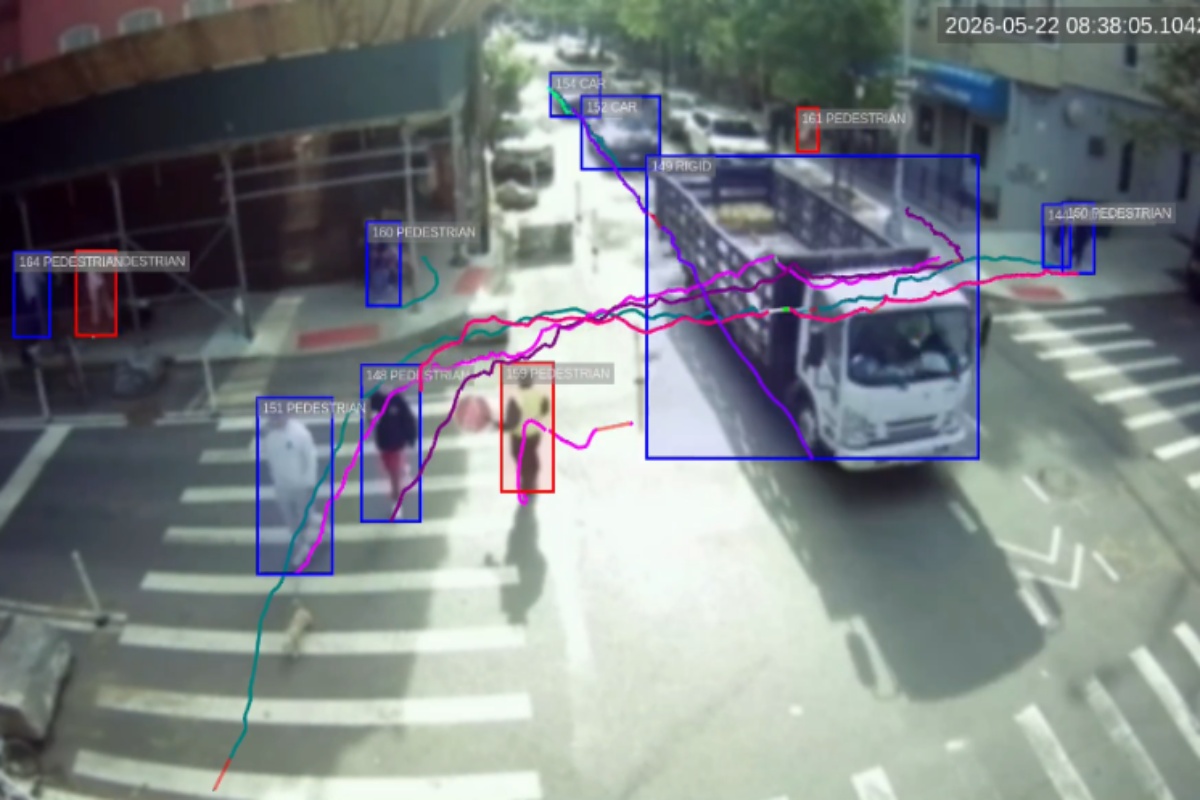
We’re really focused on improving the fibre network and have deployed a lot of new fibre in the city to support our infrastructure, and to be able to support new technology that can actually address problems. We’ve run a lot of fibre to support new advanced traffic control systems, for example, to help improve the timing of signals and improve traffic flow, but also reduce idling to help towards our climate goals.
That traffic solution also supports pedestrian infrastructure because of how it uses sensor data to time traffic signals to account for all road users. We’re hoping to deploy more solutions like that as a way of making transportation better for everybody. If people that choose to walk or cycle have a better experience, they’re going to be more likely to do so again.
SCW: During your time with the City of Portland, has the ability to work more closely with other departments improved, and is that still changing now with so many cross-departmental projects and initiatives?
Moon: I’ve been in this particular role for around six years, but I’ve been an employee of the City of Portland for about 25 years across different teams. That has been really helpful because I have managed other programmes in the city – I worked in public works, I worked in parks, and so I know the different operations better than someone who has just come into the city.
I have felt able to build relationships with different people in the city over years, which is always helpful, but our elected officials are very committed to climate action and sustainability. In the last few years, there’s been cross-department participation and collaboration. When the planning department was updating the city’s comprehensive plan, they did a great job of getting my input as the sustainability coordinator and I felt I had real participation in the comprehensive planning process.
Almost all of our departments are now really engaged in some level of climate work and can see how their work helps to make the city more resilient against the changing climate. It has definitely improved over the last number of years.
SCW: What about when it comes to collaborating with external participants on climate action? How do you ensure your work is joined up with the work of others on a wider scale?
Moon: It’s not enough to just have somebody accountable for sustainability. We actually developed our municipal climate action plan in collaboration with our neighbouring city of South Portland, so we have one plan for both cities.
Our aim was to demonstrate the importance of regional thinking in terms of addressing climate change. Portland and South Portland could both have excellent individual climate action plans, but if we didn’t work together and develop policies that complement each other, they just wouldn’t be as effective. Both cities recognise that the decisions they make affect their neighbour, so it’s crucial that we maintain that constant dialogue and collaboration. Working in that way, we hopefully encourage other communities in our region to take up the mantle and work on climate in the same way.
The state of Maine started work on its climate action plan right before we adopted ours, so we were able to communicate with the team working on the state climate action plan which was helpful. It really emphasises the importance of working together at all levels of government. To date, cities have been the real climate action leaders, particularly in the US, and it’s great to see some good policies coming from the federal government now.
SCW: What advice would you give others on how to better engage with their communities on climate and sustainability?
Moon: There’s a lot of work still to be done at the policy level, but a lot of action required does involve citizens and businesses doing specific things to help decarbonise the way they live their lives.
I mentioned earlier that 60 per cent of Portland’s emissions are from buildings, whether they be commercial or residential. In order to decarbonise, we’re going to be really focusing on electrification and getting people to use heat pumps. To do that, we need to get people comfortable with the idea that heat pumps are going to be effective, because there’s currently some resistance. One of the big selling points we can use there is that as we get more warm weather, the heat pumps help cool your house too, so they work as a resilience measure, too.
It’s really about how we maintain a high quality of life here and, frankly, if we don’t take action to address climate change now then that quality of life will degrade
We need policy to back that promotion, though; it’s one thing to tell people to get a heat pump and explain the benefits, but they need to have financial tools to make that happen. We’re working really hard at the state level to encourage programmes to help people finance these things. We’ve tried to work closely with our efficiency agency at the state level to make citizens aware of them and to take advantage of what they can offer. Then, in terms of low-income programmes and those who are going to struggle to afford technology like that regardless, it’s about funding programmes to get this type of equipment into their hands. Our most vulnerable citizens are the ones that will need this more than anyone.
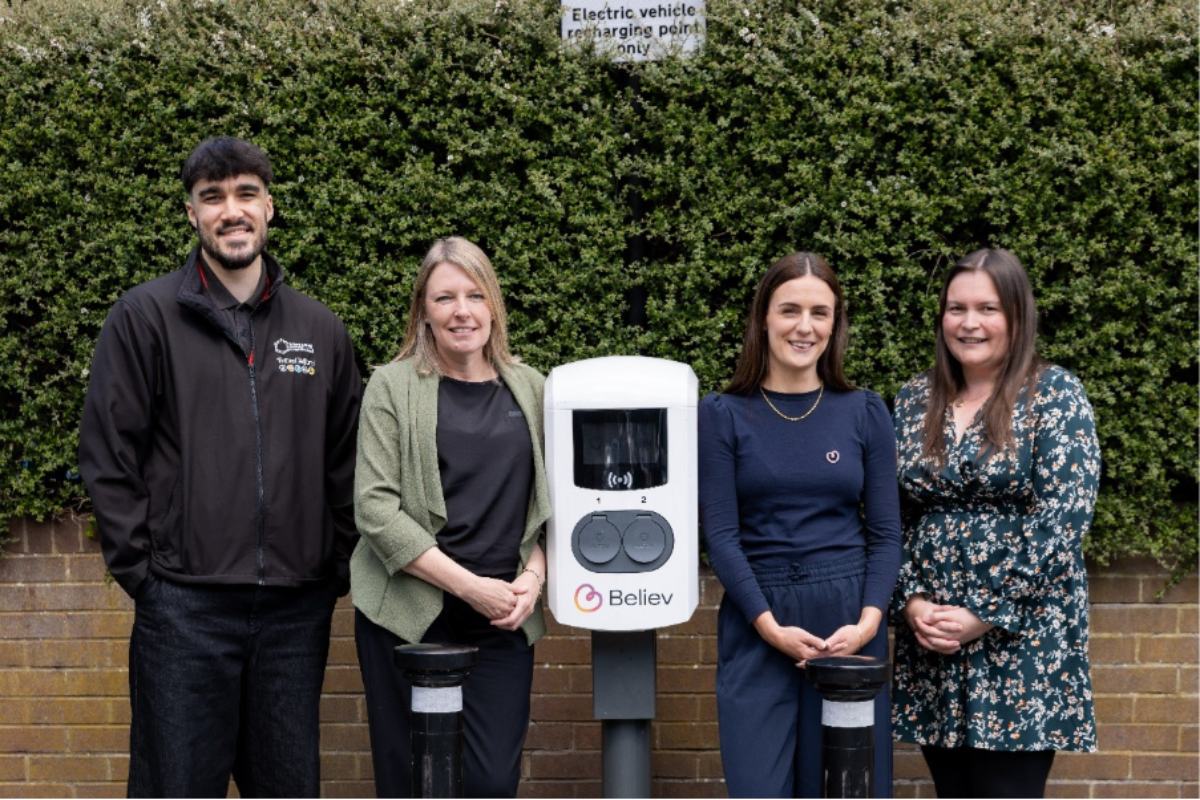
It’s a similar situation with EVs in terms of changing mindsets and making people comfortable that they’re not going to run out of power in the middle of a journey. To change the mindset, you have to draw on the positives – lower cost of ownership, no more fuel costs, lower maintenance fees. We get people asking a lot of questions now about EVs, so I think we’re seeing that mindset change coming through curiosity and we’ll start seeing the transition accelerate. We’re expending a lot of effort on EV charging infrastructure in the city to make it more visible and more commonplace – particularly for the majority of people living in Portland in apartments without access to a driveway.
SCW: To what extent can you lean on the promise of community wellbeing and improved liveability when you’re trying to get buy-in from citizens on projects like these?
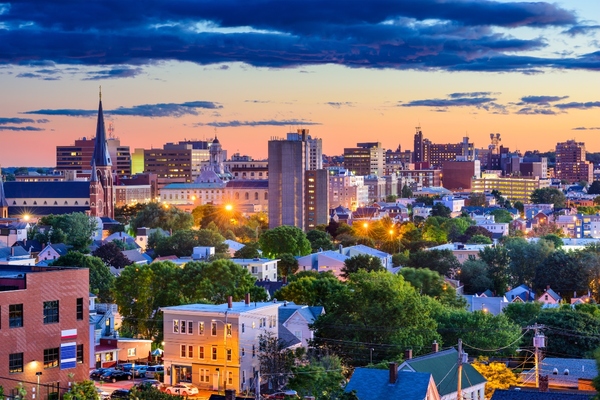
Moon: It’s a really key point. Portland is a great place to live – it’s on the waterfront, it has great social amenities, good restaurants and museums, and it’s generally just a really pleasant place to live with a really high quality of life. As we’re working on our climate action plan, our mission statement is to ensure that Portland and South Portland remain liveable, vibrant, equitable cities both now and in the future.
It’s really about how we maintain a high quality of life here and, frankly, if we don’t take action to address climate change now then that quality of life will degrade. The actions we take now are to ensure that in 2050 Portland will still be a great place to live. That means decarbonising as quickly as we can and implementing change while we still have some say in whether that change is going to be positive or negative.
Since the pandemic, people are seeing how great the amenities available to them are in our community. They’re starting to realise if they use them differently, if they can be more sustainable, it can make a real difference. Since travelling was restricted, people started using our city parks a lot more – and using them in a similar way to how people would have used them 100 years ago, before travelling felt like a necessity. People have found that they really like that, and that’s the way that we can build a better community.
Why not try these links to see what our SmartCitiesWorld AI can tell you.
(Please note this is an experimental service)
How does Portland integrate social equity into its climate action plan?What strategies support Portland’s transition to 100% renewable energy?How is citizen engagement enhanced to ensure inclusive sustainability efforts?In what ways does Portland use technology to improve urban mobility?How does regional collaboration strengthen Portland’s climate resilience initiatives?