



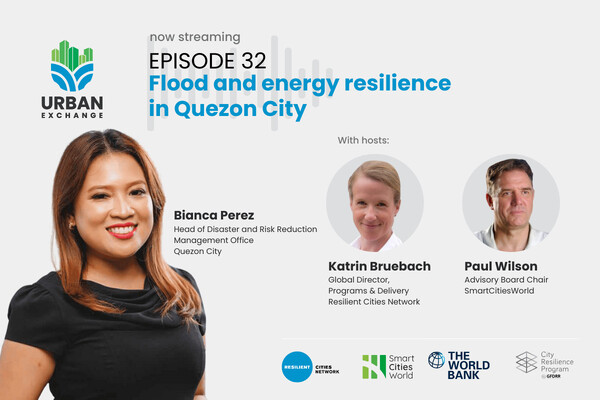


Ladd Keith, Director of the Heat Resilience Initiative, discusses how record-breaking temperatures are reshaping our understanding of summer, the global initiatives being launched to tackle heat, and the innovative strategies being developed to enhance heat resilience in communities worldwide.
The first thing to mention is that this summer was record-breaking in many ways, especially here in Arizona and across the southwestern United States. Arizona experienced its longest-ever stretch of temperatures over 100 degrees Fahrenheit, extending unusually late into the year –that’s made us rethink our traditional definition of “summer.” Many cooling centres shut down in late August because they’re designed around a seasonal view of summer, but now we’re having conversations about whether we need to establish a separate “heat season” that could span from March to October – or even November.
On a global level, I’ve been working with the Global Heat Health Information Network, which has been very active this year. One highlight was launching the Southeast Asia regional node in Singapore. The goal is to build capacity in regions that may not yet have the resources to address heat effectively. This coincided with the UN Secretary-General’s announcement declaring extreme heat a global challenge. It was a sobering moment – his announcement came during the hottest days ever recorded in Earth’s history, underscoring how urgent and critical this work is.
In my work with the University of Arizona, where I’ve been running the Extreme Heat Network since 2018/19, the university committed additional resources to expand this into the new Heat Resilience Initiative, with the goal to evolve into a full research centre. This will allow us to hire a dedicated research programme manager, bring on grad students, and provide a cohesive umbrella for the various heat-related programmes we’re running.
This initiative is particularly significant because heat-focused research programmes are rare. Globally, there are a few, such as in Australia and Singapore, or sub-programmes like the one at Duke University. With a more dedicated initiative, though, we believe this could be one of the first publicly funded institutes in the United States dedicated entirely to extreme heat and heat resilience. We’re aiming to translate lessons learned in Arizona to a global audience, helping other regions prepare for and address the growing threat of heat.
I’ve seen a real shift in just the last few years. I was reflecting on this during an end-of-heat-season meeting with cooling centre operators here in southern Arizona. A decade ago, I was often the only one in the room talking about heat. Fast forward to now, and there are over 100 people coming together specifically to discuss what worked, what didn’t, and how we can improve cooling centres. That growth alone shows how much the conversation has evolved.
This year, cooling centres in southern Arizona recorded over 15,000 visits; that’s 15,000 instances where someone was able to find relief from dangerous outdoor heat. This was the first year we tracked those numbers rigorously for the first time, which is a big leap forward in understanding the scale of need and impact. The effort to evaluate these programmes and gather data reflects a growing recognition of the importance of heat resilience.
I’m also excited about the work done this year by the Center for Heat Resilient Communities, which I co-direct. It’s a national initiative co-hosted by UCLA, University of Arizona, and Arizona State University, and is funded by NOAA (National Oceanic and Atmospheric Administration) and NIHHIS (National Integrated Heat Health Information System). The centre is tasked with developing a framework for local heat action planning, working with 30 communities across the US over the next three years. The first cohort will support 10 communities in creating heat action blueprints, which will help local governments with technical strategies like cost-benefit analyses and planning frameworks for heat resilience.
What’s particularly exciting is the centre’s open-access model. All the resources we develop will be available to any community via the heat.gov website. Even if a community isn’t part of the initial cohort, they’ll have access to the same materials, webinars, and guides to develop their own heat action plans.

A big focus this year has been on ensuring that the knowledge we’re building is accessible and adaptable to as many communities as possible. For example, through the initiative with the 30 US communities mentioned before, we’re creating a framework that’s scalable. The idea is that whether you’re New York City with extensive resources, or a small town with just one dedicated staff member, you can engage at a level that works for you.
We’ve been intentional about including a wide range of geographies, from large urban areas to small towns with limited capacity, as well as tribal governments, which operate differently than incorporated cities and towns. To support tribal communities specifically, we’ve partnered with the Udall Center at the University of Arizona to make sure their unique needs are addressed within the framework.
The framework also goes beyond technical steps; it provides guidance on how to identify and secure funding, whether from federal programmes, non-profit organisations, or by reallocating local resources. Having a more practical focus ensures communities are not just planning but are also equipped to implement their strategies.
Globally, we’re seeing common themes emerge, regardless of geography. Communities need to address urban heat islands through mitigation strategies, respond to extreme heat events through better heat management, and build governance systems that enhance their adaptive capacity for heat-related challenges. The specific approaches may differ based on local contexts. While cooling centres in Arizona operate almost year-round now, places like Portland or Seattle might only activate cooling centres during rare heat events, like a heat dome.
By gathering and sharing best practices from diverse contexts – from hot, arid regions like Arizona to hot, humid places like Singapore or historically cooler cities like London – we’re able to provide tailored recommendations. These resources help communities identify strategies that are both globally informed and locally relevant.
In Arizona, we’re definitely seeing progress in building organisational capacity for heat resilience, but there’s still a long way to go. We’re now a global leader in this space, with the nation’s first state-level Chief Heat Officer, and the City of Phoenix has established a dedicated Office of Heat Mitigation and Response. Here in Tucson, we have a Chief Resilience Officer who focuses on all hazards, but heat remains the top priority.
However, when you look at the numbers, it’s still a small group of people with dedicated positions specifically addressing heat. Across the state, these individuals are doing incredible work, often in coordination with public health agencies and non-profits, which all play critical roles. When you compare the resources allocated to heat with those dedicated to other hazards – like the number of firefighters or floodplain managers we have – it’s clear that heat resources are still a drop in the bucket.
This is particularly stark given that heat is the leading weather-related killer in Arizona and the United States as a whole. Resources don’t need to be matched one-to-one with other hazards, but there’s a significant disparity. It raises an important cultural and societal question: do we value lives lost to heat as much as we value property damage from other hazards?
The invisibility of heat as a threat plays a big role here. The Pacific Northwest heat dome in 2021 claimed at least 868 lives – far more than some highly visible disasters, like Hurricane Helene, which caused widespread destruction in the Appalachia region but resulted in fewer deaths.
There are encouraging signs of change, though. In Phoenix and Tucson, this year was record-breaking for heat, but the number of heat-related deaths in Phoenix hasn’t increased compared to the same point last year. That’s unusual because heat deaths have been climbing dramatically every year for the past eight years. It’s too soon to draw definitive conclusions, but we’re cautiously optimistic.
It could be that some of the actions we’ve taken – like operating more cooling centres and improving medical operations for first responders – are starting to make an impact. For example, firefighters are now more trained to treat heat-related illnesses, especially among vulnerable populations like the unhoused. Alternatively, the nature of this year’s heat – more consistent record-breaking temperatures rather than extreme spikes – might have played a role.
We need more data and years of observation to fully understand what’s happening, but it’s a positive sign. For now, we’re hopeful that the steps we’re taking are beginning to slow the rise in heat-related deaths, even if only slightly. It’s a reminder that while we’ve made progress, there’s still so much more to do to truly address the scale of the heat threat.
If we look at the history of federal climate action in the US, it’s clear that addressing climate issues has had bipartisan roots. For example, the National Climate Assessment, which has been instrumental in shaping our understanding of climate change, was initiated under a Republican president, George H. W. Bush, in the early 1990s. It was enacted with support from a Republican-controlled Congress, emphasising the need for a comprehensive climate assessment every few years.
Since then, different administrations have engaged with climate policy to varying degrees, but one thing remains consistent: heat is an issue that’s impossible to ignore. Unlike some broader climate topics, heat has immediate and visible impacts – it affects workers, communities, economies, and public health directly. This means that, whether in red states or blue states, there’s often significant state-level action to address heat because the demand comes directly from the ground up. People are experiencing the effects in real time and expecting solutions.
In many ways, heat transcends the broader climate change debate because it’s not an abstract issue; it’s felt daily in many communities. Addressing heat is becoming essential for maintaining strong local economies, viable healthcare systems, and even basic quality of life. So, my hope is that the momentum around local and state action will continue regardless of the outcome of any federal elections.
Ultimately, heat resilience isn’t just a political issue – it’s a practical one. Whether it’s ensuring that workers are safe, mitigating public health crises, or bolstering economies, these are challenges that demand attention, no matter who is in power. It’s the reality of heat and its impacts that will drive continued progress on this front.
Why not try these links to see what our SmartCitiesWorld AI can tell you.
(Please note this is an experimental service)
How can cooling centres adapt to extended heat seasons effectively?What strategies improve heat resilience in diverse urban communities?How does data tracking enhance heat-related public health responses?What role do local governments play in implementing heat action plans?How can tribal communities integrate heat resilience into their governance?