








 22 - 26 June 2026: Find out more



BUILD YOUR OWN
RESOURCE LIBRARY



Podcasts
Cities Thriving on Lighting, Episode 2 – Simplicity by design in smart lightingSponsored by Paradox Engineering
Cities Thriving on Lighting, Episode 1 – Lighting as the backbone of the smart citySponsored by Paradox Engineering
Opinions

Transforming indoor public safety with smart sensor networksSponsored by Motorola Solutions
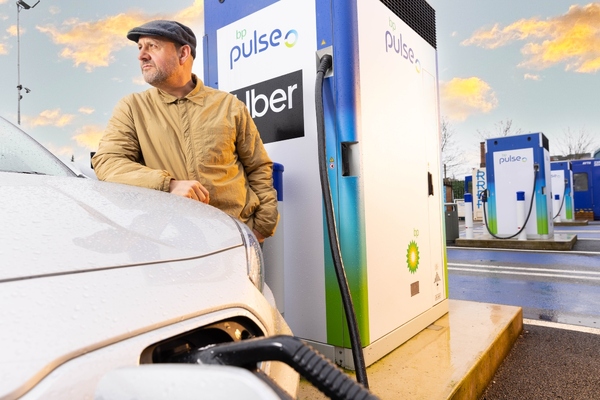
BP Pulse supports Uber’s aims to be zero-tailpipe emissions
The two companies have entered a global mobility agreement to help Uber drivers transition to EVs by providing access to reliable and convenient charging.


BP Pulse and Uber have a global mobility agreement to help accelerate the ridehailing company’s commitment to become a zero-tailpipe emissions mobility platform in the US, Canada and Europe by 2030, and globally by 2040.
The companies are using their global footprints to help drivers transition to EVs by providing access to reliable and convenient charging, including at ultra-fast speeds.
Net zero company
Uber aims to have 100 per cent of rides on the platform in electric vehicles, micromobility or public transit by 2040. BP’s ambition is to become a net zero company by 2050 or sooner and to help the world get to net zero.
Uber and BP will initially focus on collaborating in a number of key markets including Europe, the US and UK to support Uber’s 2030 targets, with other countries including Australia and New Zealand to follow. Regional teams from the two companies will now work together to offer drivers on Uber’s platform bespoke access to BP Pulse’s high speed charging network, including special offers.
“We want Uber to be the cleanest platform on Earth because it’s the right thing for consumers, our cities and our business”
Richard Bartlett, CEO, BP Pulse, said: “Drivers on Uber’s platform need great value access to the fast, reliable charging infrastructure we’re building as they make the switch to electric. We’re investing billions of dollars worldwide in high-speed EV charging, digital products and services, and large scale BP Pulse Gigahubs that will help commercial customers eliminate tailpipe emissions.
“I’m delighted we are building on our existing relationship and now have a global agreement to support ridehail drivers with charging and more, at scale, helping Uber make their incredible 2040 ambition a reality.”
Read More
Uber and BP Pulse started their strategic relationship back in 2021 when BP opened its first rapid commercial charging hub on Park Lane in London. Uber was BP’s first ridehailing platform partner customer to offer access to the new hub which provides charge points to drivers on the Uber platform. London is Uber’s leading market for electrification, with over 15 per cent of miles driven with Uber in London all electric. Uber reports drivers on its platform in Europe are switching to EVs five times faster than the general population, and the company aims for a 100 per cent EV fleet in London by the end of 2025.
“We want Uber to be the cleanest platform on Earth because it’s the right thing for consumers, our cities and our business,” said Christopher Hook, Uber’s global head of sustainability. “Getting to 100 per cent electric is not something Uber can do alone. It is a team sport, and it will take partnerships like this to reach zero tailpipe emissions, especially as we know availability of easy to access, affordable charging infrastructure is one of the biggest challenges for drivers.”
BP currently has 22,000 charging points worldwide, with operations in 10 countries. The company is investing billions globally in EV infrastructure and is currently installing hundreds of charge points every week. Its ambition is to have over 100,000 charge points worldwide by 2030.
“Getting to 100 per cent electric is not something Uber can do alone. It is a team sport, and it will take partnerships like this to reach zero tailpipe emissions”
This investment helps address the concerns of ride-hailing drivers, as identified in a recent survey of 16,000 drivers on the Uber platform, by providing the reliable and convenient charging infrastructure they need to feel confident about making the switch to electric.
The partnership builds on Uber’s initiatives to help drivers go electric, including adding a charging map directly to the Driver app to show them where the nearest EV chargers are located as well as launching an EV Hub in the Uber Driver app, a one-stop shop where drivers can get information and compare the total cost of ownership (TCO) of an EV with a non-EV.
Under the terms of the agreement, BP intends to offer bespoke deals to drivers on the Uber platform that are tailored to each market, including providing incentives for them to charge with bp pulse. The two companies will also explore working together on convenience and fuel offers. BP has a global network of almost 21,000 branded retail sites that offer fuel as well as food for now and for later with retail partners, and facilities such as toilets.
Why not try these links to see what our SmartCitiesWorld AI can tell you.
(Please note this is an experimental service)
How does BP Pulse's charging network support Uber drivers transitioning to EVs?What incentives does BP offer Uber drivers for using BP Pulse chargers?How will the partnership accelerate Uber's zero-tailpipe emissions goals by 2030?What role do BP Pulse Gigahubs play in commercial EV charging infrastructure?How is Uber integrating charging information into its Driver app for EV adoption?
Latest City Profile
Latest Urban Exchange Podcast
Latest Special Report
SmartCitiesWorld Newsletters (Daily/Weekly)
You may also like these related articles...
BECOME A MEMBER
© 2026 SmartCitiesWorld
Smart Cities World Ltd, 37 Lombard Street, London, EC3V 9BQ