











 22 - 26 June 2026: Find out more




BUILD YOUR OWN
RESOURCE LIBRARY



Podcasts

Cities Thriving on Lighting, Episode 2 – Simplicity by design in smart lightingSponsored by Paradox Engineering
Cities Thriving on Lighting, Episode 1 – Lighting as the backbone of the smart citySponsored by Paradox Engineering
Opinions
Transforming indoor public safety with smart sensor networksSponsored by Motorola Solutions
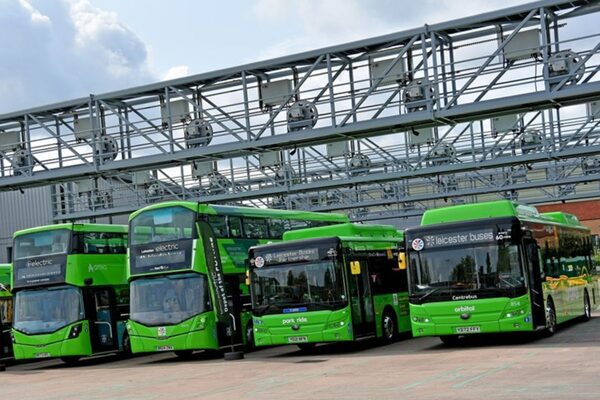
Leicester on course to meet electric bus target
With 60 further e-buses coming on stream in September, Leicester will have a 240-strong fleet of zero emission, electric buses across the city network.


At a glance
Who: Leicester City Council; Leicester Buses Partnership; Department for Transport; Arriva; Centrebus.
What: The UK city is set to meet its target of providing zero emission, all-electric buses across the whole city network. Buses are operated by Arriva and Centrebus.
Why: To create cleaner, greener travel in Leicester and fulfil the aims of a 10-year plan to improve services, vehicles and routes across Leicester and encouraging more people to use the city’s public transport network.
When: Sixty further buses are coming on stream from September 2026. It will take the total number of electric buses in Leicester to 240. All buses will be on the road by March 2027.
The UK city of Leicester is set to meet its target of providing zero emission, all-electric buses across the whole city network, with further 60 buses coming on stream from September 2026.
It will take the total number of electric buses in Leicester to 240, with all buses on the road by March 2027.
Investment in electric buses
Leicester City Council has secured £8m of Government funding towards the total cost of the fleet increase, with bus companies Arriva and Centrebus contributing the remaining £18m.
This new funding means the total investment made in Leicester’s electric bus fleet over the past four years is now £100m.
“The bus companies have made a huge commitment to cleaner, greener travel in Leicester”
“Providing zero emission buses across our whole city network is a huge achievement, made possible by the excellent work being done by the Leicester Buses Partnership,” said cpuncillor Geoff Whittle, assistant city mayor for transport and climate.
“The bus companies have made a huge commitment to cleaner, greener travel in Leicester, and the council has had great success in securing additional funds from the Department for Transport which has been very supportive of Leicester’s aims.
“Together, we are bringing to life our ambitious 10-year plan to improve services, vehicles and routes across Leicester, and encourage more people to use the city’s public transport network.”
Arriva will operate 56 of the new buses, while Centrebus will run four.
“This circa £17m investment by Arriva in a further 56 UK-built, electric buses will more than double our zero-emission fleet in Leicester, and helps shape a future where people choose to leave their cars at home with less congestion on our roads, and cleaner air for the next generation,” said Toby France, head of commercial at Arriva Midlands.
“It’s fantastic to be working with Leicester City Council on this exciting project, which really demonstrates the shared vision and commitments of our Leicester Buses partnership.”
David Brookes, Centrebus managing director, said: “This project reflects a significant financial investment from both Centrebus and Leicester City Council, enabling the next phase of electric buses in the city. As part of the Leicester Buses Partnership, we share the council’s commitment to cleaner, greener travel and we’re pleased to contribute to reducing emissions and improving journeys for local residents.”
“Our bus revolution is well underway, with our Bus Services Act now law and a recent £3bn funding boost giving local leaders the tools and financial backing to invest more in electric buses”
It is estimated that the new zero emission buses will help reduce the city’s carbon footprint by the equivalent of more than 3000 tonnes of CO2 per year, and more than 1000 kilos of NO2 – a main component of air pollution.
The completion of the fleet builds on the council’s major investment in improving bus priority on busy routes across the city and the £13.5m redevelopment of St Margaret’s bus station, the UK’s first carbon-neutral bus station building.
The Leicester Buses Enhanced Partnership Scheme commits to modernise and upgrade bus travel throughout the city. This includes bringing in more than 200 fully electric buses, automated digital ticketing, and improving reliability and frequency of services, as well as introducing bus lane and signal measures to give priority to public transport.
“Electric buses offer smoother, quieter and greener journeys for people across the country, so I’m delighted to see that Leicester City Council, backed by £8m in Government funding, is continuing their tremendous work and rolling them out across the whole of their network,” said UK Government roads and buses minister Simon Lightwood.
“Our bus revolution is well underway, with our Bus Services Act now law and a recent £3bn funding boost giving local leaders the tools and financial backing to invest more in electric buses that not only improve air quality but lead to more enjoyable journeys for passengers too.”
Why not try these links to see what our SmartCitiesWorld AI can tell you.
(Please note this is an experimental service)
How will Leicester's electric buses reduce the city's carbon footprint?What funding sources support Leicester's electric bus fleet expansion?How does the Leicester Buses Partnership improve public transport services?What impact will electric buses have on air pollution in Leicester?How does the Bus Services Act facilitate investment in electric buses?
Latest City Profile
Latest Urban Exchange Podcast
Latest Special Report
SmartCitiesWorld Newsletters (Daily/Weekly)
You may also like these related articles...
BECOME A MEMBER
© 2026 SmartCitiesWorld
Smart Cities World Ltd, 37 Lombard Street, London, EC3V 9BQ