











 22 - 26 June 2026: Find out more




BUILD YOUR OWN
RESOURCE LIBRARY



Podcasts

Cities Thriving on Lighting, Episode 2 – Simplicity by design in smart lightingSponsored by Paradox Engineering

Cities Thriving on Lighting, Episode 1 – Lighting as the backbone of the smart citySponsored by Paradox Engineering
Opinions

Transforming indoor public safety with smart sensor networksSponsored by Motorola Solutions
Air Quality Trend Report 2024
09 Apr 2024by  Smart Cities World
Smart Cities WorldThe latest Trend Report from SmartCitiesWorld looks at the current trends in air quality monitoring and improvement, identifying projects, policies and technologies that are aiding cities in creating more liveable and breathable urban environments.


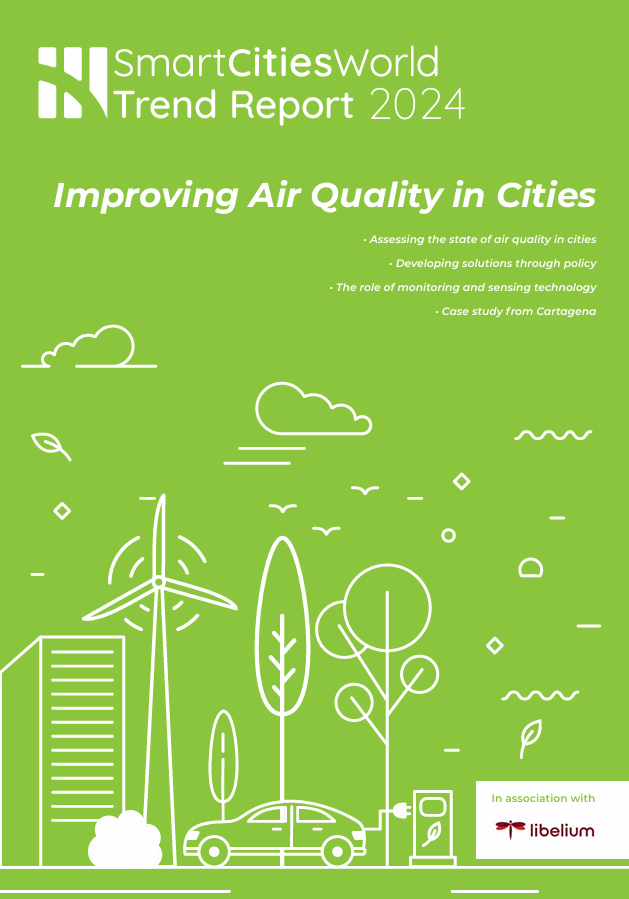
Air Quality Trend Report 2024
Air quality in cities is a topic of both hope and concern. With growing and accelerating urbanisation and an increase in traffic, the air quality in many urban environments around the world has deteriorated. This leads to the urgent question of how to find a path towards cleaner and healthier air. With practical and smart strategies that support a greener, breathable future, however, cities demonstrate there’s hope for a turnaround.
The SmartCitiesWorld Trend Report on air quality, supported by Libelium, looks at the impact of traffic and congestion, assessing ways to reduce vehicle emissions and emphasising the role of low-emission zones as well as the expansion of public transportation in mitigating emissions and traffic-related pollution.
The report will also shine a light on how to regulate emissions from diverse sources, for example through stricter environmental standards and cleaner technologies, and highlights where public-private partnerships can play a key role.
A holistic approach to air quality improvement is necessary considering the complexities faced by cities in enhancing air quality. By presenting real-world solutions and discussing technological advancements and trends, the report provides a comprehensive approach to addressing the various sources of pollution through collaborative efforts from the public and private sectors.
The report offers insight into:
- The state of play in cities that have made promising strides forward in mitigating poor air quality
- How to create solutions to improve air quality through policy development
- The role of monitoring and sensor technologies in finding solutions that work at the local level.
Among others, the Air Quality Trend Report features case studies from:
- Cartagena, Spain
- London, UK
- Copenhagen, Denmark
- Beijing, China
In association with:
Why not try these links to see what our SmartCitiesWorld AI can tell you.
(Please note this is an experimental service)
How can AI and machine learning optimize urban air quality monitoring?What policies effectively reduce vehicle emissions in low-emission zones?How do public-private partnerships enhance air quality improvement efforts?Which sensor technologies provide the most accurate local air pollution data?What role does expanded public transportation play in lowering urban pollution?AI and Machine Learningair qualityAnalyticsclimate actionConnectivity & DataDataDevicesEnergy & EnvironmentGovernance and CitizenmobilityPolicy MakingRenewablesSDGsSensorssmart citiesSustainable Development Goalsurban space
Latest City Profile
SmartCitiesWorld Newsletters (Daily/Weekly)
You may also like these related articles...
BECOME A MEMBER
© 2026 SmartCitiesWorld
Smart Cities World Ltd, 37 Lombard Street, London, EC3V 9BQ