












 22 - 26 June 2026: Find out more



BUILD YOUR OWN
RESOURCE LIBRARY



Opinions

Smart lighting: enabling smart cities beyond illuminationSponsored by Paradox Engineering

How AI and biometrics are shaping next-generation mobility paymentsSponsored by ST Engineering
Boston launches e-cargo bike delivery pilot programme
Boston Delivers will make deliveries to and from businesses in Allston, reducing pollution and easing congestion caused by the expansion of delivery services.


Boston Transportation Department (BTD) has announced the launch of an e-cargo bike delivery pilot programme to serve local residents and businesses in Allston.
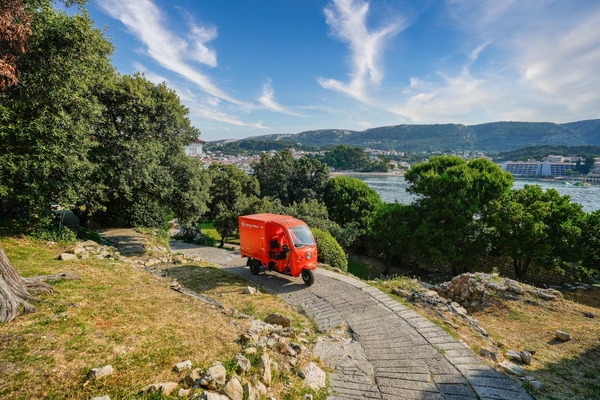
The Boston Delivers service will make deliveries to and from local businesses in Allston and the surrounding area. Instead of motor vehicles, packages will be delivered by electric cargo bikes.
Improving street safety
The programme will begin mid-September and run for at least a year, with the goal of supporting local businesses, reducing pollution, easing traffic congestion caused by the expansion of delivery services, and improving street safety.
The City reports the rise of delivery services following the pandemic has led to more congestion outside local businesses and double parking in bus, bike, and vehicle travel lanes. This has led to more conflicts among pedestrians, cyclists, and vehicles, which has increased the potential for serious injury.
Boston Delivers aims to improve safety on our streets by reducing the size, speed, and environmental impacts of delivery vehicles.
“This bike delivery pilot will support restaurants with an affordable, green, and convenient delivery option while reducing congestion on our streets”
“The way our small businesses and residents use our city’s kerbs has changed over the last few years, and we’re launching Boston Delivers to explore how to make our streets flow more smoothly and safely for everyone,” said Michelle Wu, mayor of Boston.
“This bike delivery pilot will support restaurants with an affordable, green, and convenient delivery option while reducing congestion on our streets.”
The City will subsidise the delivery costs for up to eight businesses, making delivery costs more affordable for local businesses, with funds from Massachusetts Clean Energy Centre’s (MassCEC) Accelerating Clean Transportation for All (ACT4All) programme (funded by MassCEC and the Department of Energy Resources).
Read More
This programme will also help businesses provide a delivery service where they may not already offer one. Additionally, the City is contributing about $345,000 towards the pilot programme. The majority of this is labour costs, along with outreach and translation services and equipment.
“The growth of car-based delivery services has negatively impacted our streets by adding congestion and increasing unsafe and illegal parking”
“The growth of car-based delivery services has negatively impacted our streets by adding congestion and increasing unsafe and illegal parking,” said Jascha Franklin-Hodge, chief of streets.
“This pilot will help us explore alternatives by offering convenient delivery options that support neighbourhood businesses while keeping our streets safe and moving.”
The pilot programme has several key learning objectives that will help pave the way for the operation of e-cargo bikes for delivery. These key learning objectives are:
- Identify the policies, programmes, and regulations that need to change to allow for e-cargo bike delivery in the city of Boston
- Test infrastructure changes needed to accommodate e-cargo bike delivery, including but not limited to e-cargo bike delivery zones, staging and sorting areas, parcel lockers, and other last-mile logistical needs
- Measure the benefits of e-cargo bike delivery, including its impact on environmental, safety, and economic metrics
- Understand the costs and feasibility of e-cargo bike delivery for different types of businesses
- Communicate to delivery service providers that the city of Boston is ready for delivery services to utilise e-cargo bikes.
“The electric cargo bike pilot presents an important opportunity to both learn best practices regarding sustainable, environmentally friendly local deliveries, which has an exploding demand in both urban and suburban neighbourhoods, while also reducing vehicle miles travelled by single-occupant vehicles – a key recommendation of MetroCommon 2050,” said Marah Holland, senior transportation planner at the Metropolitan Area Planning Council.
“It’s the epitome of ‘smart growth’, and we’re looking forward to opportunities to expand to other neighbourhoods and municipalities across Greater Boston.”
Boston Delivers will serve as a case study for the Urban Freight Lab at the University of Washington to help inform worldwide efforts to encourage deliveries on e-cargo bikes.
The Boston Transportation Department has partnered with Net Zero, a final mile logistics provider, to carry out the pilot. Net Zero will provide and manage the fleet of e-cargo bikes and related equipment, make the deliveries, and manage the logistics.
Why not try these links to see what our SmartCitiesWorld AI can tell you.
(Please note this is an experimental service)
How will e-cargo bikes reduce pollution compared to traditional delivery vehicles?What infrastructure changes are needed to support e-cargo bike deliveries in Boston?How can e-cargo bike delivery improve street safety for pedestrians and cyclists?What economic benefits might local businesses gain from using e-cargo bike delivery?Which policies must be updated to enable widespread e-cargo bike delivery adoption?
Latest City Profile
Latest Urban Exchange Podcast
Latest Special Report
SmartCitiesWorld Newsletters (Daily/Weekly)
You may also like these related articles...
BECOME A MEMBER
© 2026 SmartCitiesWorld
Smart Cities World Ltd, 27 Clements Lane, London, EC4N 7AE