







The trial will determine the best way for Australian cities to enforce legislation for electric micromobility and help improve rider compliance and safety.
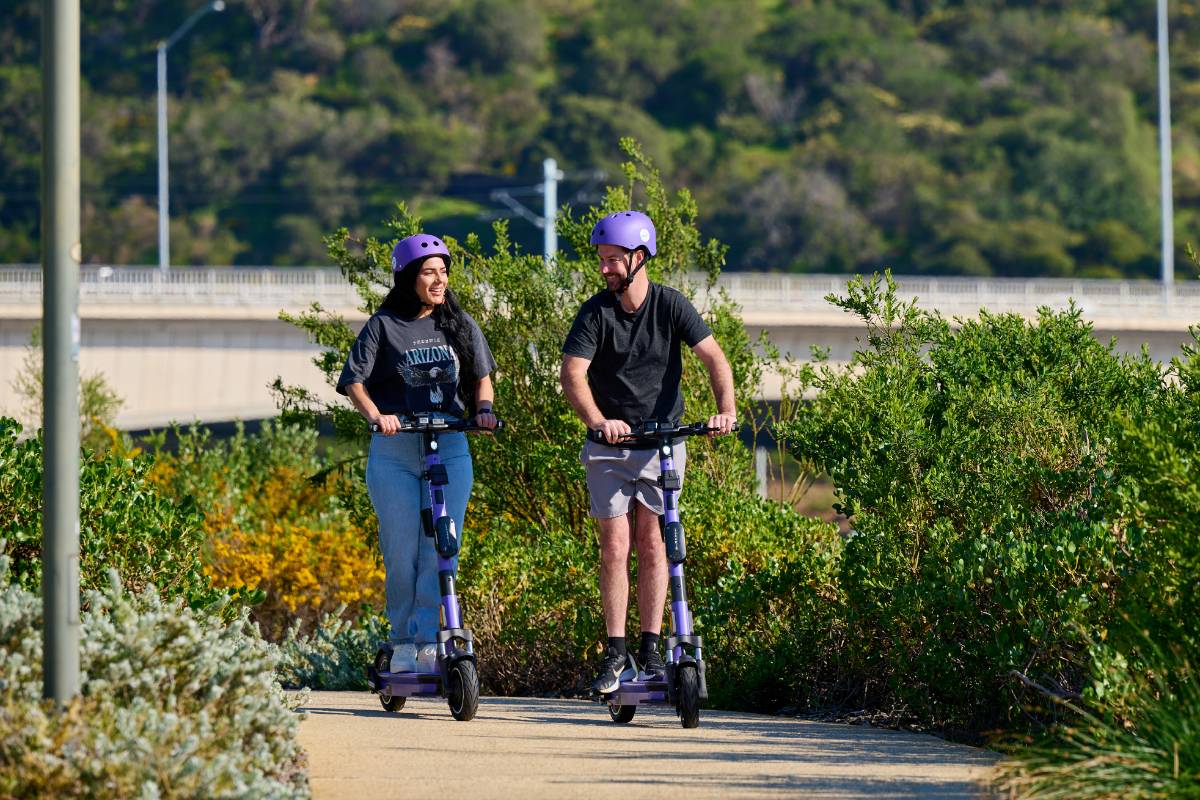
Beam is set to launch an Australian-first trial of footpath detection and speed-limiting technology on its fleet of e-scooters in the City of Melton, Victoria. Partnering with Drover AI, Beam will roll out its Pedestrian Shield technology across 150 e-scooters in the city, aiming to improve rider compliance and safety.
This initiative forms part of a broader effort by Beam and Drover to enhance safety across micromobility networks and will inform future policy decisions regarding e-scooter regulation across Australia. A comprehensive report based on the findings will be shared with councils and policymakers to guide infrastructure improvements and safety measures.
The AI-powered technology, driven by Drover AI’s PathPilot module, uses real-time detection to identify roads, bike lanes, and footpaths. E-scooters will slow down and issue verbal warnings when footpath riding is detected, ensuring compliance with local laws. The trial that began on September 1 will test various feedback mechanisms to determine the most effective way to influence rider behaviour.
Fifty e-scooters will be equipped with advanced Pedestrian Shield technology, which includes audio alerts and automatic speed adjustments when on footpaths. This system will provide warnings for illegal footpath riding and reduce the e-scooter’s speed accordingly. Fifty e-scooters will be fitted with partial Pedestrian Shield technology, providing audio alerts if the rider attempts to ride on the footpath, but without adjusting speed. The remaining fifty e-scooters will act as a control group, detecting rider interaction with different road surfaces but offering no real time feedback.
Beam’s standard rider enforcement and education programme will be implemented across all of the 150 e-scooters. The aim of the trial is to collect data that demonstrates the effectiveness of optional technology in rider education and enforcement, while also assessing its impact on rider compliance.
“With different states in Australia having different legislation governing e-rideables, Beam’s Pedestrian Shield is able to adapt to the different riding rules in each state…”
Pedestrian Shield Technology strengthens Beam’s core safety education and enforcement initiative, the Beam Safe Academy, which is designed to teach riders about local riding regulations and the proper handling of e-scooters.
Each rider receives a pre-trip in-app safety briefing, providing guidance on safe riding and proper parking. Additionally, an in-app Beam safety quiz educates users on riding rules, with free credits offered as an incentive for participation.
Beam safety ambassadors patrol high traffic areas to promote safe riding and parking. The company also enforces a three strikes policy, where riders may be suspended for repeated riding or parking violations, with permanent bans for dangerous or illegal behaviours.
Beam’s General Manager, Tom Cooper said, “With different states in Australia having different legislation governing e-rideables, Beam’s Pedestrian Shield is able to adapt to the different riding rules in each state - whether that is to enforce lower speeds on footpaths or stopping the Beam altogether.
“The trial will help us understand the best combination of real-time rider prompts and trip intervention to support safe e-scooter use.”
Drover CEO, Christian Scheder-Bieschin, said, “Helping riders comply with riding and parking regulations makes everyone safer and provides a more orderly programme.
“Equally exciting for all stakeholders are the granular insights on rider behaviour and infrastructure usage that will be revealed throughout these deployments of Drover technology.”
Why not try these links to see what our SmartCitiesWorld AI can tell you.
(Please note this is an experimental service)
How does Pedestrian Shield technology detect footpath riding in real time?What impact does speed-limiting have on e-scooter rider compliance?How can AI improve enforcement of e-rideable regulations across states?What data insights does Drover AI provide on rider behaviour and infrastructure?How effective are audio alerts compared to speed adjustments in changing rider behaviour?