














 22 - 26 June 2026: Find out more



BUILD YOUR OWN
RESOURCE LIBRARY



Boost greener travel with e-scooter legislation
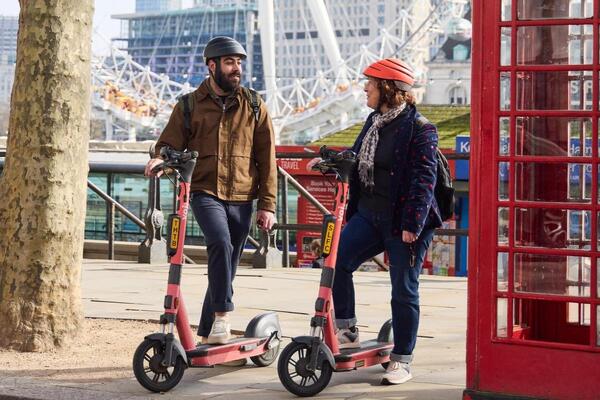
James Bolton, UK General Manager at Voi Technology, welcomes the government’s investment in active travel and explains how e-scooter legislation would unlock more greener journeys.


The UK government’s £300m investment in walking, wheeling and cycling infrastructure is a big win for cleaner, greener travel. At Voi, we welcome this move to modernise outdated roads, with funding for local authorities to create 300 miles of new footpaths and cycle tracks across England and improve crossings and junctions.
As the UK’s leading provider of e-scooter hire schemes in the UK, we are partnered with local authorities across 18 towns and cities across the UK to help them go faster and further to deliver green journeys, supporting their net zero targets. Since 2020, we’ve supported over 40 million rides, around two-thirds of all trips taken in the UK. Our riders tell us time and again just how important safe routes are. In fact, eight-in-ten women surveyed told us a lack of safe infrastructure was a barrier to riding e-scooters more.
Lack of safe spaces
Our research into the experience of women with e-scooters found infrastructure was cited as a key factor in shaping perceptions and informing ridership. There was perceived to be an overall lack of safe spaces to ride. Streets and roads were considered dangerous and drivers hostile. As with cycling, if shared e-scooters are to achieve their full potential, they will require suitable and dedicated infrastructure. This should be shared with other micromobility modes – or be on sufficiently slow or low traffic streets, where e-scooter riders can safely use the carriageway.
Millions of people across the country use Voi to make electrified trips to work, education or about town. Forty per cent of our riders use us for commuting; 28 per cent for running errands; and close to a third of our users, (31 per cent), regularly combine their trip with trains and buses.
Europe has raced ahead of Britain on micromobility. Without a firm commitment to bringing forward legislation in the immediate future, the UK will continue to lag behind
E-scooters and e-bikes have a key role to play in an integrated transport system. We give people a low emission alternative to short, single occupant motor journeys. So far, we have replaced over 11 million car trips. This has saved an estimated 7,700 tonnes of C02 emissions and just over 1,200kg of harmful fine particulate matter from entering the atmosphere.
We know from our rider surveys that our vehicles are also empowering some disabled people and older people to travel independently, be more active and leave cars at home. In Liverpool, for example, 18 per cent of our regular riders have some form of condition, such as a chronic illness, mobility impairment or learning disability, while two per cent are aged 65 or over.
Unlocking e-scooter and e-bike potential
We will continue working with the Department for Transport to unlock the potential of e-scooters and e-bikes and give more people the choice of a greener journey. The next step needs to be a timetable for e-scooter legislation to give the industry the confidence we need to plan long-term.
Europe has raced ahead of Britain on micromobility. Without a firm commitment to bringing forward legislation in the immediate future, the UK will continue to lag behind. The UK will miss out on the huge potential for micromobility-enabled economic growth across the country. Voi’s services contribute an estimated £106m to high street spending annually.
E-scooters and e-bikes have a key role to play in an integrated transport system. We give people a low emission alternative to short, single occupant motor journeys
At the same time, the number of privately owned e-scooters – which are extremely unlikely to undergo regular maintenance by trained professionals or meet strict DfT-mandated safety standards like our services – will continue to proliferate. It is already estimated to have surpassed one million vehicles on our roads. Levelling the playing field between safe rental e-scooters and unregulated private e-scooters to enhance road safety is just one more area where legislation and positive regulation can make a difference.
To give more people a greener choice of travel, the government now needs to kick-on with legislation to make the hugely popular e-scooter trials permanent and set out safety standards for privately-owned e-scooters. It’s time to move forward.
Why not try these links to see what our SmartCitiesWorld AI can tell you.
(Please note this is an experimental service)
How can e-scooter legislation improve safety for all road users?What infrastructure changes best support increased e-scooter usage?How do e-scooters contribute to reducing urban carbon emissions?In what ways can e-scooters enhance mobility for disabled people?How does integrating e-scooters with public transport benefit cities?
Latest City Profile
Latest Urban Exchange Podcast
Latest Special Report
SmartCitiesWorld Newsletters (Daily/Weekly)
You may also like these related articles...
BECOME A MEMBER
© 2026 SmartCitiesWorld
Smart Cities World Ltd, 27 Clements Lane, London, EC4N 7AE