
The GreenInCities project will use a mixture of citizen science and tools such as digital twins and neuroscience to promote the natural recovery of the estuary.
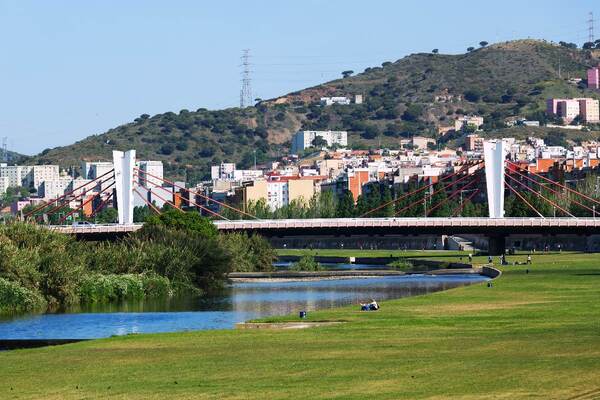
Barcelona plans to convert the Besòs river into an urban laboratory of nature, technology and citizen participation through the GreenInCities project.
The project hopes to use citizen science and tools such as digital twins and neuroscience to promote the natural recovery of the Besòs estuary in the Spanish city by increasing its biodiversity and climate resilience.
Barcelona is one of several cities involved in the GreenInCities project. The lower Besòs river area faces significant ecological and social challenges. It will make use of innovative tools such as citizen science kits, drones, interactive video games, and a digital river, developed by Kaunas University of Technology, to monitor the environment and encourage collective decision-making.
The project integrates emerging disciplines such as environmental neuroscience, which studies how green spaces affect mental health, and combines this understanding with nature-based solutions (NbS) to improve climate resilience, biodiversity, and social wellbeing.
“The Department of Citizen Participation on and the Department of Regional Planning of the Sant Adrià de Besòs Town Council have been involved from day one”
Barcelona is joined by four other leader cities in the GreenInCities programme: (Prato, Athens, Helsinki and Nova Gorica) and six follower cities (Reykjavik, Cork, Matosinhos, Pécs, Birštonas and Hersonissos), each representing different climate resilience challenges and issues.
The five leader cities have selected the most appropriate tools and methodologies to address their specific challenges, as well as holding the first co-creation and co-analysis workshops involving local stakeholders. The focus will now shift to developing the first prototypes and conducting initial trials in real urban environments.
GreenInCities is a European project aligned with the European Green Deal and the New European Bauhaus. This alignment with European policies means that it is not just a local transformation project, but also a replicable model for sustainable urban planning throughout Europe.
The Besòs river project is a coordinated effort involving the Barcelona Metropolitan Strategic Plan (PEMB), the Besòs Consortium, the Institute of Advanced Architecture of Catalonia (IAAC) and planning consultancy MCRIT. The urban planning initiative looks to bring more biodiversity and make the area more resilient to climate change.
“We want to work on the paving, reducing the number of impermeable surfaces created by the existing concrete slabs while increasing the planning area,” said Francesc Romero, an expert in urban transformation at the Besòs Consortium.
The plan involves replacing existing flora with native species that form dense canopies and require less water, which will help reduce the heat island effect and create a climate refuge that will add to the beauty of the landscape.
Citizens have been closely involved in the process from the outset, through a co-design process in collaboration with Sant Adrià de Besòs Town Council and the Besòs Consortium. In addition, local experts were invited to participate in a series of consultations to help co-design the nature-based solutions. “The Department of Citizen Participation and the Department of Regional Planning of the Sant Adrià de Besòs Town Council have been involved from day one, serving as liaisons for the processes carried out to date. Their experience helped us understand how to get things done and what to think about to make sure the process was a success,” said Romero.
GreenInCities is founded on the premise that cities are not just for humans but are spaces where many different species must coexist harmoniously. This approach is known as the One Health approach. As a result, it promotes biodiversity islands, planted facades and green corridors that connect natural spaces, encourage native species to thrive and aid climate resilience. These help to mitigate the heat island effect by reducing temperatures in dense urban areas, create sustainable drainage systems that reduce the risk of flooding during extreme rainfall events, and improve urban plant cover, which contributes to CO₂ capture and improved air quality.
“We want to work on the paving, reducing the number of impermeable surfaces created by the existing concrete slabs while increasing the planning area”
This is where environmental neuroscience comes in, showing that being in touch with nature has a positive effect on stress and psychological wellbeing. Tools such as Neurourbanism Assessment (NUA), developed by NeuroLandscape, have been used to evaluate these factors, placing emphasis on the importance of biophilic design, urban interventions and the creation of spaces that encourage social connection and physical activity.
Technology is at the heart of this approach. For example, digital twins, which are virtual replicas of the physical environment, make it possible to simulate, analyse, and monitor behaviour in real-time using data collected by sensors, or drones and other data capture devices. With GreenInCities, this technology helps visualise how urban projects will impact the environment before they’re even started, making it easier to make joint decisions and track how they affect the environment and people’s wellbeing.
Why not try these links to see what our SmartCitiesWorld AI can tell you.
(Please note this is an experimental service)
How do digital twins enhance environmental monitoring and decision-making in urban areas?What role does environmental neuroscience play in improving urban green space design?How can citizen science kits contribute to biodiversity recovery in river estuaries?In what ways do nature-based solutions reduce urban heat island effects effectively?How does the One Health approach integrate biodiversity and human wellbeing in cities?