














BUILD YOUR OWN
RESOURCE LIBRARY



Podcasts

Cities Thriving on Lighting, Episode 2 – Simplicity by design in smart lightingSponsored by Paradox Engineering
Cities Thriving on Lighting, Episode 1 – Lighting as the backbone of the smart citySponsored by Paradox Engineering
Opinions

Transforming indoor public safety with smart sensor networksSponsored by Motorola Solutions
Bratislava launches large-scale smart waste programme
The Slovakian capital is working with Sensoneo on the project, with savings expected on waste collection related to refuse truck mileage and emissions.


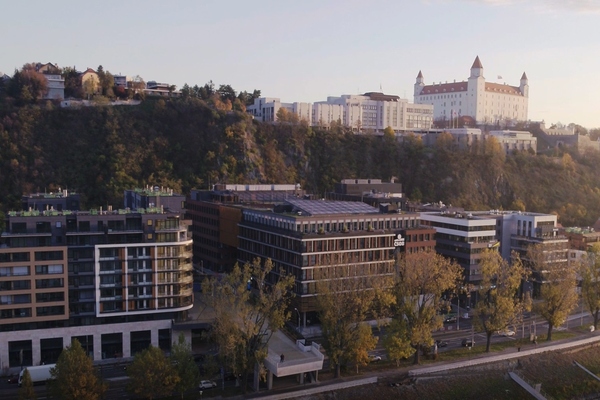
Bratislava's smart waste programme will be implemented in phases until April 2022
Slovakian capital Bratislava has launched a waste digitalisation and collection improvement initiative.
City leaders, in cooperation with technology company Sensoneo, expect to realise savings on waste collection related to refuse truck mileage and emissions as well as the scope for early intervention to limit risk of overfilled containers.
Environmental benefits
Sensoneo was awarded an EIC Accelerator grant in the summer of 2020 to support the large-scale deployment of its solution in order to demonstrate its environmental and economic benefits. The project includes several stages that will be implemented continuously until April 2022.
“For the citizens of Bratislava, this would mean cleaner public spaces and more efficient waste collection services,” said Katarína Rajčanová, city spokesperson.
The project includes:
- digitalisation of 85,000 containers, installation of 1,753 Sensoneo sensors to monitor all containers for glass waste and underground bins across the city
- deployment of 92 Sensoneo WatchDog devices on all waste collection vehicles to automatically digitalise the waste collection process and automatically verify pick-ups
- dynamic waste collection powered by Sensoneo’s Route Optimisation
- testing of prototypes facilitating the introduction of “pay-as-you-sort“ models and recognising fill-levels of containers during pick-up.
Containers for glass and semi-underground containers present the highest potential for savings – in terms of fuel and mileage as well as in terms of time and emissions. Glass waste is particularly troublesome due to its irregular filling cycle, and Sensoneo claims its real-time sensors offer invaluable time-savings by identifying when collection is required, thereby eliminating unnecessary pick-ups, while ensuring that bins will not sit overfilled.
“For the citizens of Bratislava, this would mean cleaner public spaces and more efficient waste collection services”
This knowledge motivated the City to select 1,753 bins to be monitored with sensors. Besides actual waste production monitoring, the data will be used for the automated optimisation of waste collection routes targeting the shortest mileage possible and maximised capacity utilisation of the vehicles on return to the depot.
Sensoneo reports lack of efficiency and transparency as some of the biggest challenges in waste management. The City will deploy its Watchdog service-monitoring tool on all vehicles to test the functionality of automatic identification of bins and bags authorised for waste collection, automatic verification of pick-up of each bin and a precise recording of all the routes undertaken.
The City’s waste management company OLO will also use Sensoneo’s Fleet Management to manage daily operations related to collection vehicles and routes. Operators will be given a detailed and complete overview of all the operations made in the field and in the depot, including the ability to receive real-time updates on the ongoing routes and locations of the trucks on the map. The tool also includes the Garage dashboard, incident reports, and detailed statistics showing driving patterns.
Digitalisation of waste infrastructure is in line with the City’s Strategy for Municipal Waste Management with the aim of transitioning to a circular economy through 2021-2026.
You might also like:
Why not try these links to see what our SmartCitiesWorld AI can tell you.
(Please note this is an experimental service)
How do Sensoneo sensors optimize waste collection routes in Bratislava?What environmental benefits result from digitalising 85,000 waste containers?How does the WatchDog device improve transparency in waste collection?In what ways does real-time fill-level monitoring reduce emissions?How will pay-as-you-sort models impact waste management efficiency?Latest City Profile
SmartCitiesWorld Newsletters (Daily/Weekly)
You may also like these related articles...
BECOME A MEMBER
© 2026 SmartCitiesWorld
Smart Cities World Ltd, 37 Lombard Street, London, EC3V 9BQ