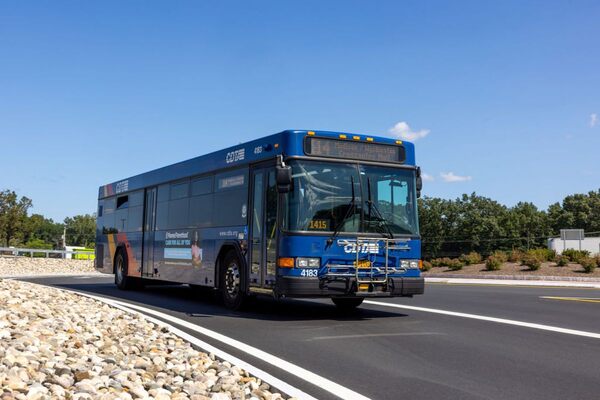






















New system refines ETAs by analysing real-time vehicle positioning, current traffic conditions, and historical travel patterns to dynamically adjust positions.
At a glance
Who: Capital District Transportation Authority (CDTA); Moovit.
What: CDTA has collaborated with Moovit to introduce an enhanced real-time arrival system within its Navigator travel app and on cdta.org.
Why: To improve bus arrival prediction accuracy for fixed routes and provide riders across New York’s Capital Region a smoother mobility experience. It reckons it is achieving a 90 per cent prediction accuracy.
When: CDTA is a mobility provider in the Capital Region, providing local, express, commuter, and bus rapid transit services across its six-county service area.
New York State public benefit corporation Capital District Transportation Authority (CDTA) has introduced an enhanced real-time arrival system within its Navigator travel app and on cdta.org.
Launched in partnership with global mobility solutions provide Moovit, CDTA reckons it achieves a 90 per cent arrival prediction accuracy for fixed routes, providing riders across New York’s Capital Region with a smoother mobility experience.
Meanwhile, CDTA claims that Navigator app usage has increased by half; and separately, its Flex on-demand service wait times fall by as much as 85 per cent.
Powered by Moovit, the latest advancement builds on CDTA’s continued investment in digital mobility solutions. The new system refines estimated times of arrival (ETAs) by analysing real-time vehicle positioning, current traffic conditions, and historical travel patterns to dynamically adjust positions. The result, CDA reports, is more reliable ETAs and a smoother ride.
The stronger accuracy comes as more riders turn to Navigator to manage their daily travel:
“Delivering reliable, easy-to-use technology solutions across all CDTA platforms, including the Navigator app and cdta.org is one of our top priorities,” said Thomas Guggisberg, director of information technology at CDTA. “Moovit has been an outstanding partner committed to helping CDTA improve the quality of CDTA services and the informational products we provide to customers.”
CDTA has also seen significant reductions in Flex on-demand waiting times following service adjustments, including transitioning to point-to-point pickup and drop-off, and the launch of a third zone in Saratoga Springs in late 2025.
“For many riders, shorter wait times mean more flexibility, less time standing outside, and more control over their schedules,” said Ziv Kabaretti, Moovit’s chief product officer. “By combining predictive AI technology with CDTA’s operational expertise, we’re delivering measurable improvements that riders can feel every day.”
“By combining predictive AI technology with CDTA’s operational expertise, we’re delivering measurable improvements that riders can feel every day”
Navigator serves as Albany’s central mobility platform, enabling riders to plan trips, track vehicles in real time, pay fares, and book on-demand services in one place.
CDTA is the premier mobility provider in the Capital Region, providing local, express, commuter, and bus rapid transit services across its six-county service area. CDTA also operates the regional bike-share programme, CDPHP Cycle!, and carshare programme, Drive. It also owns and operates the Joseph L Bruno Rail Station and the Saratoga Springs Train Station.
Why not try these links to see what our SmartCitiesWorld AI can tell you.
(Please note this is an experimental service)
How does predictive AI improve bus ETA accuracy to 90 percent?Which real-time data sources most influence ETA recalculation in Navigator?How did Navigator usage growth affect operational scheduling and resource allocation?What algorithmic methods adjust vehicle positions using historical travel patterns?How did point-to-point pickups reduce Flex on-demand wait times by 85%?