


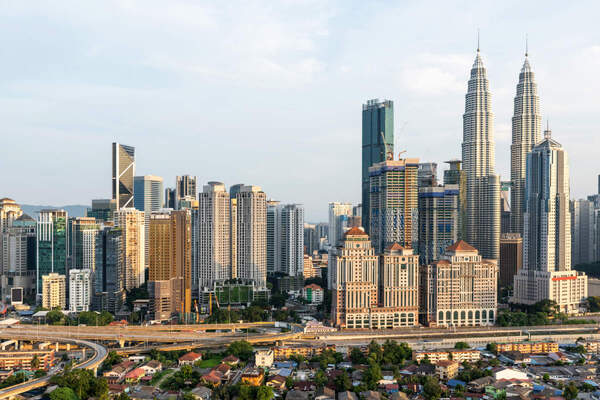



















The annual Traffic Index, based on mobility data in 2025, measures congestion levels, average speeds and travel times per mile across the global road network.
At a glance
Who: TomTom.
What: TomTom has published its annual Traffic Index. It reveals global congestion has increased by five percentage points.
Why: To help city, state, county, regional and national governments and decision-makers tackle traffic challenges and develop future-shaping strategies.
When: The index is based on based on mobility data collected in 2025.
Global congestion has increased by five percentage points, rising from 20 per cent to 25 per cent, according to a new report from TomTom.
The annual Traffic Index, based on mobility data in 2025, measures congestion levels, average speeds and travel times per mile across the global road network.
For the first time, TomTom calculated global congestion levels by aggregating driving speeds over more than 2.2 trillion miles (3.6 trillion kilometres) driven worldwide.
TomTom notes that beyond driver frustration, increased congestion has serious societal implications. Rising levels of congestion globally lead to more emissions, higher fuel consumption, reduced productivity, and growing pressure on urban infrastructure.
The index reveals Barranquilla in Colombia as the slowest city overall, followed by UK capital London in 2nd place, with Indian cities Bengaluru and Kolkata 3rd and 4th respectively. Lima in Peru rounds out the top five slowest cities.
When it comes to countries, the US placed 54th globally, with an average congestion level of 19 per cent in stark contrast to worst-rated Columbia at nearly 50 per cent. Meanwhile, Japan ranked 9th at 34 per cent, the UK 23rd at 27 per cent, and France 48th at 20 per cent.
Making up the rest of the top 10 worst countries for congestion are: Malta 2nd (45 per cent); Philippines 3rd (45 per cent); Mauritius 4th (38 per cent); India 5th (37 per cent); Singapore 6th (37 per cent); Mexico 7th (37 per cent); Peru 8th (36 per cent); and Indonesia 10th (34 per cent).
“The upward trend we see necessitates urgent action in smarter mobility planning, investments in public and shared transport, improved traffic management technologies, and coordinated policies”
When it comes to US cities, Los Angeles tops the congestion list with nearly 60 per cent congestion followed by closely by San Francisco and Honolulu. New York City remained the slowest, with drivers losing 120 hours annually to peak-hour traffic on a typical six-mile commute, in comparison to 80 hours in Los Angeles. Globally, Lima, Peru, fared worst, with 188 hours lost in traffic.
Out of the top 10, Atlanta had the largest increase of four percentage points, while New York City stayed flat and Boston declined by three points.
Cities are dynamic ecosystems of movement, interaction, and innovation. Roads help facilitate movement within this ecosystem, whether it’s moving people, packages, or pizza. As cities grow denser and interconnected, TomTom warns that residents will continue to face increasing strain from congestion, pollution, and inefficient transportation networks.
“As cities grow and adapt, we must address the multifaceted challenges that lead to increasing traffic congestion,” said Ralf-Peter Schäfer, vice president for traffic and travel information, TomTom.
“The upward trend we see necessitates urgent action in smarter mobility planning, investments in public and shared transport, improved traffic management technologies, and coordinated policies. Our traffic data enables urban planners and policymakers to better understand these interconnected issues and make well-informed decisions that ensure cities remain liveable, efficient, and sustainable in the face of growing congestion.”
For 15 years, the TomTom Traffic Index has provided a global view of mobility trends shaped by urban policies and driver behaviour. The Traffic Index also serves as a critical benchmark for Departments of Transportation, road authorities, and city planners to help make cities smarter, more efficient, and more sustainable.
To find out more and drill further down into the data, go to TomTom Traffic Index.
Why not try these links to see what our SmartCitiesWorld AI can tell you.
(Please note this is an experimental service)
How can smarter mobility planning reduce global traffic congestion effectively?What role do public and shared transport investments play in easing congestion?How do improved traffic management technologies impact urban travel times?Which coordinated policies best support sustainable urban mobility solutions?How does congestion increase affect air quality and fuel consumption globally?