









BUILD YOUR OWN
RESOURCE LIBRARY



Podcasts
Cities Thriving on Lighting, Episode 2 – Simplicity by design in smart lightingSponsored by Paradox Engineering
Cities Thriving on Lighting, Episode 1 – Lighting as the backbone of the smart citySponsored by Paradox Engineering
Opinions

Transforming indoor public safety with smart sensor networksSponsored by Motorola Solutions
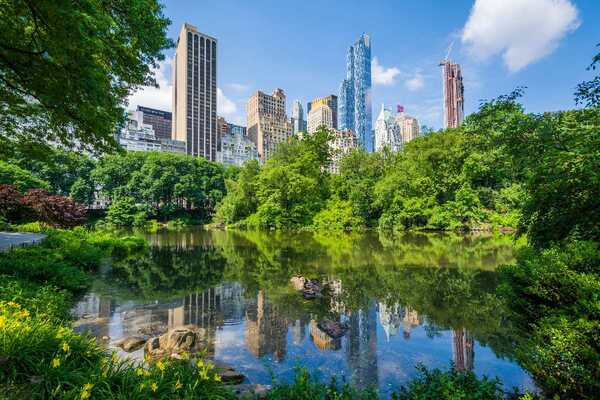
New York City launches urban forest plan
The comprehensive framework aims to protect the existing canopy, expand tree planting, and cultivate long-term stewardship across public and private land.


 At a glance
Who: Mayor’s Office of Climate & Environmental Justice (MOCEJ); NYC Parks; WXY Architecture + Urban Design (WXY).
What: New York City has unveiled its Urban Forest Plan, the city’s first comprehensive framework for protecting existing canopy, expanding tree planting, and cultivating long-term stewardship across public and private land.
Why: To establish a coordinated approach to increasing NYC’s tree canopy coverage, with the goal of boosting coverage from 23.4 per cent to 30 per cent by 2040, while addressing long standing inequities in access.
When: The plan sets out how to reach 30 per cent tree canopy citywide by 2040.
New York City has unveiled its Urban Forest Plan, the city’s first comprehensive framework for protecting existing canopy, expanding tree planting, and cultivating long-term stewardship across public and private land.
Spearheaded by the Mayor’s Office of Climate & Environmental Justice (MOCEJ) in collaboration with NYC Parks and a broad coalition of public and civic partners, the plan establishes a coordinated approach to increasing New York City’s tree canopy coverage.
Long-standing inequities
The goal is to boost coverage from 23.4 per cent to 30 per cent by 2040, while addressing long standing inequities in access. At current growth rates, MOCEJ reports it would likely not reach that threshold until 2055 or later.
While the city’s canopy has grown in recent years, it remains unevenly distributed. As of 2021, the latest citywide canopy data shows that while tree canopy covers 23.4 per cent of the city, Environmental Justice Areas have 19 per cent canopy overall, compared with 26 per cent in non-EJ areas.
The Urban Forest Plan centres equity as a core objective, directing resources and strategies toward neighbourhoods most affected by heat, environmental burdens, and historic disinvestment to ensure that all New Yorkers have access to a healthier, more resilient urban environment.
NYC-based firm WXY Architecture + Urban Design (WXY) led planning, research, design, and community and inter-agency engagement for the plan, synthesising analysis, spatial data, and public input into a coherent, actionable framework that approaches the urban forest as essential infrastructure.
“This plan reflects years of dedicated work by city agencies, conservation partners, and the community groups and stewards who have been expanding and caring for the canopy long before there was a citywide plan for it”
“The urban forest canopy is one of the few public systems no single agency can build alone,” said Claire Weisz, founding principal, WXY. “This plan is the first to treat it that way, creating a shared goal and unified framework that reaches across the city, from public agencies to private landowners.
“Growing the canopy over the coming years will ask something of every neighbourhood, property owner, and agency, bringing everyone together in collective action.”
New York City’s urban forest includes nearly seven million trees across streets, parks, forested natural areas, schoolyards, campuses, public housing, cemeteries, and private property, along with the soils, ecosystems, and communities that sustain them. This connected ecological system is critical infrastructure that cools neighbourhoods, improves air quality, absorbs stormwater, supports biodiversity, and improves public health – both mental and physical.
Read More
The plan outlines a citywide approach to growing and caring for that canopy in ways that support climate resilience, public health, environmental justice, and quality of life. Its recommendations address preservation of mature trees, street and park planting, support for private-property owners, stewardship and education programmes, and stronger coordination across agencies responsible for maintenance and implementation.
To reach 30 per cent canopy by 2040, the plan is organised around three coordinated pathways:
- Preserve tree canopy: protect and maintain existing trees, with a focus on mature canopy that delivers the greatest environmental benefits
- Plant more trees: expand canopy across streets, parks, and private property, prioritising high-impact locations and underserved areas
- Cultivate stewards of the urban forest: engage residents, organisations, and institutions in caring for trees, building long-term capacity for urban forest maintenance.
Each pathway contains three- to five strategies that describe key issues and challenges, while a total of 43 individual actions within each strategy outline specific programmes, policies, and projects that align public agencies, private partners, and community stakeholders around a shared, long-term goal.
More than 8,000 New Yorkers and 23 city agencies helped shape the framework through workshops, tours, focus groups, meetings, and a citywide questionnaire.
“Growing the canopy over the coming years will ask something of every neighbourhood, property owner, and agency, bringing everyone together in collective action”
“This plan reflects years of dedicated work by city agencies, conservation partners, and the community groups and stewards who have been expanding and caring for the canopy long before there was a citywide plan for it,” said Dare Brawley, senior associate, WXY.
“The three pathways that we developed in the UFP are built on that work, help turn it into a coordinated citywide strategy, and outline roles that City agencies, neighbourhoods and community boards, property owners, and New Yorkers can play in reaching them.”
The Mayor’s Office of Climate & Environmental Justice leads New York City’s efforts to address climate change, advance environmental justice, and improve quality of life for all New Yorkers through policy, planning, and cross-agency coordination.
WXY Architecture + Urban design is an interdisciplinary practice based in New York City and Toronto. The firm works across architecture, planning, and urban design to shape the public realm through site-specific, context-driven solutions that connect policy, infrastructure, and community engagement.
Download the full plan here.
air qualitycitizen engagementclimate actionClimate change/ResilienceCommercial buildingsCultural spaceEnergy & EnvironmentGovernance and CitizenGreenfield sitesHealth & Social CarehousinginclusivityNew YorkParks and green spacePolicy MakingPublic-private partnershipsRecreational spaceResidential buildingsresilienceurban space
Latest City Profile
SmartCitiesWorld Newsletters (Daily/Weekly)
You may also like these related articles...
BECOME A MEMBER
© 2026 SmartCitiesWorld
Smart Cities World Ltd, 37 Lombard Street, London, EC3V 9BQ