
Aiming to transform urban mobility, it advances Saudi Arabia’s Vision 2030 and contributes to improving air quality, alleviating congestion and reducing emissions.
The Riyadh Metro network has begun operations, representing a key milestone in plans outlined by the Royal Commission for Riyadh City (RCRC) to improve mobility and enhance quality of life in the Saudi Arabian capital city.
The 176km network, encompassing six lines, 85 stations, and seven depots, aims to set a new global standard for urban mobility and advances Saudi Arabia’s Vision 2030.
Projected to serve a maximum capacity of 3.6 million daily passengers, the Riyadh Metro network will, in its whole significantly reduce reliance on private vehicles. Travellers can purchase tickets through the Darb app, available in various mobile app stores.
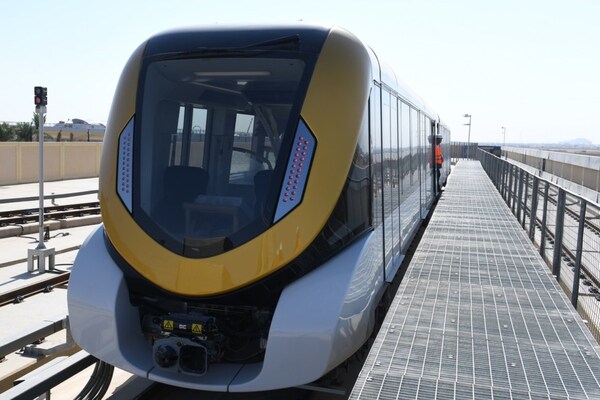
The city partnered with smart and sustainable mobility specialist Alstom on the project. It provided 47 Innovia metro trains for the Orange line and 69 Metropolis metro trains for the Yellow, Green, and Purple lines custom-designed for Riyadh’s specific needs.
“The Riyadh Metro is not just a transportation system; it is a symbol of Saudi Arabia’s forward-thinking vision and its commitment to sustainable growth”
The metro utilises Alstom’s advanced Urbalis communications-based train control (CBTC) signalling system while its Hesop regenerative braking technology recovers braking energy, reducing operational costs and lowering power consumption.
This integrated system claims to represent the largest single-phase, turnkey urban metro project ever undertaken in the rail industry, and Alstom’s most extensive turnkey urban project to date.
The metro will operate in phases, with the Yellow line (Line 4), and the Purple line (Line 6) – commencing passenger operations on 1 December, followed by the Green line (Line 5) on 15 December and the Orange line (Line 3) on 5 January.
“The Riyadh Metro is not just a transportation system; it is a symbol of Saudi Arabia’s forward-thinking vision and its commitment to sustainable growth,” said Mohamed Khalil, managing director of Middle East regional headquarters, Alstom.
“Alstom is immensely proud to have partnered in this ground-breaking journey, delivering a world-class metro that will reshape urban mobility and contribute to a brighter future for Riyadh.”
Alstom is also providing comprehensive maintenance services for the Orange, Yellow, Green and Purple lines. This includes the maintenance of trains, fixed installations such as tracks and signalling systems, communication networks, passenger information systems, and power supply, ensuring long-term system reliability.
Andrew DeLeone, region president for Africa, the Middle East, and Central Asia at Alstom, added: “By leveraging innovative technology and sustainable practices, we are reshaping urban mobility together with RCRC and empowering communities while fostering economic growth. Alstom is humbled to play a major role in this transformation, contributing to a brighter and more interconnected future for the Kingdom and beyond.”
Why not try these links to see what our SmartCitiesWorld AI can tell you.
(Please note this is an experimental service)
How does the Riyadh Metro reduce reliance on private vehicles?What technologies enable energy efficiency in the Riyadh Metro system?How will the Riyadh Metro contribute to improving air quality?What role does Alstom play in maintaining the Riyadh Metro network?How does the Riyadh Metro support Saudi Arabia’s Vision 2030 goals?